
15 Types of Green Tea: Best varieties and brands (2026 Guide)
📅 Last updated: May 2026
By Doo & Rita – 16 min read – herbal wellness enthusiasts – tested and brewed for 5+ years
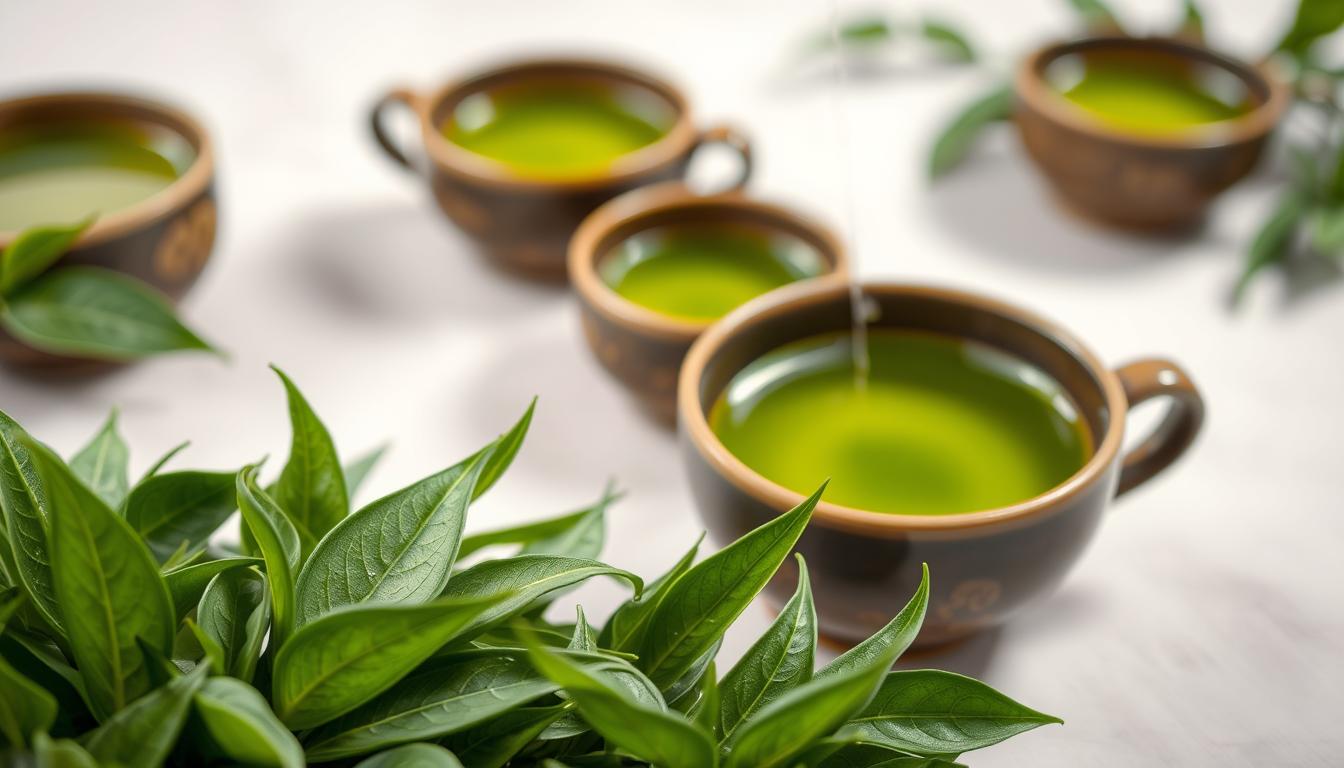
Exploring the many types of green tea available worldwide can be an exciting journey for tea enthusiasts. Green tea is appreciated for its role in traditional wellness routines and its naturally refreshing character. With so many choices, finding what green tea is good for your lifestyle can feel overwhelming.
There’s a wide range of green tea products out there, from tea bags to matcha powders and loose-leaf teas. Whether you’re seeking a certain taste profile or specific qualities, understanding your options is important when choosing good green tea.
⬇ JUMP TO SECTION
⚡ QUICK ANSWER
What are the main types of green tea?
15 types covered in this guide — here’s how they break down:
Sencha · Matcha · Gyokuro · Hojicha · Genmaicha · Kabusecha
Longjing · Gunpowder · Bi Luo Chun · Jasmine · Huang Shan
Korean · Vietnamese · Indian · Emerging regions
Sencha or Dragon Well
🔍 DEFINITION — TYPES OF GREEN TEA
Green tea is made from the unoxidized leaves of Camellia sinensis — the same plant used for black and oolong tea. What makes it green tea is the processing method: leaves are steamed (Japanese style) or pan-fired (Chinese style) immediately after harvest to prevent oxidation, preserving their natural green colour and plant compounds.
There are over 1,000 named varieties of green tea worldwide, but the 15 types covered in this guide represent the most widely appreciated, accessible and culturally significant varieties — spanning Japan, China, Korea, Vietnam and India.
Key facts: Japanese teas are steamed · Chinese teas are pan-fired · Matcha has the highest caffeine (70mg/serving) · Hojicha has the lowest (7mg) · Best brewing temperature: 160–175°F · Never use boiling water.
📋 FULL CHEAT SHEET — 15 TYPES OF GREEN TEA AT A GLANCE
| Tea | Origin | Flavour | Caffeine | Best For |
|---|---|---|---|---|
| Sencha ⭐ | Japan | Light, grassy, refreshing | 30mg | Everyday drinking |
| Matcha | Japan | Rich, umami, creamy | 70mg | Lattes, ceremonies |
| Gyokuro | Japan | Sweet, complex, umami | 35mg | Premium experience |
| Hojicha | Japan | Nutty, toasty, sweet | 7mg | Evening, low caffeine |
| Genmaicha | Japan | Grassy, nutty, warm | 15mg | Food pairing |
| Kabusecha | Japan | Gentle umami, balanced | 25mg | Between sencha & gyokuro |
| Longjing ⭐ | China | Sweet, nutty, mellow | 30mg | Premium Chinese |
| Gunpowder | China | Bold, slightly smoky | 35mg | Strong tea lovers |
| Bi Luo Chun | China | Floral, fruity, delicate | 25mg | Floral lovers |
| Jasmine | China | Floral, soft, aromatic | 25mg | Beginners, gifting |
| Huang Shan | China | Light, sweet, delicate | 25mg | Afternoon tea |
| Nokcha | Korea | Clean, light, grassy | 20mg | Subtle flavour seekers |
| Vietnamese | Vietnam | Floral, fruity notes | 25mg | Aromatic blends |
| Indian (Darjeeling) | India | Brisk, lively, floral | 30mg | Black tea lovers transitioning |
| Emerging regions | Kenya · Nepal | Variable, distinctive | 25mg | Adventurous drinkers |
Covered in this guide — Japan, China, Korea, Vietnam, India.
Hojicha lowest · Matcha highest — wide range across types.
Ideal brewing temperature for most green teas. Never boiling.
Green tea has been cultivated in China since around 3000 BCE.
Table of Contents
The World of Green Tea
Green tea is special in the world of tea. It’s made from the leaves of the Camellia sinensis plant. These leaves are steamed or pan-fried to preserve their naturally occurring beneficial compounds. This process gives green tea its unique flavor and color.
What Makes Green Tea Different from Other Teas
Green tea is different because it’s processed to maintain its naturally occurring plant compounds and flavor. Unlike black or oolong tea, green tea is steamed or pan-fried soon after picking. This stops the enzymes that cause oxidation. If you’re curious about how it compares, discover the key differences in our detailed guide on Black Tea vs Green Tea: Which Is Better in 2025?
The Processing of Green Tea Leaves
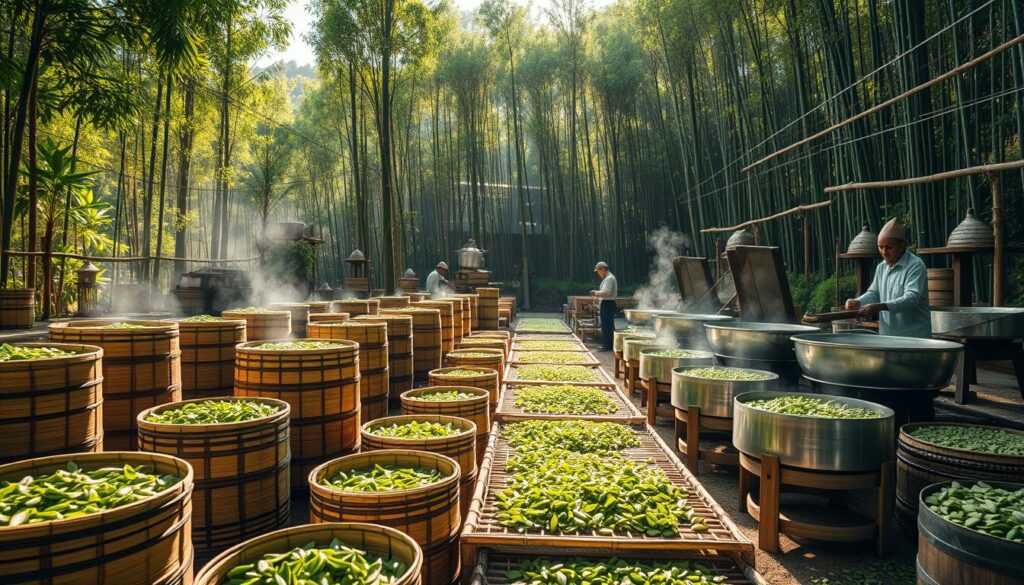
Green tea leaves go through several steps. First, they’re harvested, then withered. Next, they’re steamed or pan-fried, rolled, and dried. The techniques used can change the flavor and aroma of the tea.
| Processing Step | Japanese Method | Chinese Method |
|---|---|---|
| Halt oxidation | Steaming (quick, vegetable-like) | Pan-firing (toasty, nutty) |
| Typical flavour result | Grassy, umami, marine | Mellow, nutty, sweet |
| Colour | Vibrant deep green | Lighter, yellow-green |
Green Tea’s Cultural Significance
Green tea is deeply rooted in Asian cultures. It’s part of many ceremonies and traditions. In Japan, the traditional tea ceremony (chado) is a significant cultural practice involving the preparation and serving of matcha in a ceremonial setting. In China, tea drinking has been a social and philosophical ritual for over three thousand years — the foundation of a culture that produced more than half the world’s named green tea varieties.
Traditional Qualities of Green Tea
Green tea is rich in naturally occurring plant compounds that have been valued throughout history. It contains catechins, which are traditionally appreciated in tea culture.
Plant Compounds and EGCG
One catechin, epigallocatechin gallate (EGCG), is particularly valued in traditional tea appreciation. EGCG is a naturally occurring compound found in green tea and has been the subject of cultural interest for generations. Shade-grown varieties like Gyokuro and Matcha tend to be richer in these naturally occurring compounds — the shading process increases their concentration in the leaf.
Green Tea in Balanced Living
Green tea is often enjoyed as part of a balanced, mindful lifestyle. It’s traditionally appreciated for its refreshing qualities. Regular enjoyment has been a cherished practice in many cultures for centuries—and its versatility extends well beyond the cup. Green tea’s naturally occurring compounds are also used in skincare formulations, including cleansers and toners. If you’re curious about green tea’s role in natural skincare, our green tea facial cleanser guide covers how to harness its properties for your skin.
Mental Refreshment and Traditional Appeal
Green tea has long been enjoyed for its refreshing and focusing qualities. Its naturally occurring compounds — including L-theanine, an amino acid found almost exclusively in tea plants — are associated with the calm, alert state that experienced tea drinkers often describe. This combination of gentle caffeine and L-theanine is one of the reasons green tea has such a long history as a contemplative drink.
Daily Enjoyment Recommendations
Many people enjoy 2–3 cups a day to appreciate green tea’s traditional qualities. Choose a high-quality green tea you enjoy. Make it a part of your daily routine. If you’re new to brewing, the section below on water temperature and steeping times will help you get the most from whichever variety you choose.
How to Store Green Tea for Maximum Freshness
📦 GREEN TEA STORAGE GUIDE
Container
Airtight, opaque
Metal or ceramic — no clear glass
Location
Cool, dark place
Away from heat, light and moisture
Shelf life
6–12 months
Matcha: use within 2–3 months of opening
Avoid
Fridge (usually)
Condensation when removing can damage leaves
Popular Types of Green Tea from Japan
Japan is famous for its wide variety of types of green tea. These teas come in different flavors and offer unique brewing experiences. They are cherished for their taste, cultural value, and traditional place in daily life. Japan produces six of the fifteen varieties covered in this guide—more than any other country.
Sencha: Japan’s Everyday Green Tea
Sencha is Japan’s most beloved green tea variety, accounting for roughly 80% of Japanese tea production. It has a light, refreshing taste and is deeply woven into Japanese daily life. Unlike shade-grown varieties, sencha is grown in full sun, which gives it a brighter, slightly brisk character.
It’s rich in naturally occurring plant compounds and has a slightly grassy, refreshing taste. For beginners, sencha is the most accessible entry point into Japanese green tea—familiar enough to enjoy immediately and complex enough to keep exploring.
Matcha: Powdered Perfection
Matcha is a finely ground green tea used in lattes, smoothies, and tea ceremonies. It’s grown in the shade for the final weeks before harvest, which intensifies its color, concentrates its L-theanine, and develops its signature umami depth. This gives it a rich, distinctive flavor unlike any other green tea.
Matcha is traditionally appreciated in Japanese tea culture as the centerpiece of chado—the way of tea. To learn how to prepare it properly, explore our detailed step-by-step matcha making guide for beginners.
Gyokuro: Shade-Grown Delicacy
Gyokuro, meaning “jade dew,” is a premium, shade-grown green tea shaded for three to four weeks before harvest. It has a rich, complex flavor—deep, slightly sweet, with a pronounced umami that makes it unlike anything else in the Japanese tea canon.
Gyokuro is traditionally associated with moments of quiet contemplation. It’s brewed at a lower temperature than other teas—around 140–150°F—which preserves its delicate sweetness. It is the most expensive of Japan’s mainstream green teas and the one Doo considers the most rewarding discovery he’s made in five years of tea exploration.
Hojicha: Roasted Green Tea
Hojicha is a roasted green tea with a reddish-brown color — the only Japanese green tea that genuinely looks like a different beverage entirely. It has a nutty, slightly sweet flavor with caramel notes from the roasting process. Its caffeine content is the lowest of any green tea variety at around 7 mg per cup—making it the natural choice for evening drinking or for those who enjoy green tea’s character without its stimulating effect.
Genmaicha: Green Tea with Roasted Rice
Genmaicha is a blend of green tea and roasted brown rice—occasionally including popped rice kernels that resemble popcorn. It has a grassy and nutty flavor with a warm, comforting quality that makes it one of the most approachable Japanese teas for those transitioning from other beverages. Rita describes it as “the gateway “tea”—the one she recommends to friends who aren’t sure they like green tea.
Kabusecha: The Hidden Middle Ground
Kabusecha—meaning “covered tea”—occupies a fascinating position between sencha and gyokuro that most tea guides overlook entirely. The plants are shaded for approximately one to two weeks before harvest, compared to the three to four weeks for gyokuro. The result is a tea that has noticeably more sweetness and umami depth than sencha, but none of gyokuro’s intensity.
For anyone who has tried sencha and found it slightly too grassy, or tried gyokuro and found it too rich, kabusecha is consistently the recommendation. It’s less well-known outside Japan, which means it’s often better value than gyokuro for a comparable quality of experience. Look for it from specialist Japanese tea suppliers—it rarely appears in supermarket ranges.
These six Japanese types of green teas show the variety and richness of Japan’s green tea culture. Whether you prefer a light tea like sencha or a complex one like gyokuro, there’s a Japanese green tea for everyone.
Matcha vs Sencha vs Dragon Well: Quick Comparison
| Feature | Matcha | Sencha | Dragon Well |
|---|---|---|---|
| Caffeine Level | High (70mg) | Medium (30mg) | Medium (30mg) |
| Preparation | Whisked powder | Steeped loose leaf | Steeped loose leaf |
| Flavour | Rich, umami, creamy | Light, grassy, brisk | Sweet, nutty, mellow |
| Best For | Lattes, energy, ceremonies | Daily drinking | Premium tea experience |
| Price range | $$–$$$ | $–$$ | $$–$$$ |
Caffeine Levels in Different Green Teas
Chinese Green Tea Varieties
China is where green tea first originated, and it offers many types of green tea. These teas have been cherished by people all over the world for thousands of years. Each type has its own special taste and cultural significance. Chinese green teas are characterised by pan-firing rather than steaming — giving them a warmer, more mellow character than their Japanese counterparts.
Longjing (Dragon Well): The Premium Choice
Longjing, or Dragon Well, is China’s most celebrated green tea — hand-picked in Zhejiang province to preserve its flavor and aroma. It has distinctively flat leaves and offers a sweet taste with a hint of nuttiness that makes it immediately recognizable. Authentic Longjing from West Lake in Hangzhou is among the most prized teas in the world and carries a geographical indication that protects its origin.
Gunpowder Tea: Rolled Leaves with Character
Gunpowder tea is recognized for its tightly rolled leaves that resemble gunpowder pellets—a name given by English traders who thought the rolled leaves looked like small shot. It has a bold, slightly smoky character that stands apart from most other green teas. Gunpowder is the tea traditionally used in Moroccan mint tea, mixed with fresh spearmint and sweetened generously—one of the world’s most recognizable tea traditions.
Bi Luo Chun: Delicate and Aromatic
Bi Luo Chun, or Green Snail Spring, is a treasured tea from Jiangsu province. Its leaves are shaped like tiny snails and covered in fine white hairs. It’s appreciated for its floral and fruity aroma—traditionally grown alongside plum, apricot, and peach trees, whose blossoms are said to influence the tea’s fragrance during the growing season.
Jasmine Green Tea: Floral Infusion
Jasmine green tea beautifully combines green tea leaves with jasmine flowers. The traditional process layers fresh jasmine blossoms over the tea leaves overnight—repeated several times for premium grades—allowing the leaves to naturally absorb the fragrance without any artificial flavoring. The result is floral and delicate, with a soft jasmine aroma that makes it the most approachable Chinese green tea for first-time drinkers and one of the most commonly gifted teas globally.
Huang Shan Mao Feng: Yellow Mountain Tea
Huang Shan Mao Feng, or Yellow Mountain Fur Peak, is a premium green tea from the Huangshan Mountains of Anhui Province. It features tender leaves and buds covered in fine white hairs—”Mao Feng” literally means “fur peak.” Its flavor is light and sweet with a clean finish, making it a favorite among experienced green tea drinkers who prefer subtlety over intensity.
| Tea Variety | Region | Flavor Profile |
|---|---|---|
| Longjing (Dragon Well) | Zhejiang | Sweet, slightly nutty |
| Gunpowder Tea | Zhejiang | Bold, slightly smoky |
| Bi Luo Chun | Jiangsu | Floral, fruity |
| Jasmine Green Tea | Various | Floral, delicate |
| Huang Shan Mao Feng | Anhui | Delicate, slightly sweet |
Other Notable Types of Green Tea Around the World
Green tea is cultivated in many countries beyond Japan and China, each adding its own distinctive character. You’ll find a wide range of flavors and preparation styles as you explore different types of green teas.
Korean Green Tea (Nokcha)
Korean green tea, called “Nokcha,” is appreciated for its light, clean taste. It’s often steamed like Japanese tea, which makes it stand out from Chinese pan-fired varieties. Hadong Nokcha and Boseong Nokcha are prized selections — Hadong claims the oldest wild tea trees in Korea, while Boseong produces the most commercially recognizable Korean green tea from its misty hillside gardens.
Vietnamese Green Tea
Vietnamese green tea is celebrated for its floral or fruity notes — a character shaped by the highland growing conditions of regions like Thai Nguyen and Moc Chau. The high-altitude climate, significant day-to-night temperature variation, and mineral-rich soils produce teas with a brightness and aromatics that distinguish them from both Japanese and Chinese styles.
Indian Green Tea
India, particularly Darjeeling and Assam, is far better known for black tea, but its green teas deserve more attention than they typically receive. Darjeeling green tea is cherished for its light, floral notes and the same “muscatel” character that makes Darjeeling first-flush black tea famous. For anyone who loves Darjeeling black tea, the green version from the same gardens offers a fascinating, lower-caffeine alternative.
Emerging Green Tea Regions
New regions like Kenya and Nepal are beginning to cultivate green tea with notable results. Kenyan green tea benefits from high-altitude equatorial growing conditions—producing a clean, bright cup with less astringency than many established varieties. Nepal’s Himalayan teas, particularly from the Ilam region, are winning recognition at international competitions and offer exceptional value compared to equivalent quality teas from Japan or China.
Top Japanese Green Tea Brands
Looking for recommended green tea brands? Japan offers many top-quality brands to choose from. These brands are recognized for their excellence and traditional methods.
Ippodo Tea Co.
Ippodo Tea Co. has a distinguished history, dating back to 1717 in Kyoto. They are celebrated for their exceptional sencha, gyokuro, and matcha. Ippodo is a premier choice for Japanese green tea and operates both in Japan and internationally—their online store ships worldwide.
Yamamotoyama
Yamamotoyama is a highly respected brand founded in 1690—one of the oldest tea companies in Japan. They offer premium green teas like sencha and gyokuro. Their teas are appreciated for their complex flavor profiles and are more accessible internationally than many specialist Japanese brands.
Harney & Sons Japanese Collection
Harney & Sons features a curated selection of Japanese green teas. They offer sencha and matcha varieties. Their teas are known for their quality and are widely available in North American specialty food stores — a practical starting point for anyone building their first Japanese green tea collection.
Sugimoto Tea Company
Sugimoto Tea Company emphasizes quality and traditional methods. They have a variety of green teas, including sencha, gyokuro, and hojicha—and are particularly well-regarded for their transparency about sourcing and processing, which is less common than it should be in the specialty tea market.
| Brand | Founded | Signature Tea | Best For |
|---|---|---|---|
| Ippodo Tea Co. | 1717 | Sencha, Gyokuro, Matcha | Premium Japanese experience |
| Yamamotoyama | 1690 | Gyokuro | International accessibility |
| Harney & Sons | 1983 | Matcha, Sencha | North American availability |
| Sugimoto Tea | 1946 | Sencha, Hojicha | Sourcing transparency |
Best Chinese Green Tea Brands
Looking for authentic Chinese green tea? There are many excellent recommended green tea brands to explore. China is renowned for its green teas, from traditional varieties to contemporary blends.
Teavivre
Teavivre is a premier brand known for its quality Chinese green teas sourced directly from growing regions. They offer a variety, including Longjing (Dragon Well) and Bi Luo Chun, with detailed origin and harvest information for each tea—more transparency than most Chinese tea brands provide.
The Republic of Tea
The Republic of Tea is notable for Chinese green tea with accessible pricing and wide retail distribution. They’re praised for their consistent quality and diverse range of flavors—a good starting point for exploring Chinese green tea without committing to specialist suppliers.
Yunnan Sourcing
Yunnan Sourcing specializes in Yunnan province teas and is particularly well-regarded among serious tea enthusiasts for their direct relationships with growers. They offer detailed harvest information and are one of the few Western-facing Chinese tea companies where you can reliably trace exactly where your tea came from.
Seven Cups Fine Chinese Teas
Seven Cups Fine Chinese Teas offers an extensive selection of Chinese green teas with exceptional sourcing transparency. They work directly with farmers and maintain long-term relationships with specific growing regions—their Longjing and Huang Shan Mao Feng selections are consistently among the best available outside China. You can also discover more about traditional Chinese infusions and their role in wellness in our detailed guide on Chinese herbal tea.
Accessible Green Tea Brands in American Supermarkets
Looking to incorporate green tea into your daily routine? Many brands are easily accessible in American supermarkets — you don’t need to visit specialty stores or order online to start exploring different types of green tea.
Bigelow
Bigelow is a well-established name in the tea world with a family-owned heritage going back to 1945. They offer many green tea flavors crafted from quality leaves. Their classic green tea bags are found in most supermarkets and represent a reliable, consistent entry point for everyday drinking.
Twinings
Twinings—founded in London in 1706—has a range of green teas with unique flavor profiles, including pure green tea, jasmine green, and various blends. Their products are found in virtually every American supermarket and offer a bridge between everyday tea drinking and more considered choices.
Yogi Tea
Yogi Tea is known for its herbal and green tea blends combining organic and fair-trade green tea with complementary botanicals. Their green tea selections are designed with wellness in mind and integrate naturally with the kind of plant-based daily routines many of our readers already follow.
Traditional Medicinals
Traditional Medicinals offers green tea products blended with traditional herbs for interesting flavor combinations. You can find their teas in health food stores and supermarkets — they’re a natural fit for anyone already interested in herbal wellness practices.
Stash Tea
Stash Tea has a wide selection of green teas — from pure varieties to flavored blends. Their teas are known for their quality and are widely available. For anyone new to green tea, Stash’s range offers an accessible way to explore different flavor profiles without a significant investment.
How to Brew the Perfect Cup of Green Tea
To fully appreciate green tea, you need to learn proper brewing techniques. Each type of green tea has its own preparation method to bring out its finest flavors. The single most common mistake — boiling water — ruins more green tea than any other factor.
Water Temperature Guidelines
| Tea Type | Temperature | Steep Time | Notes |
|---|---|---|---|
| Gyokuro | 140–150°F | 90 sec | Lowest temp of all |
| Kabusecha | 150–160°F | 1–1.5 min | Shade-grown — treat gently |
| Sencha | 160–170°F | 1–2 min | Most forgiving of the Japanese types |
| Longjing · Bi Luo Chun | 170–175°F | 2–3 min | Chinese pan-fired — slightly more robust |
| Genmaicha · Hojicha | 175–185°F | 1–2 min | Roasted — tolerates higher heat |
| Matcha | 175°F | Whisked — no steeping | Sift first for smoothest result |
Steeping Times for Different Varieties
Steeping time is essential for achieving the right flavor. Japanese teas typically steep for 1 to 2 minutes. Chinese teas might steep for 2 to 4 minutes. The key rule: when in doubt, err on the shorter side and taste. You can always steep longer—you can’t un-steep an over-extracted cup.
Brewing Equipment Recommendations
The right tools make a significant difference. A kyusu teapot is excellent for Japanese teas—its side handle and fine strainer are designed specifically for loose-leaf green tea. A simple infuser or tea filter works well too. For matcha, a bamboo whisk (chasen) and a wide matcha bowl (chawan) produce better results than any spoon or regular cup.
Common Brewing Mistakes to Avoid
❌ Boiling water
Creates bitter, astringent tea. The most common and most damaging mistake. Let boiled water cool for 3–5 minutes first.
❌ Steeping too long
Over-extracted green tea turns bitter quickly. Set a timer. Remove the leaves as soon as the time is up.
❌ Using too many leaves
1 tsp per 6oz is the standard starting point. More is not better — it intensifies bitterness rather than flavour.
❌ Skipping re-steeps
Quality loose leaf green tea can be steeped 2–3 times. Each infusion reveals different character. The second steep is often the best.
Choosing the Right Green Tea for Your Taste Preferences
Beginning your green tea journey can feel overwhelming with so many types of green teas available. Understanding your preferences is key to finding what green tea is good for you.
For Beginners: Mild and Accessible Options
New to green tea? Try Sencha, Jasmine Green Tea, or Genmaicha. They’re easy to appreciate and won’t overwhelm your palate. Jasmine green tea is particularly good for anyone coming from floral herbal teas. Genmaicha’s toasty, nutty warmth is an easy bridge from coffee or black tea.
For Tea Enthusiasts: Complex Flavor Profiles
Looking for something more sophisticated? Gyokuro, Kabusecha, or Bi Luo Chun offers deep, layered flavors worth exploring. Gyokuro rewards patience—brew it correctly, and it’s one of the most distinctive cups in the world of tea. Bi Luo Chun’s seasonal aromatics make it a tea that changes character meaningfully between harvests.
Seasonal Considerations for Green Tea Selection
Seasons can influence your green tea choice naturally. Lighter, more delicate teas like Sencha and Bi Luo Chun are particularly refreshing in spring and summer. Richer, warmer varieties like hojicha and genmaicha are genuinely comforting in autumn and winter—hojicha especially suits cold evenings when you want something warming without caffeine.
Pairing Green Tea with Food
Green tea complements many foods beautifully. Jasmine green tea pairs nicely with light dishes and delicate pastries. Hojicha works well with richer flavors and chocolate. Sencha is the classic companion to Japanese cuisine for good reason—its clean, slightly brisk character cuts through the umami of soy-based dishes.
| Green Tea Type | Best Paired With |
|---|---|
| Sencha | Sushi, salads, light fish dishes |
| Jasmine Green Tea | Delicate pastries, seafood, light soups |
| Hojicha | Rich desserts, nuts, chocolate |
| Genmaicha | Rice dishes, grilled vegetables, savoury snacks |
| Gyokuro | Alone — its complexity needs no competition |
Green Tea Price Ranges
- Budget-friendly ($5–15): Supermarket brands — Bigelow, Twinings, Yogi Tea. Good for daily drinking and exploring basic varieties.
- Mid-range ($15–40): Quality loose leaf from specialist brands—Teavivre, Harney & Sons, Sugimoto. Where most enthusiasts settle.
- Premium ($40+): Ceremonial matcha, first-flush gyokuro, competition-grade Longjing. For those who want the full experience of a particular variety.
🧪 How We Explored These 15 Varieties — Doo & Rita’s Experience
🌿 How it started — Rita’s Genmaicha moment
Rita’s introduction to loose leaf green tea came through a bag of Genmaicha from a Japanese grocery in 2019. She’d tried green tea bags before and found them too bitter. The toasty, nutty warmth of Genmaicha was something completely different — and led directly to the rabbit hole that eventually produced this guide.
🎯 The temperature discovery
Doo brewed sencha with boiling water for two years and found it consistently disappointing — slightly bitter, nothing special. A tea shop staff member in London showed him the correct temperature. The same leaves, brewed at 165°F, produced a completely different cup. The temperature section of this guide comes directly from that experience.
☕ Why Kabusecha made this list
Kabusecha wasn’t in the original article — we added it because it genuinely changed how Doo thinks about Japanese green tea. It’s undersold, underwritten about, and consistently better value than its quality deserves. Any guide that helps one person discover Kabusecha has done something useful.
🌍 The emerging regions surprise
We included Kenyan and Nepalese green teas after tasting samples that genuinely surprised us. A Kenyan green tea from a small producer in Nandi Hills was cleaner and brighter than several Chinese teas we paid more for. The world of green tea is wider and more interesting than Japan and China alone.
🧴 Green tea beyond the cup
Working on this guide alongside our skincare content made us more aware of how green tea’s naturally occurring compounds cross between beverages and topical applications. The same EGCG that makes a cup of gyokuro distinctive is used in our green tea facial cleanser. The plant is genuinely versatile.
📚 What the brands section reflects
The brand sections come from five years of buying and brewing from all of them. Ippodo is where we’d spend money without hesitation. Teavivre is where we send friends who ask for Chinese tea recommendations. Yogi Tea is what we suggest to readers who want organic options in a supermarket. These aren’t affiliations — they’re our actual experience.
Conclusion: Embracing the World of Green Tea
Exploring the diverse types of green tea reveals there’s a variety for everyone. From Japan’s Sencha, Matcha, and Kabusecha to China’s Longjing and Jasmine Green Tea, the options are abundant. The 15 varieties covered in this guide are a starting point — not a destination.
With so many types of green teas available, you can experiment with different brewing methods and flavor profiles. Whether you’re new to tea or a seasoned enthusiast, there’s always something new to discover among recommended green tea brands and varieties.
Keep exploring new brands and varieties, like those from Korea, Vietnam, or India. Green tea’s rich history, cultural significance, and place in traditional practices make it enjoyable for everyone seeking good green tea. And if you’re interested in exploring green tea’s role in natural skincare alongside your tea practice, our green tea facial cleanser guide shows how the same plant translates beautifully to a skincare routine.
Ready to expand your tea journey? Explore more soothing blends, natural remedies, and traditional infusions in our Herbal Wellness collection.
Doo and Rita are the creators of Nature’s Herbal Remedy, a plant-based wellness blog. They’ve been exploring green tea varieties for over five years — from Genmaicha in a Japanese grocery to Gyokuro at Ippodo in Kyoto. Every variety, brewing note, and brand recommendation in this guide comes from personal experience rather than research alone.
Disclaimer: All content is for educational purposes only. We are not medical professionals. Always consult a qualified professional for health concerns. Contact: [email protected]