By Doo & Rita – 14 min read – tested on combination & sensitive skin – 3+ years personal use
Last updated: May 2026
The flaxseed gel face mask was something Rita stumbled into completely by accident. She had been making flaxseed gel for her hair and had a small amount left over one evening. On a whim, she applied it to her face before bed. She woke up to noticeably smoother, calmer skin—and repeated it the following week deliberately. That became a four-week experiment, and that experiment became a permanent fixture in her skincare rotation.
What started as leftover hair gel turned into a proper investigation: What does flaxseed gel actually do for facial skin? How do you make a flaxseed gel face mask that performs consistently? Which ingredients pair best with it for different skin concerns? And what are the real flaxseed gel face mask benefits—beyond the initial smoothing effect? This guide covers everything we found, plus five tested recipes, the honest mistakes to avoid, and a clear answer to whether flaxseed gel belongs in your skincare routine.
Yes — for most skin types, especially combination, sensitive and mature skin. Here’s what matters before you start:
①Whole flaxseeds brown or golden, not pre-ground
②15–20 min leave-on the sweet spot for the face
③2x per week consistency builds results
④3–4 weeks for results cumulative, not overnight
Fastest start: Simmer 2 tbsp whole flaxseeds in 1 cup water for 8–10 min → strain → cool to room temperature → apply thin layer to clean face → leave 15–20 min → rinse with cool water.
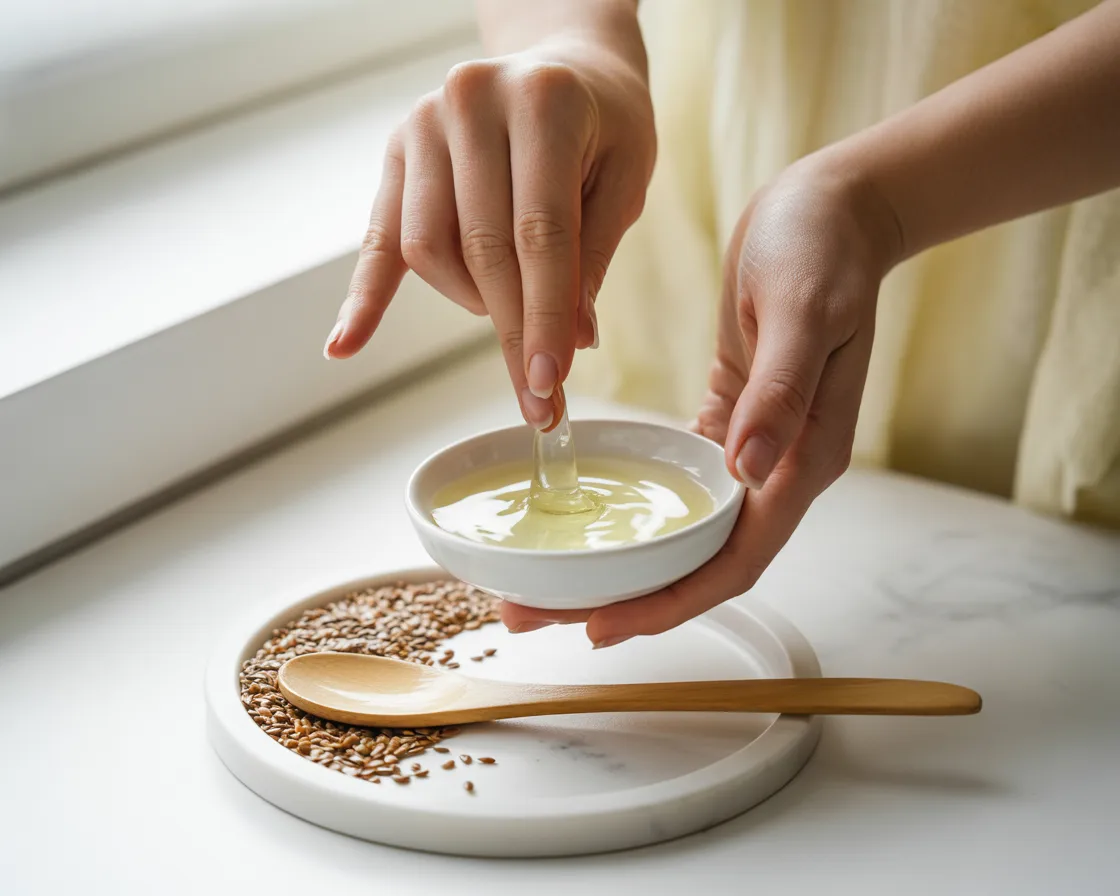
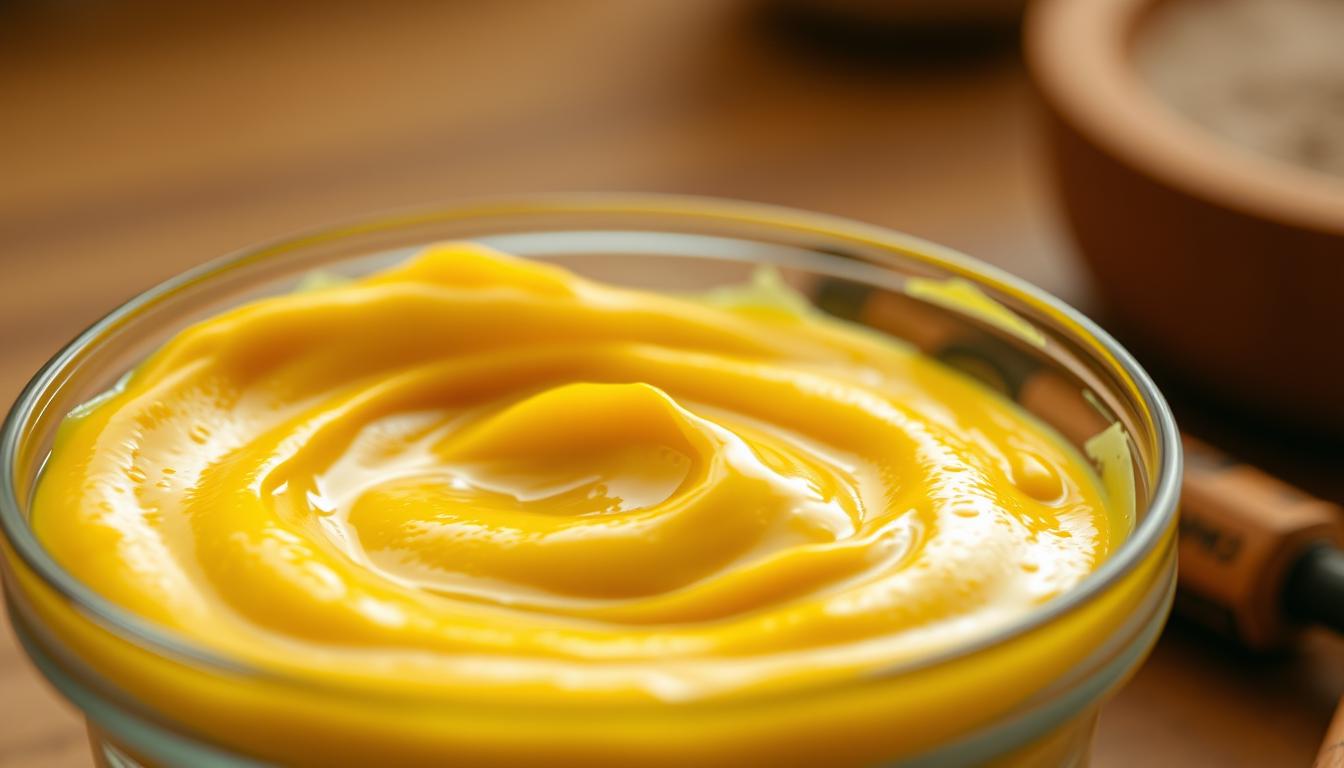
A flaxseed gel face mask is a leave-on skincare formula made by simmering whole flaxseeds (Linum usitatissimum) in water until they release a natural mucilaginous gel rich in omega-3 fatty acids, lignans and polysaccharides. Applied to the face, this gel forms a breathable film that delivers hydration, supports the skin’s natural barrier, and temporarily smooths the skin’s surface.
Unlike most store-bought facial masks, a flaxseed gel mask for the face contains no synthetic film-formers, fragrances or preservatives — just plant-derived actives in their most natural form. The gel is the same base used in flaxseed hair styling gel, adapted for facial use at a shorter contact time and paired with skin-specific supporting ingredients.
Key facts: Suitable for all skin types · 15–20 min leave-on · Results in 3–4 weeks of twice-weekly use · Fresh gel performs better than stored gel older than 5 days.
A flaxseed gel face mask works differently from most facial masks because the gel itself—not just the add-in ingredients—is an active. When flaxseeds are simmered in water, they release a mucilaginous gel rich in soluble fiber, omega-3 fatty acids (alpha-linolenic acid), lignans, and polysaccharides. Each of these compounds interacts with facial skin in a specific, well-documented way.
The polysaccharides in flaxseed gel form a lightweight, breathable film over the skin’s surface—similar in character to what hyaluronic acid does in conventional skincare, but without the synthetic processing. This film temporarily plumps the skin’s surface, smooths fine lines caused by dehydration, and slows moisture loss while the mask is on. The omega-3 fatty acids support the skin’s natural lipid barrier—the layer responsible for keeping moisture in and environmental aggressors out. Lignans, the plant compounds found in particularly high concentration in flaxseeds, are known for their supportive role in maintaining skin’s natural resilience over time.
Research published in the Journal of Drugs in Dermatology (2012) found that a flaxseed oil extract applied topically over 12 weeks produced measurable improvements in skin smoothness, hydration, and barrier function. While that study used an oil extract rather than a whole-seed gel, the active compounds responsible — the omega-3s and lignans — are present in both forms. The gel format has an additional advantage: its water-based consistency makes it particularly suited to oily and combination skin types that don’t tolerate oil-based formulas well.
💧Polysaccharides
Form a breathable film that hydrates and temporarily plumps the skin’s surface.
🔬Omega-3 (ALA)
Supports the skin’s natural lipid barrier — keeping moisture in and environmental factors out.
🌱Lignans
Plant compounds supporting skin’s natural resilience and surface balance over time.
⚖️Water-based gel
Suitable for all skin types — including oily skin that doesn’t tolerate oil-based formulas.
Flaxseed Gel Face Mask Benefits — The Honest List
The flaxseed gel face mask benefits that show up consistently—across our own experience and the published research on flaxseed’s topical properties—come down to six things. Each is grounded in what the gel actually contains, not in marketing language.
💧 Immediate surface hydration
The gel’s polysaccharide film draws moisture to the skin’s surface and holds it there while the mask is on. The smoothing effect is noticeable from the first use — skin feels softer and more supple immediately after rinsing.
🛡️ Barrier support
The omega-3 fatty acids in flaxseed gel support the skin’s natural lipid barrier — the layer that determines how well skin holds moisture between washes. With consistent use, this translates to skin that feels less tight and reactive day to day.
✨ Smoother skin surface
The temporary film left by the gel fills fine surface irregularities — fine lines from dehydration, rough patches, and uneven texture feel noticeably smoother after each use. This effect is cumulative with regular use over 3–4 weeks.
🌿 Gentle on reactive skin
Pure flaxseed gel contains no fragrance, no alcohol, no synthetic surfactants. For skin that reacts to most products, it is one of the most tolerated natural facial masks available. Even sensitive skin types can usually use the base gel without dilution.
⚖️ Balancing for oily skin
Because flaxseed gel is water-based, it hydrates the skin without adding oil — which makes it one of the few genuinely balancing facial masks for oily or combination skin. Dehydrated oily skin often overproduces sebum to compensate for moisture loss; the gel addresses that cycle without adding to the oil load.
🌹 Supporting mature skin over time
The lignans in flaxseed have been studied for their role in supporting skin resilience as it matures. Combined with the hydrating and barrier-supporting effects of regular use, this makes flaxseed gel a particularly relevant addition to a mature skin care routine.
💡 Flaxseed vs. aloe vera for the face: Both are water-based, plant-derived facial care ingredients—but they work differently. Aloe vera’s strength is its enzyme activity and scalp-specific pH. Flaxseed gel’s strength is its film-forming polysaccharides and omega-3 content, which makes it particularly effective for barrier support and surface smoothing. They are complementary rather than interchangeable—which is why Recipe 4 below combines both for sensitive skin.
Which Skin Types Benefit Most
Skin Type
Main Benefit
Best Pairing
Verdict
Dry / dehydrated
Surface hydration, barrier support
Honey + rose water
✓ Works Very Well
Oily / combination
Hydration without oil, balance
Clay + tea tree
✓ Works Very Well
Sensitive / reactive
Calming, barrier protection
Aloe vera + chamomile
✓ Works Well
Mature skin
Smoothing, resilience support
Rosehip + vitamin E
✓ Works Well
Dull / uneven tone
Brightening, radiance
Turmeric + lemon
~ Patch test first
Very reactive / rosacea-prone
Base gel only — no add-ins initially
None — pure gel first
~ Start very gradually
💧 Dry / dehydrated
BenefitSurface hydration, barrier support
Best pairingHoney + rose water
Verdict✓ Works Very Well
🫧 Oily / combination
BenefitHydration without oil, balance
Best pairingClay + tea tree
Verdict✓ Works Very Well
🌸 Sensitive / reactive
BenefitCalming, barrier protection
Best pairingAloe vera + chamomile
Verdict✓ Works Well
🌹 Mature skin
BenefitSmoothing, resilience support
Best pairingRosehip + vitamin E
Verdict✓ Works Well
✨ Dull / uneven tone
BenefitBrightening, radiance
Best pairingTurmeric + lemon
Verdict~ Patch test first
⚠️ Very reactive / rosacea-prone
ApproachBase gel only — no add-ins initially
Verdict~ Start very gradually
How to Make a Flaxseed Gel Face Mask — Step by Step
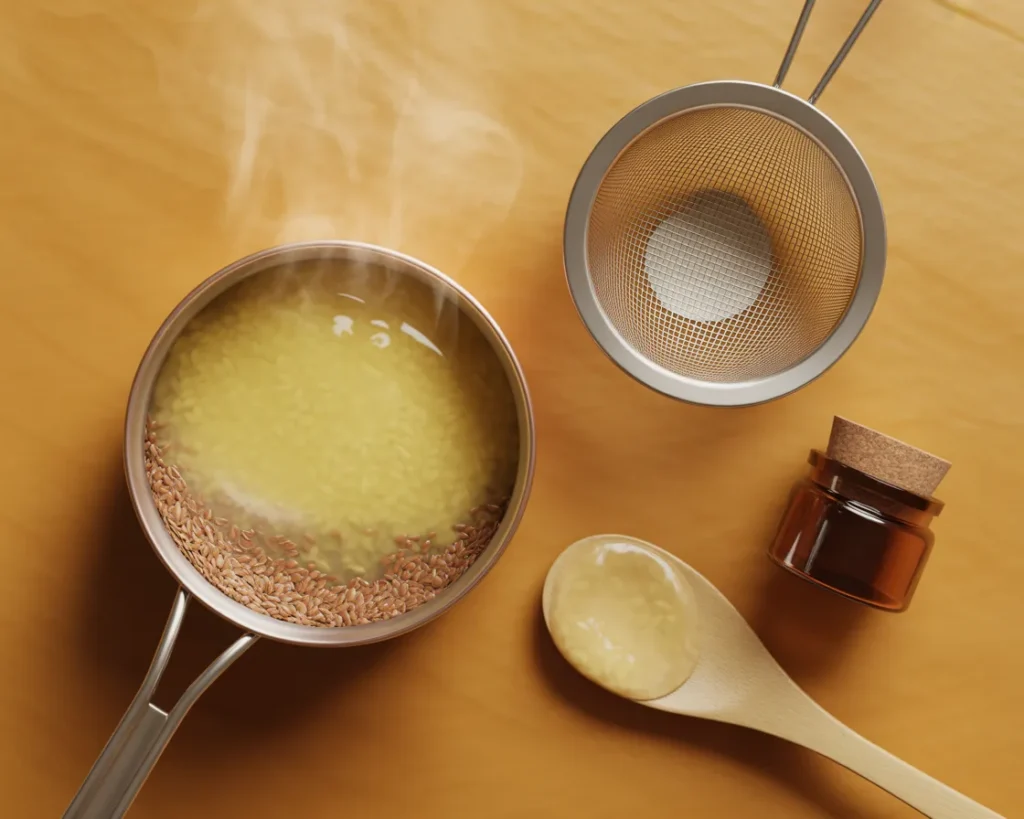
The flaxseed gel face mask recipe base is the same regardless of which add-in ingredients you choose. Making the gel takes about 15 minutes and produces enough for 3–4 applications. Master the gel-making process once, and every recipe below becomes a 2-minute preparation.
Works for all 5 recipes below · 15 min · Makes 3–4 applications · Store up to 5 days in fridge
⏱ Cook time10–12 min
📦 Yield3–4 uses
🧊 Storage5 days fridge
📊 LevelEasy
🌿 WHAT YOU NEED
✦ 2 tbsp whole flaxseeds — brown or golden (not pre-ground, not flaxseed oil)
✦ 1 cup (250ml) filtered or still water
✦ A small saucepan
✦ A fine mesh strainer or muslin cloth
✦ A clean glass jar for storage
📋 HOW TO MAKE IT
1Add flaxseeds and water to a small saucepan. Use filtered water if possible — tap water with high mineral content can affect the gel’s consistency and shelf life. Stir once to distribute the seeds.
2Bring to a simmer over medium heat, stirring regularly. You will see the water begin to thicken and turn slightly opaque within 4–5 minutes. Do not let it boil aggressively — a gentle simmer is all you need. Keep stirring to prevent sticking.
3Remove from heat when the gel coats the back of a spoon. This is the consistency you want — similar to a light egg white. If it’s still watery, simmer for 2–3 more minutes. If it sets like jelly, it’s been cooked too long — add a little water and stir off the heat.
4Strain immediately through a fine mesh strainer. Pour the mixture through a fine strainer into a clean bowl or jar — the seeds stay behind, the gel passes through. Work quickly as the gel thickens further as it cools. Squeeze the last of the gel through with a spoon.
5Cool completely before applying to face. Allow to reach room temperature — this takes about 20 minutes. Never apply warm gel to the face. Store remaining gel in a sealed glass jar in the fridge for up to 5 days.
🌿 From our routine: Rita makes a double batch on Sunday evenings — enough for two to three applications across the week. She stores it in a small glass jar with a tight lid and adds the recipe-specific extras (honey, turmeric, etc.) fresh each time she uses it. The base gel keeps well for 5 days but the add-in ingredients should always go in at the moment of use, not during storage.
How to Apply a Flaxseed Gel Face Mask Properly
The application technique for a flaxseed gel mask for the face determines how much of the gel’s active compounds actually reach the skin — and for how long. The gel’s film-forming character means application method matters more than with thicker clay masks.
🚿 The Correct Application Method
Clean face · Thin even layer · 15–20 minutes · Cool water rinse
1Start with a freshly cleansed face. The flaxseed gel film needs clean, dry skin to adhere properly. Cleanse as normal, pat dry, and wait 2 minutes before applying. Do not apply over other skincare products — the film needs direct contact with skin.
2Apply a thin, even layer using fingertips or a facial brush. Flaxseed gel goes on like a serum — not like a thick clay mask. A thin, even layer is more effective than a thick uneven one. Cover the full face and neck, avoiding the immediate eye and lip area.
3Allow to dry slightly — about 5 minutes — then add a second thin layer. A double layer increases contact time with the skin’s surface. The first layer will feel slightly tacky before the second layer goes on — this is normal. Do not let it dry completely hard before the second coat.
4Leave on for 15–20 minutes. Set a timer. The gel forms a light, flexible film as it dries — you will feel a gentle tightening sensation, which is normal. If the tightening becomes uncomfortable, rinse earlier. Do not leave on longer than 20 minutes for facial use.
5Rinse thoroughly with cool water — then follow with your usual moisturiser. The cool water closes pores and seals the hydration effect. Apply your regular moisturiser within 2 minutes of patting dry — the skin is particularly receptive to it at this stage.
🚿 From our routine: Rita applies the mask while running a bath — the steam softens the gel’s drying sensation and makes the 15-minute wait genuinely relaxing. The double-layer technique was something she developed after noticing the mask dried too quickly in a warm room. The second coat buys another 10 minutes of active contact time. She always follows with a facial oil or light moisturiser within two minutes of rinsing — the skin absorbs it noticeably better on mask days.
5 Flaxseed Gel Face Mask Recipes — One for Every Skin Concern
Each recipe below uses the base flaxseed gel as the foundation and adds one or two supporting ingredients to target a specific skin concern. All five have been tested. Add-in ingredients go in fresh at the time of use — never into the stored base gel.
Recipe 1 — Flaxseed Gel, Honey & Rose Water Face Mask (Dry & Dehydrated Skin) ⭐
Our most-used recipe · Deep surface hydration · Best for dry, tight or dehydrated skin
⏱ 2 min prep⏳ 20 min
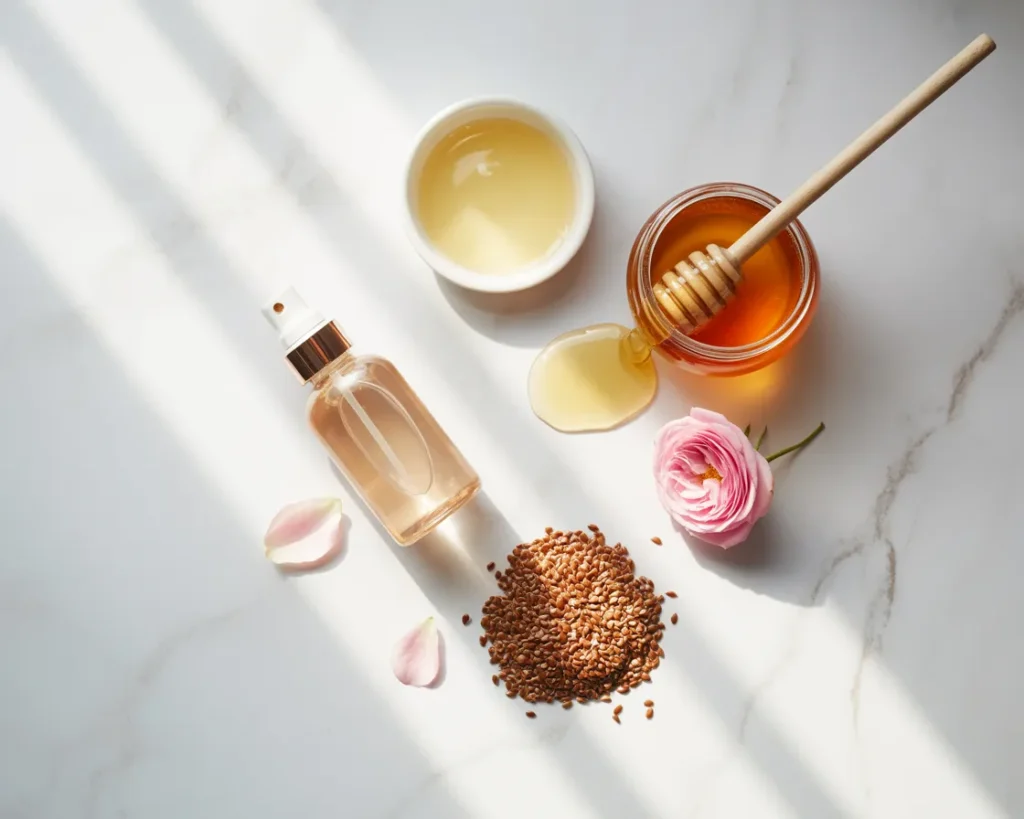
Honey is a natural humectant — it draws moisture from the air and holds it on the skin’s surface. Combined with flaxseed gel’s polysaccharide film and rose water’s gentle toning character, this is the most comfortable and hydrating recipe for skin that feels perpetually thirsty or tight.
🌿 INGREDIENTS
✦ 2 tbsp flaxseed base gel (cooled)
✦ 1 tsp raw honey
✦ 1 tsp pure rose water
📋 INSTRUCTIONS
Mix honey into flaxseed gel until fully combined.
Add rose water and stir well.
Apply to clean face using the method above.
Leave 20 min. Rinse with cool water. Moisturise immediately.
🌿 From our routine: This is the recipe Rita uses most often — particularly in winter when central heating pulls moisture from the skin. The honey makes the gel slightly thicker and stickier on application, but it rinses off completely and leaves no residue. The skin feels noticeably plumper and softer immediately after rinsing — more so than with any other recipe.
Brightening · Radiance-boosting · Patch test before first use
⏱ 2 min prep⏳ 15 min
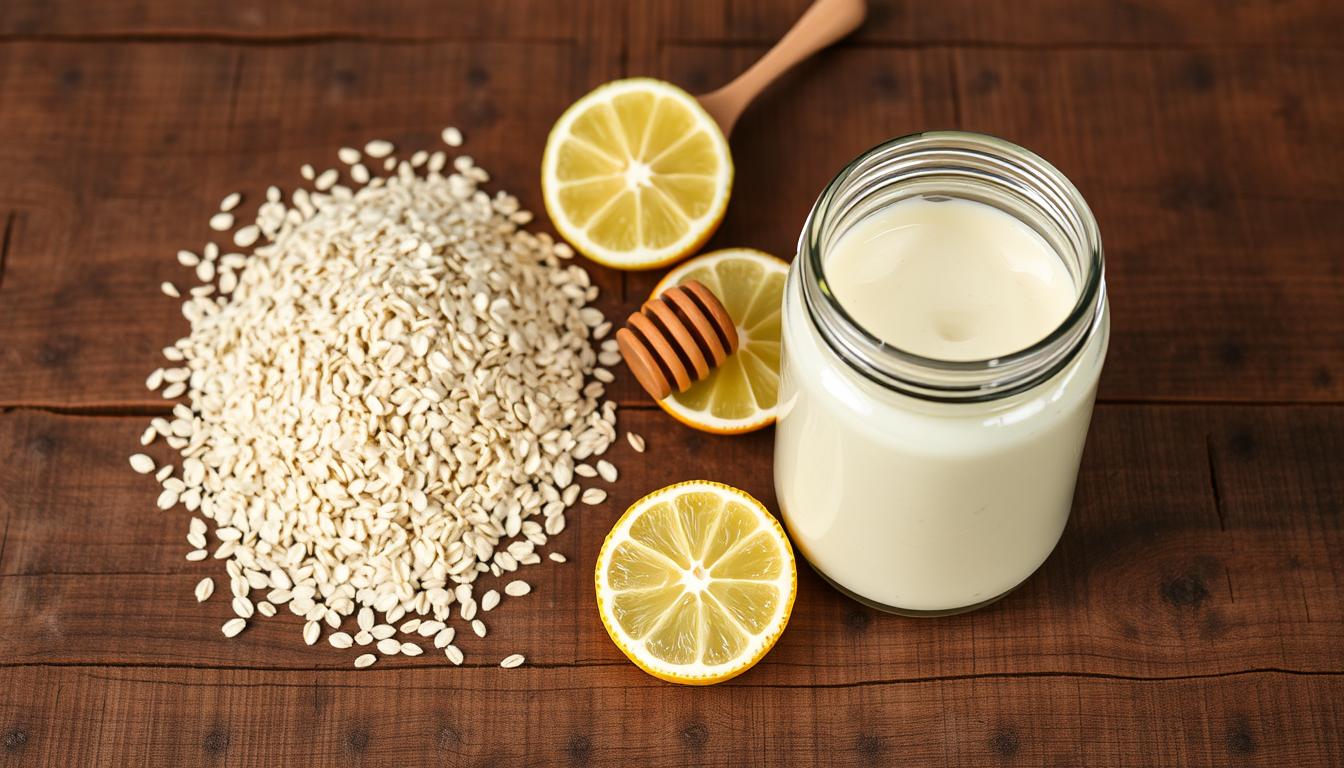
Turmeric’s curcumin content gives it a well-established brightening character in plant-based skincare. Combined with a small amount of fresh lemon juice and the flaxseed gel base, this recipe supports a more even, radiant skin tone over time. Use a pinch of turmeric — a small amount goes a long way and too much will temporarily stain the skin.
🌿 INGREDIENTS
✦ 2 tbsp flaxseed base gel (cooled)
✦ ¼ tsp ground turmeric
✦ ½ tsp fresh lemon juice
✦ 1 tsp honey (to soften lemon’s acidity)
📋 INSTRUCTIONS
Mix turmeric into gel first until no lumps remain.
Add lemon juice and honey. Stir well.
Patch test on jaw 24h before first full face use.
Apply to clean face. Leave 15 min. Rinse with cool water.
⚠ Important notes: Turmeric can temporarily stain the skin yellow — use a minimal amount and rinse thoroughly. Do not use this recipe before sun exposure as lemon juice increases photosensitivity. Always apply SPF after rinsing if using during the day. Patch test first — this recipe is not suitable for very sensitive or reactive skin.
Recipe 3 — Flaxseed Gel, Kaolin Clay & Tea Tree Face Mask (Oily & Congested Skin)
Balancing · Pore-refining · For oily or congested skin · 15 min max
⏱ 2 min prep⏳ 15 min max
Kaolin is the gentlest of the cosmetic clays — it absorbs excess surface oil without stripping the skin’s moisture, making it the right clay for regular use rather than occasional deep-cleansing. The flaxseed gel base ensures the clay doesn’t over-dry, while tea tree’s purifying character supports a more balanced skin environment.
🌿 INGREDIENTS
✦ 2 tbsp flaxseed base gel (cooled)
✦ 1 tsp kaolin clay powder
✦ 2 drops tea tree essential oil
📋 INSTRUCTIONS
Stir kaolin clay into gel until smooth — no lumps.
Add tea tree essential oil and mix well.
Apply to clean face. Leave 15 min max — do not let it dry hard.
Rinse with cool water. Follow with a light, oil-free moisturiser.
🫧 From our routine: Doo uses this recipe on the T-zone only — applying Recipes 1 or 4 to the drier cheeks at the same time. The flaxseed gel makes the kaolin clay noticeably more comfortable to wear than straight clay masks, and the 15-minute limit prevents the over-drying that classic clay masks can cause with regular use.
Recipe 4 — Flaxseed & Aloe Vera Gel Face Mask with Chamomile (Sensitive Skin)
The gentlest recipe · Flaxseed + aloe vera gel face mask · Calming + barrier-supporting
⏱ 2 min prep⏳ 15–20 min
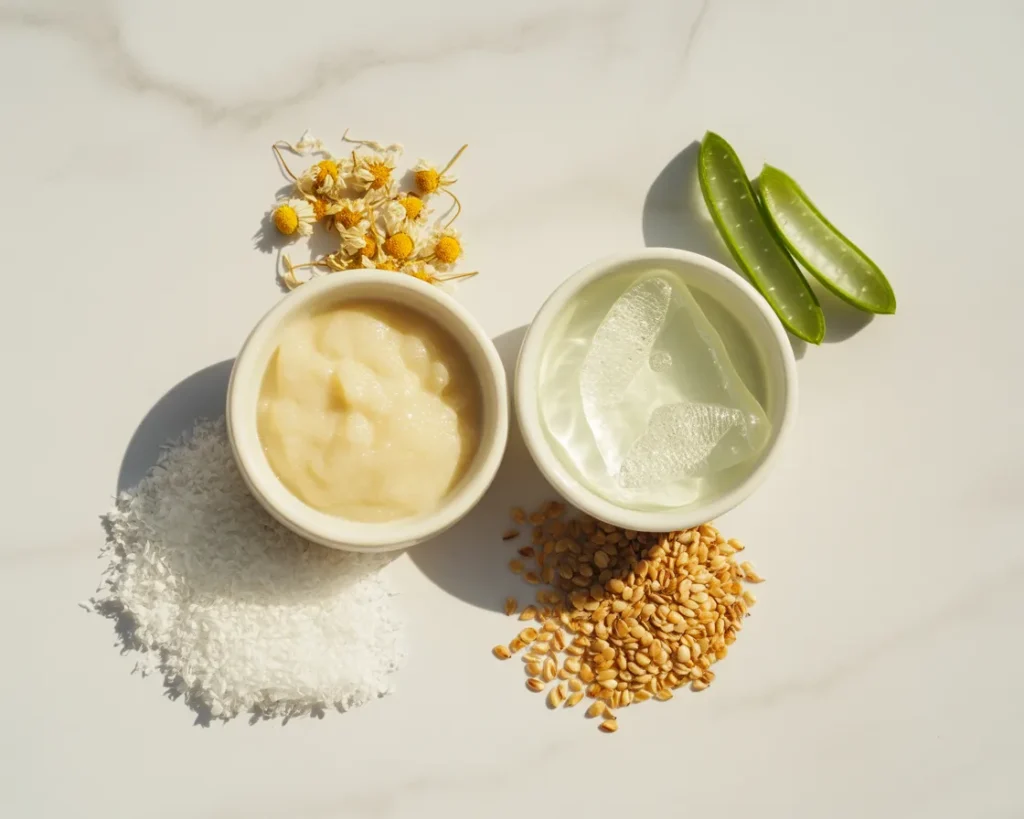
This is the flaxseed and aloe vera gel face mask in its most purposeful form — two water-based, plant-derived gel ingredients working together rather than competing. Flaxseed gel provides the film-forming barrier support. Aloe vera adds its own set of enzymes and vitamins, and its pH of ~4.5 helps maintain the skin’s surface balance. Chamomile water or brewed chamomile tea adds a calming quality that makes this the right recipe for skin that reacts to almost everything else.
🌿 INGREDIENTS
✦ 1 tbsp flaxseed base gel (cooled)
✦ 1 tbsp pure aloe vera gel (99%+ or fresh)
✦ 1 tsp cooled chamomile tea or chamomile water
📋 INSTRUCTIONS
Combine flaxseed gel and aloe vera gel in a small bowl.
Add cooled chamomile tea and mix gently.
Apply to clean face — no patch test needed for most sensitive skin.
Leave 15–20 min. Rinse with cool water. Moisturise.
🌸 From our routine: This is the recipe we developed specifically for readers who found even pure flaxseed gel slightly drying in winter. The aloe vera addition brings extra moisture and the chamomile makes the whole formula feel noticeably calmer on the skin. It is also the recipe Rita uses after a long flight or after extended sun exposure — times when the skin’s surface feels stressed and reactive.
Recipe 5 — Flaxseed Gel, Rosehip Oil & Vitamin E Face Mask (Mature Skin)
Mature or maturing skin · Smoothing + nourishing · Most generous recipe
⏱ 2 min prep⏳ 20 min
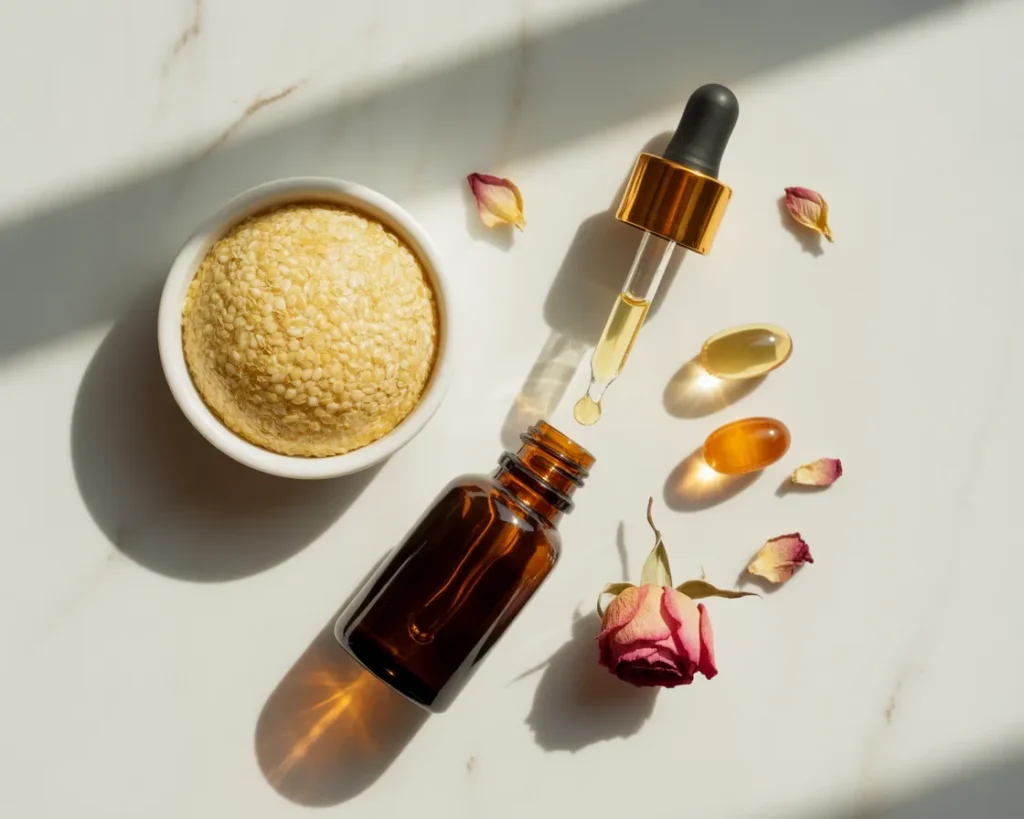
Rosehip oil is one of the most studied plant-based facial oils for mature skin — its natural vitamin A content and high fatty acid profile make it particularly suited to skin that has lost some of its natural suppleness over time. Combined with flaxseed gel’s lignans and polysaccharides, and vitamin E’s antioxidant properties, this recipe delivers the most nourishing experience of all five. The gel base ensures it doesn’t feel heavy or greasy despite the oil content.
🌿 INGREDIENTS
✦ 2 tbsp flaxseed base gel (cooled)
✦ ½ tsp rosehip oil
✦ 1 vitamin E capsule (pierce and squeeze out)
✦ 1 tsp rose water (optional)
📋 INSTRUCTIONS
Squeeze vitamin E capsule into flaxseed gel.
Add rosehip oil and rose water if using. Mix well.
Apply to clean face and neck — include neck and décolletage.
Leave 20 min. Rinse with cool water. Skip additional moisturiser — this recipe is nourishing enough.
🌹 From our routine: This is the recipe Rita uses on weekend evenings — it takes slightly more preparation than the others but the result is the most noticeably nourished skin of all five. She skips her usual moisturiser afterwards because the rosehip and vitamin E combination means the skin doesn’t need it. The neck and décolletage inclusion is something she added after noticing those areas were missing out on the benefits.
What Results to Expect — The Honest Timeline
FIRST USE
Immediate smoothness
Skin feels immediately softer and more supple after the first rinse. The polysaccharide film effect is visible from use one — particularly noticeable on dry or dehydrated areas.
WEEK 2–3
Sustained improvement
Skin holds moisture better between uses. Oily areas feel more balanced. Reactive skin feels calmer and less tight day to day. The cumulative effect of twice-weekly use becomes visible.
WEEK 4–6
Visible improvement
Skin texture is noticeably smoother. Fine dehydration lines are less visible. Skin tone looks more even. Others notice the improvement without being told about the routine change.
WEEK 8+
Maintenance phase
Once a week is enough to maintain results. Return to twice weekly during seasonal changes, travel or periods of stress when skin is more reactive.
⚠ If no improvement after 4 weeks: Check the mistakes section below — the most common reasons are cooking the gel too long (breaks down the polysaccharides), applying over other skincare products rather than directly on clean skin, or leaving it on too briefly. If skin concerns are persistent or accompanied by significant redness or discomfort, professional guidance is the right step.
7 Mistakes That Explain Why Results Stall
❌ Overcooking the gel
Simmering the flaxseeds for too long breaks down the polysaccharide chains responsible for the film-forming effect — turning the gel from a skin-smoothing formula into a sticky mess with reduced activity. Remove from heat as soon as the gel coats the back of a spoon. If it sets solid like jelly at room temperature, it has been overcooked.
❌ Applying over other products
Applying the gel over a moisturiser, serum or SPF creates a barrier between the active compounds and the skin. The gel needs direct contact with clean, bare skin to form its film properly. Always apply to a freshly cleansed, product-free face.
❌ Applying warm gel
Warm flaxseed gel applied to the face is uncomfortable and ineffective — it doesn’t form the film properly and can cause redness on reactive skin. Always allow the gel to cool completely to room temperature before applying. If you’re making it fresh, 20 minutes of cooling time is the minimum.
❌ Leaving it on too long
Unlike hair masks where longer contact times are generally beneficial, flaxseed gel on the face should not exceed 20 minutes. As the gel dries and tightens beyond this point, it can pull at the skin and cause temporary redness — the opposite of what you want. Set a timer and rinse on time.
❌ Using pre-ground flaxseeds
Ground flaxseeds (flaxseed meal) do not produce the same mucilaginous gel as whole seeds — the grinding process disrupts the seed coat that releases the polysaccharides when simmered. Always use whole flaxseeds, either brown or golden. Flaxseed oil is also not a substitute — it doesn’t contain the gel-forming compounds at all.
❌ Storing gel too long
Flaxseed gel is a fresh, preservative-free formula with a 5-day refrigerated shelf life. Gel older than 5 days begins to break down and can develop an unpleasant smell — a clear signal to discard and make a fresh batch. If in doubt, smell before applying: fresh flaxseed gel has a mild, neutral scent.
❌ Skipping the moisturiser after
Flaxseed gel hydrates while it’s on the skin — but once rinsed, the skin needs a moisturiser to seal in that hydration. Skipping this step means the water drawn to the surface by the polysaccharide film simply evaporates, leaving skin feeling temporarily drier than before. Apply moisturiser within 2 minutes of patting dry.
📚 Sources & Scientific References
🔬 Flaxseed oil extract — skin smoothness and hydration British Journal of Nutrition · 2009
De Spirt, S., et al. (2009). Intervention with flaxseed and borage oil supplements modulates skin condition in women. British Journal of Nutrition, 101(3), 440–445. — View on PubMed ↗
This study found that supplementation with flaxseed oil over 12 weeks produced measurable improvements in skin hydration, smoothness and reduced sensitivity in participants with dry skin. Skin roughness decreased by around 35% in the flaxseed group. While the study used an oral supplement rather than a topical gel, the active compounds — omega-3 fatty acids and lignans — are present in both forms and the skin barrier-supporting mechanism is the same.
💡 Context: oral supplement study. The topical gel format delivers the same compounds locally and without the systemic pathway — useful framing for understanding the mechanism, not a direct trial of flaxseed gel as a face mask.
Naran, R., et al. (2008). Novel structural elements of flaxseed mucilage polysaccharides. Phytochemistry, 69(14), 2591–2596. — View on PubMed ↗
This research characterised the structural composition of flaxseed mucilage — the polysaccharide-rich gel released when seeds are simmered in water. The study confirmed the presence of both neutral and acidic polysaccharides that form a film capable of retaining moisture and adhering to biological surfaces. This is the scientific basis for the gel’s film-forming effect on facial skin — the same mechanism used in cosmetic formulation.
💡 Context: structural chemistry study. Confirms the mechanism behind the gel’s smoothing and hydrating properties at a molecular level.
🔬 Lignans and skin resilience Cosmetics · 2020
Cornacchia, C., et al. (2020). Flaxseed in cosmetics. Cosmetics, 7(1), 12. — View on MDPI ↗
The 2020 cosmetic review specifically examines flaxseed’s topical applications, confirming the role of lignans in supporting skin surface resilience and the suitability of flaxseed mucilage as a natural film-former in skincare. The review notes flaxseed gel’s particular relevance for mature and dry skin types, consistent with our experience and Recipe 5 above.
💡 Context: cosmetic application review. Most directly relevant to the face mask format — covers topical rather than oral use.
Frequently Asked Questions
❓ What is a flaxseed gel face mask and how does it work?
A flaxseed gel face mask is a leave-on facial care formula made by simmering whole flaxseeds in water until they release a natural mucilaginous gel. Applied to the face, the gel’s polysaccharides form a breathable film that delivers hydration, supports the skin’s natural barrier, and temporarily smooths the skin’s surface. It works at room temperature with no synthetic additives — just plant-derived actives in their most natural form.
❓ What are the main flaxseed gel face mask benefits?
The six main flaxseed gel face mask benefits are: immediate surface hydration (visible from first use), natural barrier support from omega-3 fatty acids, a smoother skin surface from the polysaccharide film, gentleness on reactive skin (no fragrance, alcohol or synthetic additives), a balancing effect on oily skin without adding oil, and cumulative support for mature skin’s natural resilience from lignans. Results build over 3–4 weeks of twice-weekly use.
❓ How do you make a flaxseed gel face mask at home?
The basic flaxseed gel face mask recipe: simmer 2 tablespoons of whole flaxseeds in 1 cup of water over medium heat for 8–10 minutes, stirring regularly, until the water thickens and coats the back of a spoon. Strain immediately through a fine mesh strainer. Cool completely to room temperature before applying to the face. Add recipe-specific ingredients (honey, aloe vera, clay etc.) fresh at the moment of use. Store the base gel in the fridge for up to 5 days.
❓ How long should I leave a flaxseed gel mask on my face?
15–20 minutes is the right window for facial use. Unlike hair masks where longer contact can be beneficial, flaxseed gel on the face should not exceed 20 minutes — the gel continues to tighten as it dries and can cause temporary redness if left on too long. Set a timer and rinse with cool water on time.
❓ Can I make a flaxseed and aloe vera gel face mask?
Yes — and it’s one of the most effective combinations for sensitive or reactive skin. The flaxseed and aloe vera gel face mask in Recipe 4 above combines both gel ingredients in equal parts with cooled chamomile tea. The two gels are complementary: flaxseed provides the film-forming barrier support, aloe vera adds enzyme activity and helps maintain the skin’s natural surface balance. They address different aspects of the same goal and work well together.
❓ Is flaxseed gel face mask suitable for oily skin?
Yes — flaxseed gel is water-based, which makes it one of the few natural face mask bases that hydrates oily skin without adding oil. Dehydrated oily skin often overproduces sebum to compensate for moisture loss — the gel addresses that cycle from the water side. For oily skin, Recipe 3 (flaxseed + kaolin clay + tea tree) is the most targeted option, addressing both hydration and surface balance in one step.
❓ How often should I use a flaxseed gel face mask?
Twice a week for the first 4–6 weeks, then once a week for maintenance. During seasonal changes, periods of travel or environmental stress, return to twice weekly for 2–3 weeks. Mature skin types can use the gel up to three times a week as it is gentle enough for regular use. There is no benefit to using it more frequently than three times a week.
Complete Your Natural Skincare Routine
A flaxseed gel face mask works best as part of a consistent routine—paired with a gentle cleanser, a balancing toner, and a moisturizer that seals in what the mask delivers.
📅Twice-Weekly Mask Routine
① CLEANSE
🌿 Gentle natural cleanser
Clean bare skin — no residue before the mask goes on.
② THE MASK
🌿 Flaxseed Gel Face Mask
Choose recipe per skin concern. Thin even layer. 15–20 min.
Doo and Rita are the creators of Nature’s Herbal Remedy, a plant-based skincare and wellness blog. Rita discovered the flaxseed gel face mask by accident while making hair gel — and tested it properly before writing about it. Every recipe in this guide has been applied to at least one real face before being included here.
🌿 3+ years personal use🔬 3 peer-reviewed sources cited🧪 5 DIY recipes tested📅 Last updated: May 2026
📌 Note: The information in this article is for general lifestyle and cosmetic inspiration only. It is not intended to diagnose, treat, cure or prevent any health condition. If you have a persistent skin concern, known skin sensitivities, or any reaction to the ingredients listed, please consult a qualified dermatologist before changing your skincare routine. Always patch test new DIY formulas on the inner arm 24 hours before first facial use.