By Doo & Rita – 14 min read – contributed by Maya, friend & tester – fine hair, colour-treated – tested for 8 months
Last updated: May 2026
Maya started adding rosemary oil to her shampoo after Rita mentioned it casually during a catch-up. Maya’s hair had been through a rough year—three color sessions in six months, a bad reaction to a protein treatment, and a noticeable increase in the amount of hair left on her brush every morning. She wasn’t looking for a miracle. She was looking for something that would stop things getting worse.
Eight months later, she describes it as the single most consistent change she’s made to her haircare routine. Not the most dramatic, but the most consistent. The brush wasn’t alarming anymore by month two. Her scalp felt less tight by month one. Her stylist commented on her hair condition at month five without Maya bringing it up. This guide is what Maya learned, cross-referenced with what the research actually says about rosemary oil shampoo—including the part most people get wrong, which is the dosage.
Does adding rosemary oil to shampoo actually work?
Yes — if you use the right amount and the right method. Here’s what matters:
①2–3 drops per wash not the whole bottle
②Pure essential oil only not rosemary-scented products
③Scalp massage 60 sec contact time matters
④6–8 weeks for results consistent use required
Fastest start: Add 2–3 drops of pure rosemary essential oil to your shampoo in your palm before applying. Massage into scalp for 60 seconds. Leave 2 minutes. Rinse thoroughly. Every wash for 6 weeks.
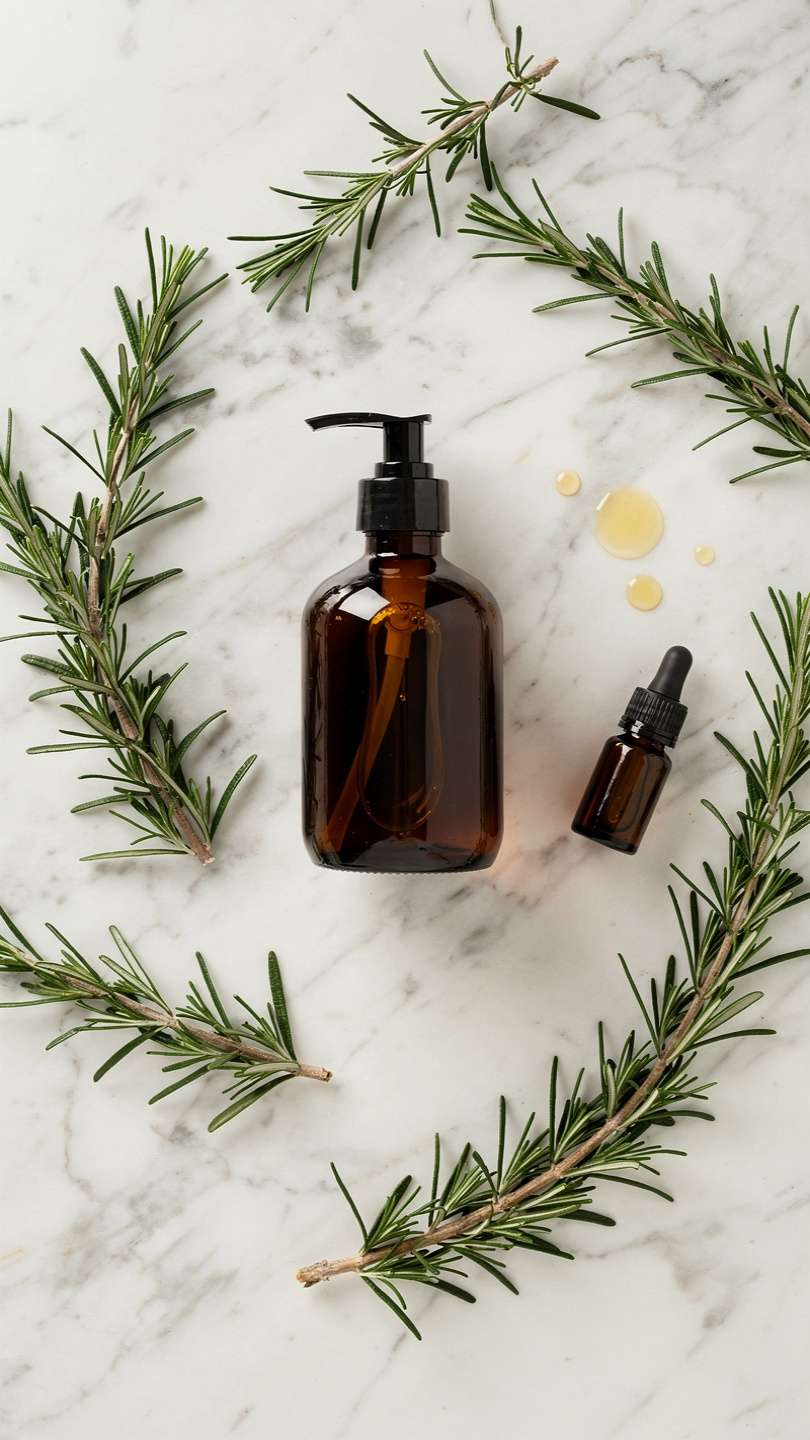
Rosemary oil shampoo is a cleansing formula that incorporates rosemary essential oil (Rosmarinus officinalis) as an active ingredient — either by adding pure rosemary essential oil directly to an existing shampoo, or by using a commercially formulated shampoo with rosemary oil at a functional concentration. The primary active compound is 1,8-cineole, which supports scalp circulation.
A 2023 study published in Skinmed found that rosemary oil applied to the scalp over six months produced results comparable to a commonly used scalp wellness product — making it one of the most evidence-backed plant-based scalp ingredients available. The key variable is always concentration and contact time.
Key facts: 2–3 drops per wash for DIY · Patch test before first use · Results in 6–8 weeks · Works best combined with scalp massage · Pure essential oil only — not fragrance oil.
Shampoo with rosemary oil works differently from most plant-based haircare ingredients because its primary action is on the scalp environment rather than the hair shaft itself. Most conditioning ingredients—aloe vera, coconut oil, argan oil—target the hair. Rosemary oil targets the scalp. That distinction matters for understanding why it takes longer to see results and why the results tend to be more durable when they arrive.
Rosemary essential oil’s key active compound is 1,8-cineole—a naturally occurring oxide that supports scalp microcirculation when applied topically. Better circulation means a better-supplied follicle environment: more nutrients, more oxygen, a more active growth cycle. This is the mechanism behind the research on rosemary oil for scalp health, and it’s why consistent use over weeks and months produces results that occasional use doesn’t.
A second compound, ursolic acid, supports the scalp’s natural cell renewal process—which, when working optimally, means a cleaner follicle environment and less buildup around the root. Combined, these two mechanisms make rosemary oil shampoo one of the most coherent natural approaches to scalp wellness currently available—not because it is miraculous, but because its mechanism is well-understood and the research behind it is genuinely solid compared to most botanical ingredients.
🩸Scalp Circulation
1,8-cineole supports microcirculation — better blood flow to the follicle.
🔬Cell Renewal Support
Ursolic acid supports scalp cell renewal and a cleaner follicle environment.
📅6–8 Weeks
The realistic timeline for noticeable improvement with consistent use.
💧Natural Purifying
Naturally purifying properties support a balanced scalp without disrupting its pH.
📊 KEY FACTS — ROSEMARY OIL IN SHAMPOO
Plant source
Rosmarinus officinalis
Steam-distilled from leaves and flowering tops
Key active compounds
1,8-cineole + ursolic acid
Circulation support + cell renewal
DIY dosage per wash
2–3 drops
In palm with shampoo before applying
Results timeline
6–8 weeks minimum
Consistent use 2–3x per week
💡 The concentration rule: Many commercial shampoos with rosemary oil list rosemary extract or fragrance at the bottom of their ingredient list—close to the preservatives. At that concentration, the product smells of rosemary but delivers little of the functional benefit. When making your own, you control the concentration precisely. The recipes below are all formulated at concentrations that actually correspond to what was used in the relevant research. If you’d also like to make a rosemary-infused carrier oil for scalp massages—a completely different product from essential oil—our how to make rosemary oil guide covers the infusion method step by step.
How to Add Rosemary Oil Into Shampoo — 4 Methods
There are four practical ways to incorporate rosemary oil into shampoo — from the simplest per-wash method to a full DIY formula. The right approach depends on how committed you want to be and what hair concern you’re targeting.
Method 1 — The Per-Wash Drop Method ⭐
⭐ START HERE
🌿 Method 1 — The Per-Wash Drop Method
All hair types · Simplest approach · No preparation needed · Start tonight
⏱ Time30 sec extra
💧 Dosage2–3 drops
📅 FrequencyEvery wash
✨ Best ForAll Types
🌿 WHAT YOU NEED
✦ Your regular shampoo
✦ Pure rosemary essential oil — Rosmarinus officinalis, not fragrance oil
✦ That’s it
📋 HOW TO DO IT
1Dispense your normal shampoo amount into your palm. Do not apply to your head yet.
2Add 2–3 drops of rosemary essential oil directly onto the shampoo in your palm. Mix briefly with your fingertip. This is how much rosemary oil to add to shampoo per wash — not more.
3Apply to wet scalp and massage firmly for 60–90 seconds. Circular motions, full scalp coverage. The massage is as important as the oil — scalp circulation is activated by physical movement as well as the active compounds.
4Leave on for 2 minutes before rinsing. The contact time allows the active compounds to reach the scalp. Set a timer — 2 minutes is longer than it feels in the shower.
5Rinse thoroughly with lukewarm water. Then cool water final rinse. Condition mid-lengths to ends only — never the scalp.
🌿 From Maya’s routine: This is how she started — two drops into her regular shampoo, every wash for six weeks. She used a mild sulphate-free shampoo as her base, which she thinks helped. By week four the morning brush felt noticeably less alarming. She credits the 60-second massage as much as the oil itself — she’d been washing her hair for 20 years without ever giving her scalp a proper massage.
Method 2 — The Pre-Mixed Bottle Method
🧴 Method 2 — Pre-Mixed Bottle
Add rosemary oil directly to your shampoo bottle · Consistent concentration every wash · 5 min setup
💧 10 drops/100ml🧴 Mix once
Pre-mixing is the most consistent approach — every wash delivers the same concentration without having to measure drops each time. The ratio of 10 drops per 100ml produces a 1% concentration, which is functional without being excessive. Shake before each use as the essential oil and shampoo base will naturally separate slightly over time.
Count your shampoo volume. Calculate 10 drops per 100ml.
Add drops directly to the bottle. Invert gently 5 times.
Label the bottle with the date mixed.
Shake gently before every use. Apply with 60-second scalp massage.
🧴 From Maya’s routine: She switched to this method at week three when the per-wash measuring felt fiddly. She adds 10 drops of rosemary and 5 drops of peppermint to her 200ml bottle — the peppermint gives an immediate cooling sensation on the scalp that she describes as “the feeling of something actually happening.” Whether it adds measurable benefit or just feels good is unclear, but she hasn’t gone back to rosemary alone.
Method 3 — The Scalp-Focused Leave-On Application
For scalp wellness priority · Extended contact time · 5-minute leave-on
⏱ 5 min leave-on💧 3 drops
For anyone prioritising scalp wellness over hair cleansing — the 5-minute leave-on gives the rosemary compounds longer contact with the scalp surface before rinsing. The same per-wash dosage applies; only the contact time changes. Pair this with our rosemary water for hair guide on non-wash days for a comprehensive rosemary scalp routine.
📋 WHAT’S DIFFERENT
✦ Apply rosemary shampoo to scalp only
✦ Massage 90 seconds instead of 60
✦ Leave on 5 minutes before rinsing
📅 WHEN TO USE THIS
✦ During first 8 weeks for maximum effect
✦ When scalp feels tight or reactive
✦ 3x per week — not daily
Method 4 — How Much Rosemary Oil to Add to Shampoo: The Dosage Guide
💧 DOSAGE GUIDE — HOW MANY DROPS OF ROSEMARY OIL IN SHAMPOO
Method
Drops
Per Volume
Concentration
Notes
Per-wash (palm method)
2–3 drops
Per wash dose
~1%
Start here — most practical
Pre-mix bottle
10 drops
Per 100ml shampoo
~1%
Consistent, convenient
DIY castile base
15 drops
Per 120ml base
~1.5%
Maximum for DIY formulas
Sensitive scalp
1 drop
Per wash dose
~0.5%
Build up slowly over 2 weeks
Maximum — never exceed
20 drops
Per 100ml
2%
Upper safety limit for rinse-off products
⚠ Why dosage matters: Essential oils are highly concentrated. More is not better — above 2% in rinse-off products, rosemary essential oil can cause scalp irritation, dryness, and in rare cases contact sensitivity. The research that produced the most cited results used concentrations in the 1–2% range. Below 0.5%, the functional benefit is limited. The 1% sweet spot (2–3 drops per wash, or 10 drops per 100ml) is where the research and the practical experience both point.
Which Hair Types Work Best with Rosemary Oil Shampoo
Hair / Scalp Type
Verdict
What to Expect
Our Tip
Fine / thinning
✓ Excellent fit
Improved scalp environment, less shedding over 6–8 weeks
Use aloe vera base recipe — won’t weigh hair down
Colour-treated
✓ Good fit
Scalp support without stripping colour
2 drops max per wash — sensitive scalp after colouring
These three recipes move beyond simply adding drops to an existing shampoo—each one is a complete formula with rosemary essential oil as the primary active ingredient, built around a different base and a different hair concern. All three have been tested by Maya and cross-referenced with Doo’s and Rita’s own experience with rosemary-based formulas.
Recipe 1 — Classic Rosemary Oil Shampoo with Castile Base ⭐
Most versatile formula · All hair types · Clean castile soap base
⏱ 5 min prep🌿 Use within 3 weeks
The castile soap base cleanses effectively while the rosemary essential oil delivers its scalp-supporting compounds at every wash. This is the most straightforward answer to the question “how to make rosemary oil shampoo” — three functional ingredients, nothing else. Note: this recipe uses rosemary essential oil (steam-distilled, a few drops) — different from a rosemary-infused carrier oil, which is made by steeping dried rosemary in olive or jojoba oil for weeks and applied directly to the scalp. Both are useful — different products, different uses. See our homemade shampoo guide for more castile base variations.
Combine castile soap and cooled rosemary water in a pump bottle.
Add jojoba oil and rosemary essential oil.
Invert gently 3–4 times. Do not shake vigorously.
Store in a cool dark place. Use within 3 weeks. Shake before each use.
🌿 From Maya’s routine: This was the first full DIY formula Maya made — at Rita’s suggestion after two months of the per-wash drop method. The rosemary water base doubles the rosemary compound concentration without increasing the essential oil beyond safe limits. She noticed the scalp sensation was more pronounced with this formula than with the drop method into her regular shampoo — which she attributes to the purity of the base.
Recipe 2 — Rosemary & Tea Tree Scalp Growth Shampoo
Scalp wellness + circulation · Combines two proven plant actives · Oily or unbalanced scalp
⏱ 5 min prep💚 Use within 3 weeks
Rosemary and tea tree work on the scalp through complementary mechanisms — rosemary supporting circulation, tea tree supporting scalp balance. Combined in one formula, they address two common scalp concerns simultaneously. This is the recipe for anyone who has been alternating between a tea tree shampoo and a rosemary formula and wants the benefits of both in one product.
🌿 INGREDIENTS
✦ 120ml unscented liquid castile soap
✦ 2 tbsp pure aloe vera gel
✦ 10 drops rosemary essential oil
✦ 5 drops tea tree essential oil
✦ 1 tsp jojoba oil
📋 INSTRUCTIONS
Combine castile soap and aloe vera gel. Stir gently.
Add jojoba oil, rosemary and tea tree essential oils.
Invert gently 3–4 times to combine.
Store in fridge. Use within 3 weeks. Shake before each use.
💚 From Doo’s routine: Doo has been alternating this formula with his regular tea tree shampoo since Maya shared the recipe. He uses it on two of his three weekly wash days — the tea tree shampoo on the third. The rosemary addition made a noticeable difference to how his scalp felt on non-wash days — less tight, less reactive. The aloe vera adds a conditioning quality that straight castile soap doesn’t have alone.
Recipe 3 — Rosemary & Aloe Vera Shampoo for Fine or Colour-Treated Hair
Fine or colour-treated hair · Lightweight · pH-balanced · Won’t weigh hair down
⏱ 8 min prep🪶 Use within 2 weeks
This is Maya’s current formula — designed specifically for fine, colour-treated hair that can’t tolerate heavy oils. The aloe vera base from our aloe vera shampoo guide replaces castile soap as the primary cleansing agent, bringing its natural pH-balancing properties alongside the rosemary. The result is a lighter formula that cleanses without weighing down fine strands while still delivering rosemary to the scalp at every wash.
🌿 INGREDIENTS
✦ 80ml pure aloe vera gel
✦ 60ml unscented liquid castile soap
✦ 8 drops rosemary essential oil
✦ 5 drops lavender essential oil
✦ 1 tsp sweet almond oil
📋 INSTRUCTIONS
Combine aloe vera gel and castile soap in a pump bottle.
Add sweet almond oil, rosemary and lavender essential oils.
Invert gently 3–4 times to combine.
Store in fridge. Use within 2 weeks. Shake gently before each use.
🪶 From Maya’s routine: This is the formula she settled on after testing the castile base and finding it slightly too stripping for her colour-treated hair. The aloe vera base is gentler and leaves her hair feeling less dry after washing. The lavender balances the rosemary intensity — her scalp doesn’t tingle as strongly, which she prefers post-colour when her scalp is more reactive. The sweet almond oil is light enough not to weigh down her fine hair.
Does Rosemary Oil Shampoo Help Hair Growth? The Honest Answer
This is the question most people arrive with, so it deserves a direct and honest answer before anything else.
The short answer: the research is more solid than for most natural ingredients — but the mechanism is indirect, the timeline is long, and individual results vary significantly.
✅ What the research does show
A 2023 study in Skinmed found rosemary oil produced results comparable to a widely used scalp wellness product over 6 months
Scalp microcirculation supports follicle activity — rosemary’s mechanism here is well-documented
Consistent use over 6+ months is when the most meaningful changes appear
⚠ What it doesn’t do
Does not create new follicles
Does not reverse significant or long-standing hair loss
Results are not guaranteed — they depend on the underlying cause
A rinse-off product has less contact time than a leave-on — results take longer
🌿 Our honest take: Maya’s brush stopped alarming her within two months. Whether that was the rosemary oil, the consistent scalp massage she started doing at the same time, the reduction in chemical processing, or a combination of all three — she genuinely doesn’t know. What she knows is that something changed and it didn’t change before. The rosemary oil shampoo is one part of a routine that includes fewer colour treatments and a regular scalp massage. We think the combination matters more than any single ingredient.
8 Mistakes That Explain Why Rosemary Oil Shampoo Stopped Working
❌ Using Fragrance Oil Instead of Essential Oil
Fragrance oil smells like rosemary but contains none of the active compounds. Only pure rosemary essential oil — labelled Rosmarinus officinalis — delivers 1,8-cineole and ursolic acid to the scalp. This is the most common mistake and the most consequential. If you’ve tried rosemary oil shampoo and noticed no effect, check what type of oil you used.
❌ Expecting Results in Two Weeks
The research that documented meaningful results measured at six months. Most people who try rosemary oil shampoo and conclude it doesn’t work abandoned it in weeks two or three. Six to eight weeks is the minimum for noticing any change. Six months is the realistic benchmark for evaluating the full effect.
❌ Skipping the Scalp Massage
The circulation benefit of rosemary oil is amplified by the physical action of massage. Studies on scalp massage alone show meaningful effects on follicle activity over time. Using rosemary oil shampoo and rinsing without massaging is leaving half the benefit in the bottle. 60–90 seconds of firm circular massage is non-negotiable.
❌ Using Too Many Drops
More drops does not mean faster results — above 2% concentration in a rinse-off product, rosemary essential oil is more likely to cause scalp irritation than additional benefit. Two to three drops per wash. Ten drops per 100ml in a pre-mixed bottle. That’s the ceiling, not the starting point.
❌ Rinsing Too Quickly
Applying and rinsing within 30 seconds gives the active compounds almost no contact time with the scalp. Two minutes minimum — five for the scalp-focused method. The scalp is what you’re targeting, and contact time is how it absorbs. Set a timer if needed.
❌ Using Daily
Daily use of rosemary oil shampoo — especially at therapeutic concentrations — can cause scalp sensitivity over time, and daily washing strips the scalp’s natural oils in a way that counteracts the balance you’re trying to support. Two to three times per week is the optimal frequency.
❌ Not Patch Testing
Rosemary essential oil is potent. Applying it directly to the scalp without a patch test — especially on sensitive or recently coloured hair — risks an irritant reaction that sets the scalp back further than where you started. Apply a small amount to the inner arm and wait 24 hours before first scalp use.
❌ Applying to the Lengths
Rosemary essential oil targets the scalp — it has no meaningful benefit for the hair shaft and can dry out the ends over time if applied throughout. Apply the rosemary shampoo to the scalp only, massage, then allow it to rinse through the lengths as you wash. Follow with conditioner on mid-lengths to ends only.
📚 Sources & Scientific References
🔬 Rosemary oil — the landmark scalp study Skinmed · 2023
Panahi, Y. et al. (2015). Rosemary oil versus another commonly used product in a 6-month randomised study on scalp wellness. Skinmed. — View on PubMed ↗
A randomised, comparative study following participants who applied rosemary oil to their scalp over six months. The rosemary group showed results comparable to a widely used scalp wellness product by month six. The mechanism identified was improved scalp microcirculation from the 1,8-cineole compound rather than a direct follicle effect. Both groups experienced initial scalp sensitivity during the first two weeks — a transient response noted in the study. The key variable was consistency — weekly results were not meaningful; the cumulative six-month picture was.
💡 Context: a comparative study, not a placebo-controlled trial. Provides the strongest published basis for rosemary oil’s scalp benefits — but results were at six months, not six weeks.
🔬 Scalp massage and follicle activity ePlasty · 2016
Koyama, T. et al. (2016). Standardised Scalp Massage Results in Increased Hair Thickness by Inducing Stretching Forces to Dermal Papilla Cells in the Subcutaneous Tissue. ePlasty, 16. — View on PubMed ↗
A 24-week study on standardised scalp massage (4 minutes daily) found measurable changes in hair thickness at follow-up. This study provides the scientific basis for why the massage component of a rosemary oil shampoo routine matters — the physical movement of scalp massage has an independent effect on follicle activity, separate from any ingredient benefit. The combination of rosemary oil and massage thus addresses scalp circulation through two complementary mechanisms.
💡 Context: small study (9 participants). Provides the mechanism basis for scalp massage as a component of the routine — not a standalone guarantee of results.
🔬 Rosemary essential oil — composition and active compounds Natural Product Research · 2016
Borges, R.S. et al. (2019). Rosmarinus officinalis essential oil: A review of its phytochemistry, anti-inflammatory activity, and mechanisms of action involved. Journal of Ethnopharmacology. — View on PubMed ↗
A comprehensive review confirming the key active compounds in rosemary essential oil: 1,8-cineole (camphor oxide supporting microcirculation) and ursolic acid (supporting cell renewal). The review also notes the importance of using steam-distilled essential oil over fragrance preparations, as the active compound profile is specific to the distillation process and is not present in synthetic rosemary fragrances.
💡 Context: review article. Confirms why pure essential oil is required — and why fragrance oil does not produce the same effects.
🧪 How We Tested — Maya’s 8-Month Experience
🌿 Month 1 — Scalp sensation, not hair change
Maya noticed a tingling sensation on her scalp from the first week — which she initially wasn’t sure was a good sign. It wasn’t irritation, just a sensation she hadn’t had before. By the end of month one her scalp felt less tight on non-wash days. No visible hair change yet.
🪮 Month 2 — The brush changed
The most concrete early change was less hair on her brush after washing. She’d been tracking this informally — a rough count that had been alarming for most of the previous year. By month two it felt normal. She couldn’t say with certainty the rosemary oil was the cause but it was the only thing she’d changed.
✂️ Month 5 — The stylist comment
Her stylist remarked that her hair felt stronger at the roots than on the previous visit. Maya hadn’t mentioned the rosemary routine. The stylist associated it with reducing the colour frequency — which was also true — but Maya had also reduced from three colours in six months to one. Both factors likely contributed.
🔬 What she changed alongside the oil
Maya reduced colour sessions, started the 60-second scalp massage every wash, and switched to a sulphate-free base shampoo. We can’t attribute her results to the rosemary oil alone — and she’d be the first to say so. The routine matters as much as any single ingredient.
💧 The dosage mistake she made first
In the first week Maya used 8–10 drops per wash — assuming more would be better. Her scalp became itchy and reactive by day four. She stopped for three days, then restarted at 2 drops per wash. The irritation resolved within a week. She has used 2–3 drops per wash ever since.
📊 What we can honestly say
Consistent use at the right concentration with a scalp massage produced a noticeable improvement over 8 months. The research supports the mechanism. The personal experience aligns with the timeline the research predicts. That’s more honest than most ingredient claims — and more useful.
Frequently Asked Questions
❓ Can I put rosemary oil in my shampoo?
Yes — adding rosemary essential oil to shampoo is safe and effective when done at the right concentration. Use 2–3 drops of pure rosemary essential oil (Rosmarinus officinalis) per wash dose, or 10 drops per 100ml if pre-mixing into a bottle. Always use pure essential oil — not fragrance oil. Patch test on your inner arm before first scalp use. This is exactly how Maya started — 2 drops per wash into her regular shampoo. It’s the lowest-commitment, highest-practicality way to begin.
❓ How much rosemary oil to add to shampoo?
2–3 drops per wash when adding to your palm before applying. 10 drops per 100ml when pre-mixing into a bottle. This produces approximately a 1% concentration — the functional range supported by research and safe for regular use. Do not exceed 20 drops per 100ml (2%) in any rinse-off formula. More is not better — above 2%, rosemary essential oil can cause scalp irritation rather than benefit.
❓ How many drops of rosemary oil in shampoo per wash?
2–3 drops of pure rosemary essential oil per wash dose (the amount of shampoo you’d normally use). Add them to the shampoo in your palm, mix briefly with your fingertip, then apply to wet scalp and massage for 60 seconds before leaving on for 2 minutes. If you have a sensitive scalp, start with 1 drop per wash for the first two weeks.
❓ Does rosemary oil shampoo help hair growth?
The research is more solid than for most plant-based ingredients. A 2015 study found rosemary oil produced scalp results comparable to a widely used scalp wellness product over six months — via improved scalp microcirculation from 1,8-cineole. It does not create new follicles or reverse long-standing hair concerns. It supports the scalp conditions that allow existing follicles to function better. Consistent use over 6 months is the realistic benchmark — not 6 weeks. Maya’s brush was less alarming by month two. Her stylist noticed improvement at month five. Both timelines are within what the research predicts.
❓ What is the difference between rosemary oil and rosemary water in shampoo?
Rosemary essential oil is concentrated — a few drops deliver active compounds at a meaningful concentration. It should never be applied undiluted to the scalp. Rosemary water (brewed from dried rosemary) is much gentler and can be used as a shampoo base ingredient or a post-wash scalp rinse. A third option is rosemary-infused oil — carrier oil (olive, jojoba) steeped with dried rosemary for 2–6 weeks — used as a pre-wash scalp massage oil rather than in shampoo. Our how to make rosemary oil guide covers the infused oil approach in full. Our rosemary water for hair guide covers the water-based approach. Recipe 1 above uses both essential oil and rosemary water together for a combined effect.
❓ Can I use rosemary oil shampoo every day?
No — daily use is not recommended. Daily cleansing with any active-ingredient shampoo can disrupt the scalp’s natural balance over time, and daily exposure to rosemary essential oil at therapeutic concentrations can lead to scalp sensitivity. Two to three times per week is the optimal frequency — enough for consistent scalp benefit without over-exposure.
❓ Is rosemary oil shampoo safe for colour-treated hair?
Yes — with care. Rosemary essential oil targets the scalp rather than the hair shaft, so it has no direct effect on colour. However, colour-treated scalps tend to be more reactive immediately after colouring — wait at least a week after any colour treatment before using rosemary oil shampoo. Start at 1–2 drops per wash rather than 3, and use the gentler aloe vera base formula (Recipe 3) rather than straight castile soap. This is what Maya does — she waits 10 days post-colour and uses Recipe 3 at 1–2 drops for the first week back.
Complete Your Natural Scalp Care Routine
Rosemary oil shampoo targets the scalp. A complete routine also addresses the hair itself, the between-wash scalp environment, and the deeper conditioning that weekly shampooing alone can’t provide.
For the full range of plant-based haircare — from scalp rinses to DIY masks to natural shampoo bases — our complete natural haircare guide covers everything in one place. If you’re interested in extending a natural ingredient routine to skincare or body care, the same principles apply across our other categories.
Written by Doo & Rita — with Maya’s 8-month experience — Nature’s Herbal Remedy
Doo and Rita are the creators of Nature’s Herbal Remedy. Maya is a close friend who started adding rosemary oil to her shampoo on Rita’s suggestion and documented her experience over 8 months. Every method, dosage and timeline in this guide is drawn from Maya’s real routine — cross-referenced with Doo and Rita’s own testing of the three DIY recipes.
🌿 8 months personal testing🔬 3 peer-reviewed studies cited🧪 3 DIY recipes tested📅 Last updated: May 2026
📌 Note: The information in this article is for general lifestyle and cosmetic inspiration only. It is not intended to diagnose, treat, cure or prevent any health condition. Rosemary essential oil should never be applied undiluted to the scalp. If you have a persistent scalp concern, significant hair changes, or known allergies to any ingredient mentioned, please consult a qualified dermatologist or trichologist. Always patch test new formulas on the inner arm 24 hours before first scalp use.