
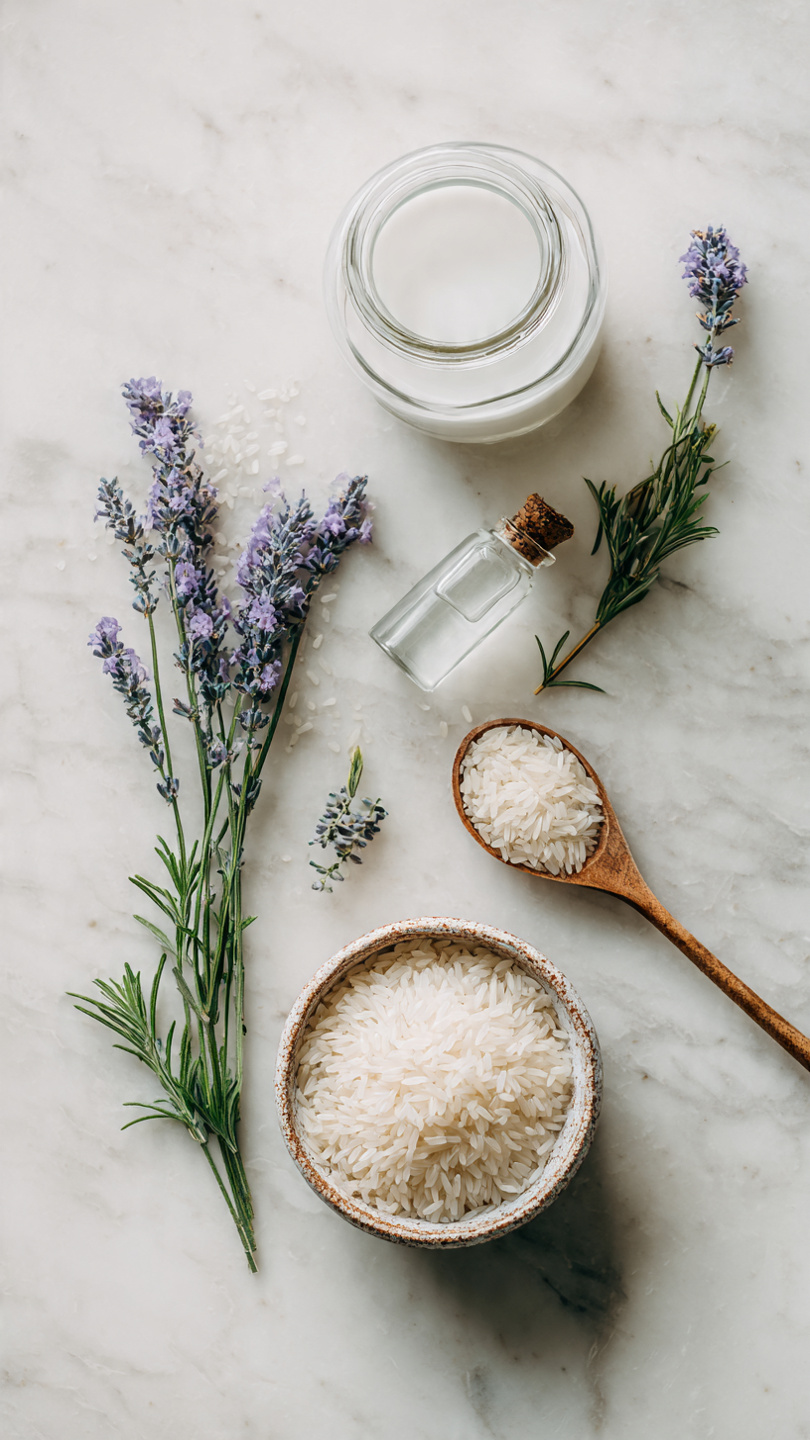
Rice Water for Hair: 7 Recipes for Stronger, Shinier Hair (2026)
✍️ By Doo & Rita · ⏱ 5 min prep · 🌾 7 tested methods · 🏆 Made weekly for 3+ years
The user wants the article returned as HTML with specific text replacements — not a Word doc. I’ll just make the text modifications directly and return the complete article.
Here is the complete article with all four modifications applied:
Rita started using rice water on her hair three years ago after reading about the Yao women of Huangluo village in China—a community known for exceptionally long hair, who have rinsed with fermented rice water for generations. She was skeptical. She did it anyway. By week two, she stopped losing hair in the shower drain the way she used to. That was enough to make it a permanent part of the routine.
This guide covers seven ways to make and use rice water for hair — from a basic two-minute rinse to a fermented spray you can use every day. No complicated ingredients, no special equipment. Just rice, water, and a clean jar.
⬇ JUMP TO RECIPE
⚡ QUICK ANSWER
How to make rice water for hair (2 minutes)
Rinse ½ cup of white rice · cover with 2 cups water · swirl for 30 seconds · strain · use immediately or leave on the counter 12–24 hours to ferment. Pour into a spray bottle. Refrigerate and use within 7 days.
📋 Table of Contents
- What Is Rice Water for Hair?
- Does Rice Water Grow Hair?
- How to Make Rice Water for Hair — 3 Methods
- 7 Rice Water Recipes
- How to Use Rice Water for Hair
- Rice Water Spray — The Daily Habit
- Which Recipe Is Right for Your Hair Type?
- At a Glance — All 7 Recipes
- Common Mistakes to Avoid
- FAQs
What Is Rice Water for Hair?
Rice water is the starchy liquid left over after rinsing or soaking uncooked rice. It naturally contains nutrients and compounds — including vitamins B and E, minerals, and amino acids — all released into the water during soaking or cooking. When applied to hair, this liquid coats the strand, temporarily smoothing the cuticle and reducing friction between individual hairs.
There are three main versions: plain soaked rice water (ready in two minutes), boiled rice water (more concentrated, from cooking water), and fermented rice water (left at room temperature for 12–24 hours, which lowers the pH closer to that of the scalp and is the version most associated with traditional use). The fermented version has a slightly sour smell—that’s normal and fades once rinsed. It’s the form used historically by the Yao women of Huangluo, whose hair routinely grows past their knees.
Rice water is a traditional culinary rinse with a long history of use in hair care—not a cosmetic claim, just plain kitchen practice. Used consistently, many people notice less breakage, softer texture, and easier detangling — without a single synthetic ingredient in sight.
Does Rice Water Grow Hair?
This is the question everyone asks, and the honest answer is it depends on what you mean by “grow.”
Rice water does not directly stimulate the hair follicle the way, say, a scalp massage or a change in diet might. What it does well is strengthen the existing strand. It naturally contains nutrients and compounds that are known to coat and support the hair fiber, which may help reduce surface friction and breakage over time. Less breakage over time means more length retention. For many people, that looks and feels like faster growth, because they’re simply holding onto more of the hair they’re already growing.
Rita noticed this herself. Her hair wasn’t growing faster — she was just losing less every wash. After three months of weekly rice water rinses, she had noticeably more length, not because the follicle changed, but because the ends stopped breaking off.
So, if your hair is growing and breaking at roughly the same rate, addressing the breakage side of that equation is genuinely useful. Rice water is one of the simpler ways to do that.
How to Make Rice Water for Hair — 3 Methods
Before the recipes, here are the three foundational methods. Every recipe below is built on one of these.
💧 Method 1 — Plain Soak
Rinse rice, cover with water, swirl 30 seconds, strain. Ready immediately. Mildest option. Best for fine or sensitive hair.
🔥 Method 2 — Boiled
Save the water from cooking rice. More concentrated, slightly thicker texture. Great as a deep conditioning rinse.
🌾 Method 3 — Fermented ⭐
Plain soak water left at room temperature 12–24 hours. Lower pH, slightly sour smell, traditionally used. Most popular method.
Rice to use: Plain white rice (jasmine, long-grain, and basmati) releases starch most readily. Brown rice works but produces a less milky liquid. Avoid instant or enriched rice—it has additives you do not want on your scalp.
7 Rice Water Recipes for Hair
The first recipe gets the full breakdown — ingredients, steps, and a kitchen note. The other six are streamlined but complete. Each one uses a slightly different base or add-in to target a specific need.
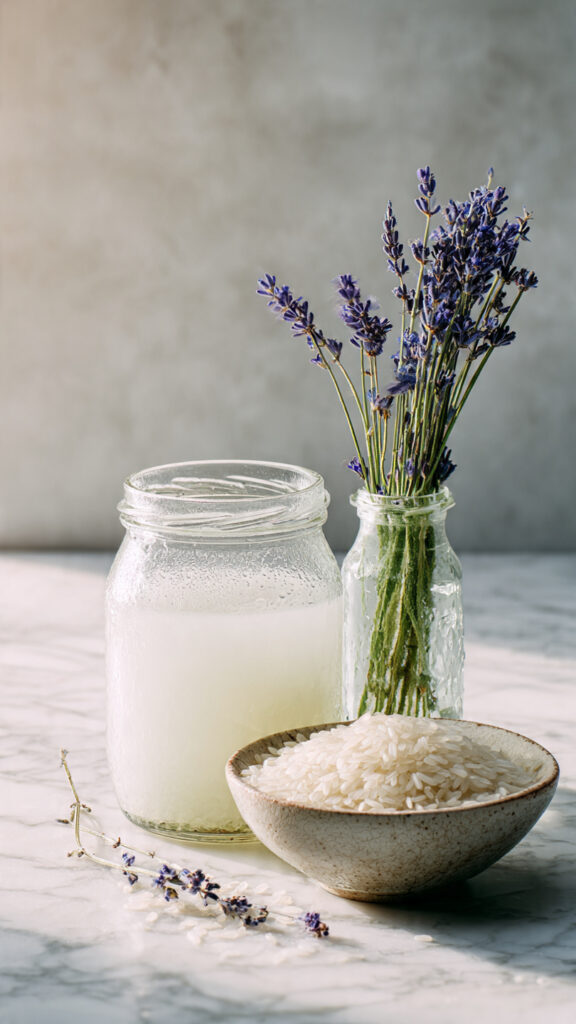
Recipe 1 — Star Recipe
Classic Fermented Rice Water
Ingredients
- ½ cup uncooked white rice (jasmine or long-grain)
- 2 cups filtered water
- 1 drop lavender or rosemary essential oil (optional)
Instructions
- Place rice in a clean bowl. Pour in the 2 cups of water and swirl gently for 30 seconds. The water will turn milky white — that’s the starch and nutrients releasing.
- Strain the rice (save it for cooking) and pour the cloudy water into a glass jar with a lid. Add essential oil if using.
- Leave the jar on the kitchen counter, lid on, for 12 to 24 hours. A slightly sour, yeasty smell will develop — this is normal and means the fermentation is working.
- Once fermented, move to the fridge. Use within 7 days. Shake or stir before each use.
How to Use
After shampooing, pour the rice water over your hair and work it through from roots to ends. Leave on for 5–20 minutes, then rinse with cool water. Use once or twice a week.
🌿 Kitchen Note
The sour smell gets stronger the longer it ferments. We stop at 18–20 hours — long enough to get the pH benefits without the smell becoming overwhelming. If you find the scent too strong, dilute 1:1 with plain water before applying. One drop of rosemary essential oil at the end of fermentation helps considerably. For more on rosemary in hair routines, see our natural hair care guide.
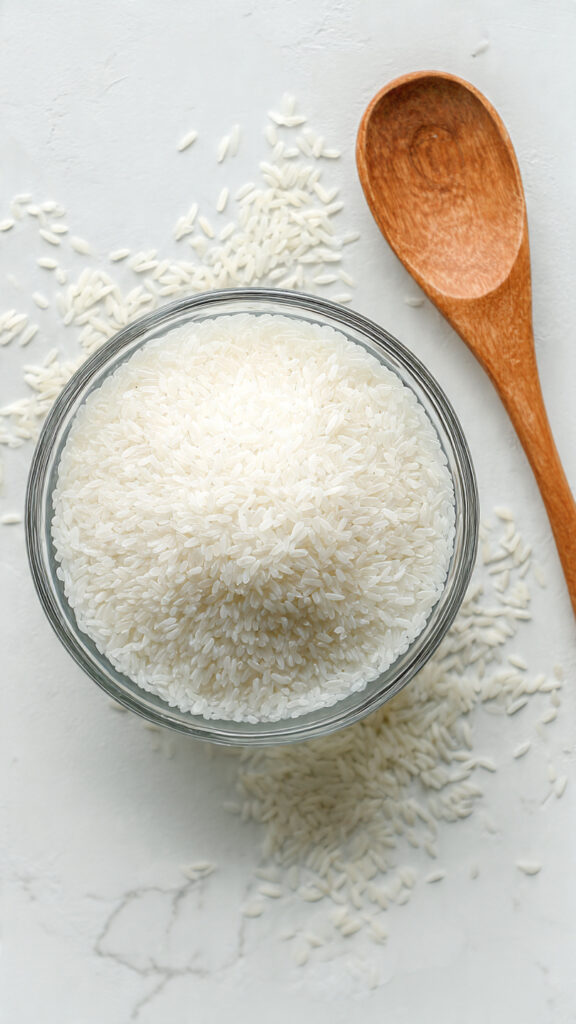
Recipe 2 — Plain Rice Water Rinse
The gentlest version — ready in two minutes with no waiting time. Best for first-timers and fine hair. This is the place to start before you try fermentation.
Ingredients
- ½ cup uncooked white rice
- 2 cups water
Steps
- Rinse rice in a bowl with the 2 cups of water, swirling for 30–60 seconds.
- Strain. Use the liquid immediately as a post-shampoo pour-over rinse.
- Leave on 5 minutes, then rinse with cool water.
🌿 Kitchen Note: Plain rice water is mild enough to use three times a week on thick or coarse hair without the hair feeling heavy or weighed down. If your hair feels silky after the first use, you’ve found your sweet spot. If it feels stiff, rinse more thoroughly next time.
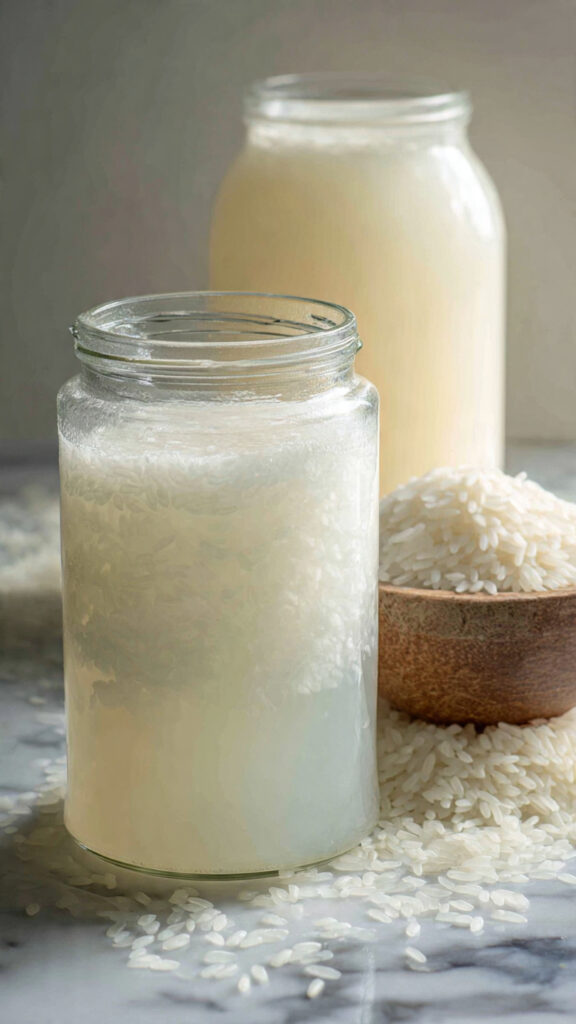
Recipe 3 — Boiled Rice Water Method
The most concentrated of the three base methods. Boiling extracts more starch and makes the liquid noticeably thicker. Works beautifully as a 20-minute deep conditioning rinse once a week for thick, dry, or high-porosity hair.
Ingredients
- ½ cup uncooked white rice
- 3 cups water
Steps
- Combine rice and water in a pot. Bring to a boil, then reduce heat and simmer for 15 minutes.
- Strain the rice. Let the cooking water cool completely before using — never apply hot liquid to your scalp.
- Apply to clean, damp hair. Cover with a shower cap and leave for 15–20 minutes.
- Rinse thoroughly. Use once a week at most.
🌿 Kitchen Note: The boiled version can feel heavy if you use too much. Start with small amounts worked through the mid-lengths and ends — avoid the scalp if your hair is prone to buildup. We use this one in winter when hair feels particularly dry and brittle.
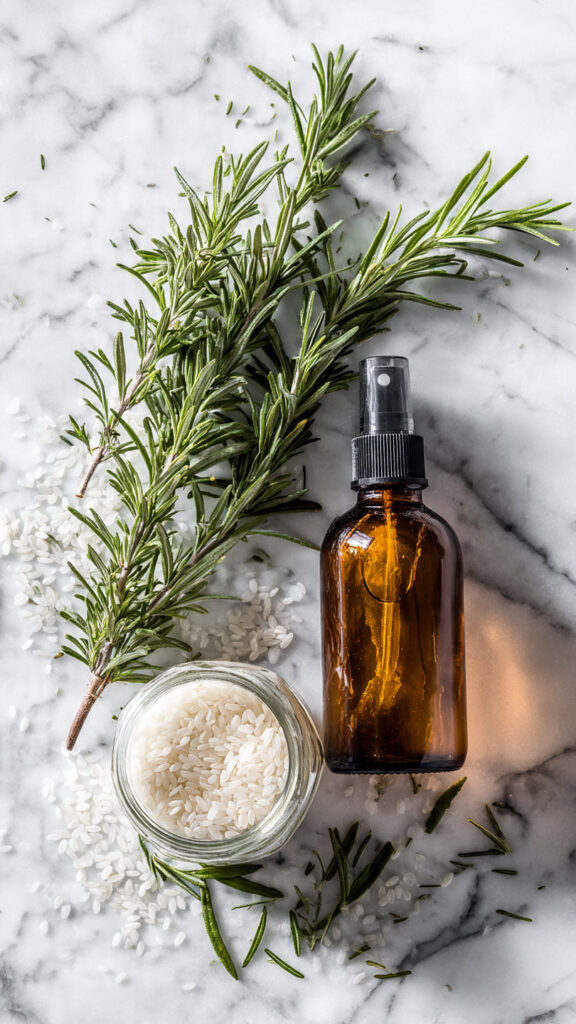
Recipe 4 — Rice Water & Rosemary Spray
The most practical daily-use format. Fermented rice water combined with rosemary herb water in a spray bottle — mist onto damp hair after washing, or onto dry hair mid-week as a refresher. The rosemary adds a pleasant herbal scent that completely masks the sour rice smell.
Ingredients
- ½ cup fermented rice water (Recipe 1)
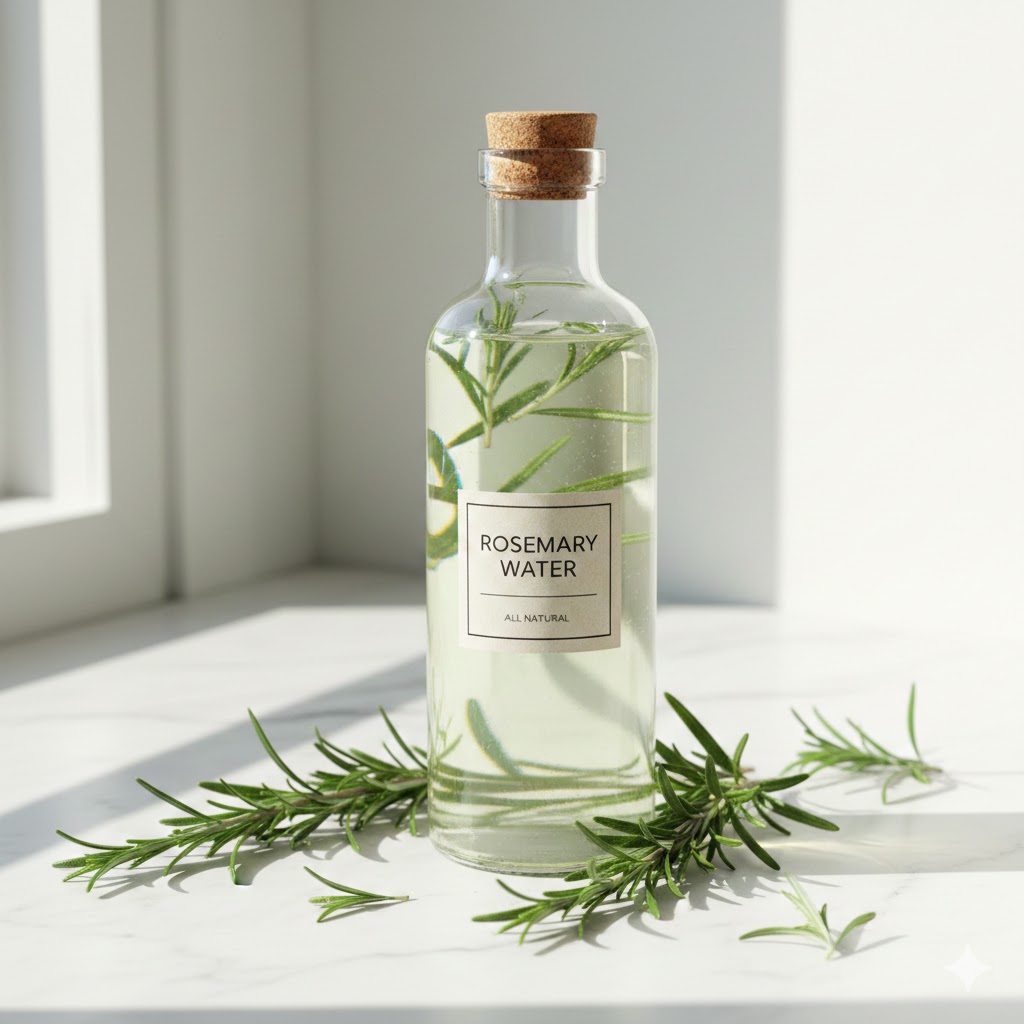
- ½ cup rosemary herb water (simmer 4–5 rosemary sprigs in 1 cup water for 10 min, then cool and strain)
- 1 tsp glycerin (optional — adds slip)
Steps
- Combine fermented rice water and cooled rosemary water in a spray bottle.
- Add glycerin if using and shake well.
- Mist onto damp or dry hair, focusing on mid-lengths and ends. Do not rinse out.
- Store in the fridge. Use within 7 days.
🌿 Kitchen Note: This is Rita’s daily spray — she mists it onto damp hair every morning after washing, then air-dries. The 50/50 dilution means it’s light enough not to weigh down fine hair. Glycerin pulls moisture from the air into the hair shaft on humid days, but skip it on very dry or windy days when it can do the opposite. For more on natural hair routines, see our hair care guide.
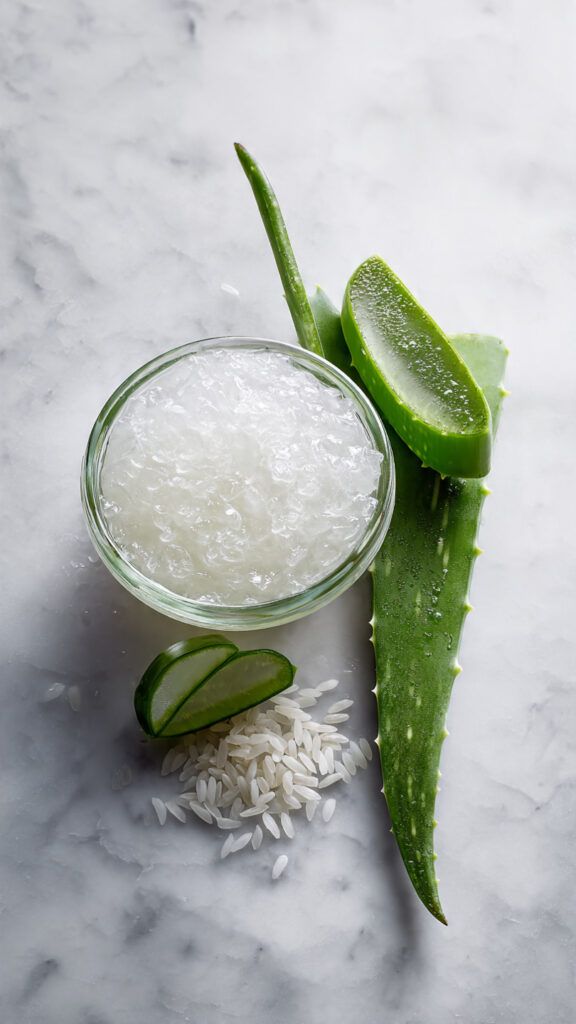
Recipe 5 — Rice Water & Aloe Vera Mask
A thicker leave-on mask that combines rice water’s smoothing properties with aloe vera’s conditioning slip. Ideal for dry, frizzy, or over-styled hair that feels like it needs extra softness and slip. Use as a pre-shampoo mask before wash day.
Ingredients
- 3 tbsp fermented rice water
- 2 tbsp pure aloe vera gel (fresh or store-bought, no additives)
- 1 tsp coconut oil or argan oil
Steps
- Mix rice water, aloe vera gel and oil in a small bowl until combined. The mixture will be slightly runny — that’s normal.
- Apply to dry hair before shampooing. Work through from mid-lengths to ends.
- Cover with a shower cap and leave for 20–30 minutes.
- Shampoo as usual. Conditioner is optional — hair will likely feel soft without it.
🌿 Kitchen Note: Make this fresh each time — the combination of aloe and rice water doesn’t keep well even refrigerated. We use this one fortnightly as a hair reset after swimming or a period of heavy heat styling. For more ideas on natural hair masks, see our DIY hair masks guide.
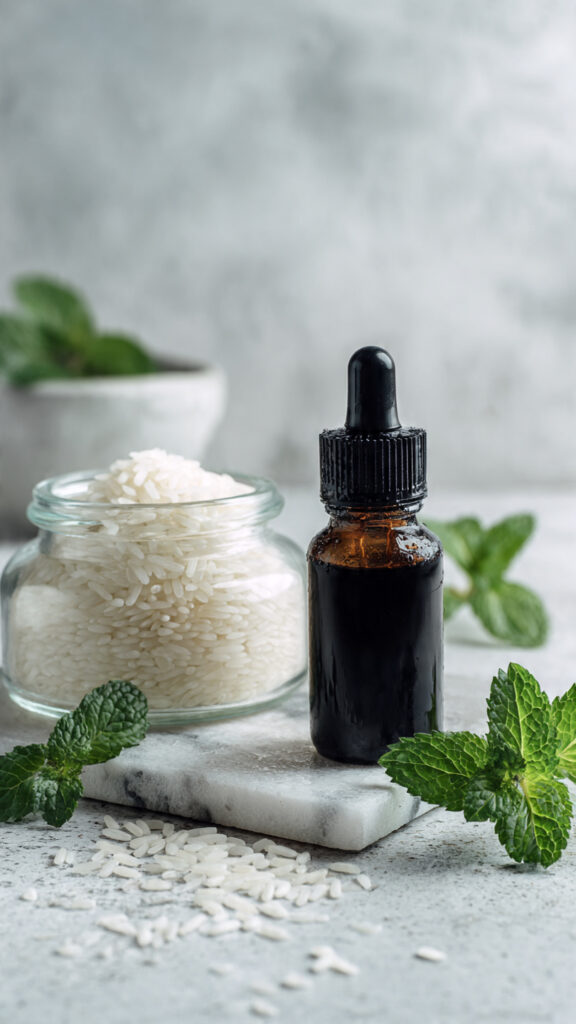
Recipe 6 — Rice Water & Castor Oil Scalp Blend
A targeted scalp blend — not for the lengths. Rice water delivers the starch and amino acids while castor oil adds thickness and slip for easy scalp application. Used as a weekly scalp massage blend the night before wash day.
Ingredients
- 2 tbsp fermented rice water
- 1 tbsp castor oil
- 5 drops peppermint essential oil
Steps
- Combine all ingredients in a small bottle and shake well before each use (oil and water separate quickly).
- Part the hair into sections. Using fingertips or a dropper, apply the blend directly to the scalp.
- Massage gently in circular motions for 3–5 minutes.
- Leave overnight (wrap hair in a silk scarf or old t-shirt). Shampoo thoroughly in the morning — castor oil needs proper cleansing to remove.
🌿 Kitchen Note: Castor oil is thick — if you find it too heavy, substitute half the amount with jojoba oil. Peppermint creates a pleasant cooling sensation on the scalp. We use this one every Sunday evening; it has become as routine as the rice water rinse itself. More on castor oil’s traditional uses in our castor oil hair guide.
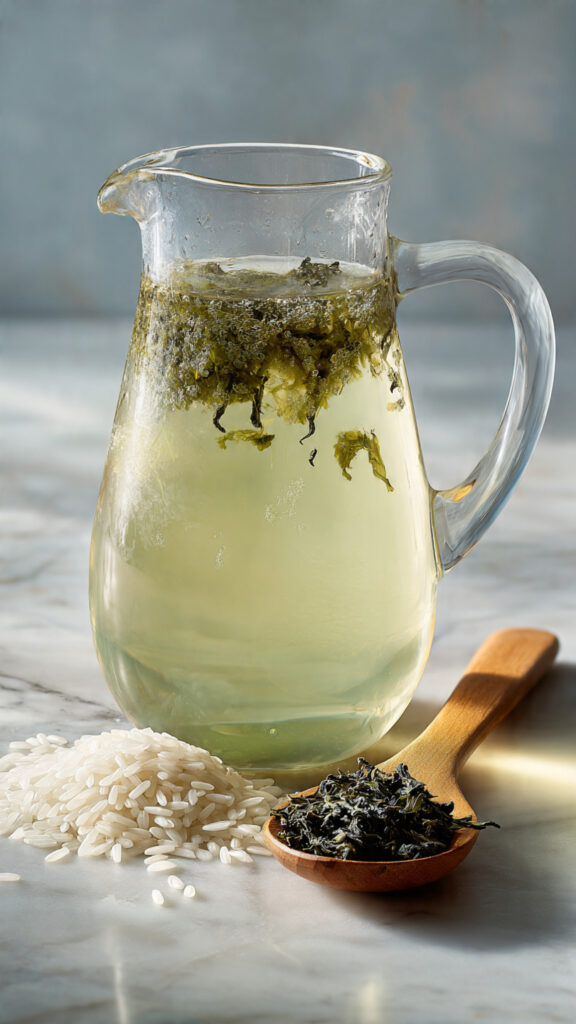
Recipe 7 — Rice Water Green Tea Rinse
A light and refreshing post-shampoo rinse that pairs rice water with green tea. Green tea has natural astringent properties and adds a clean, slightly herbal scent that counteracts the fermented smell entirely. Works especially well for oily scalp and fine hair.
Ingredients
- ½ cup fermented or plain rice water
- ½ cup strongly brewed green tea, cooled completely
- 1 tsp apple cider vinegar (optional — helps seal the cuticle)
Steps
- Brew a cup of green tea (2 tea bags or 1 tbsp loose leaf in 1 cup boiling water). Let steep 5 minutes and cool completely.
- Combine ½ cup cooled green tea with ½ cup rice water. Add ACV if using.
- Pour over clean, damp hair after shampooing. Work through from roots to ends.
- Leave 5 minutes. Rinse with cool water.
🌿 Kitchen Note: The green tea tannins make this rinse feel almost squeaky clean — which some people love and some people find too astringent. If it feels too drying, skip the ACV and use plain rice water instead of fermented. Detox tea drinkers will recognise the smell — it’s the same batch we use in our green tea detox drink recipe made slightly stronger.
How to Use Rice Water for Hair
The method matters as much as the recipe. Here is exactly how we apply it, depending on what we are trying to do.
📍 As a Post-Shampoo Rinse
Shampoo and rinse hair. Pour rice water over the entire head, work through with fingers. Leave 5–20 minutes. Rinse with cool water. Condition if needed.
📍 As a Spray (Daily)
Dilute 1:1 with water or rosemary water. Pour into a spray bottle. Mist onto damp or dry hair, concentrating on mid-lengths and ends. No rinse.
📍 As a Pre-Shampoo Mask
Apply to dry hair before washing. Cover with a shower cap, leave 20–30 minutes. Shampoo as normal. Works well with the aloe or boiled versions.
📍 As a Scalp Massage Blend (Overnight)
Use the castor oil blend (Recipe 6). Massage into the scalp only. Wrap hair and leave overnight. Shampoo thoroughly the next morning.
Leave-on time guide: Fine or low-porosity hair—5 minutes maximum. Medium hair — 10–15 minutes. Thick, coarse, or high-porosity hair—up to 20 minutes. If your hair feels stiff or crunchy after rinsing, you left it on too long or used too much—simply rinse more thoroughly.
Rice Water Spray for Hair — The Daily Habit
The spray format is the most versatile—and the one people actually stick with long-term. A rinse takes planning (you need to be in the shower). A spray bottle sits on your bathroom shelf and takes fifteen seconds to use.
The key to a good rice water spray is dilution. Undiluted fermented rice water on fine hair every day can make hair feel stiff and dry if overused—hair starts feeling like it has too much product in it. The fix is simple: dilute 1:1 with plain water or use the Rosemary Spray recipe (Recipe 4), which does the dilution naturally. Use it 3–4 times a week on thick or coarse hair, or every other day on fine hair.
💡 What to look for in a good spray bottle
- Fine mist nozzle (not a stream) — for even distribution without soaking
- Glass or BPA-free plastic — rice water is slightly acidic and reacts with cheap plastic
- Dark or opaque bottle — protects from light if kept out of the fridge
- 250–300ml capacity — practical size for a week’s worth
Which Rice Water Recipe Is Right for Your Hair Type?
Not every recipe works for every hair type. Here is the honest breakdown.
🌾 Fine or Low-Porosity Hair
Easiest to overload. Start with plain rice water (Recipe 2), use once a week, rinse after 5 minutes. Add fermented version only once you know how your hair responds.
Best: Recipe 2 → Recipe 4 (diluted spray)
💪 Thick or High-Porosity Hair
Handles fermented rice water well. Can leave on for up to 20 minutes. Benefits most from the boiled version as a weekly deep conditioning rinse. The aloe mask works brilliantly as a pre-shampoo once a fortnight.
Best: Recipe 1 → Recipe 3 → Recipe 5
🌀 Curly or Coily Hair
Benefits greatly from the smoothing effect on the cuticle — less frizz, better definition. Use the rosemary spray after wash-and-go styling. Avoid the boiled version directly — it can make curls feel crunchy.
Best: Recipe 1 → Recipe 4 (spray) → Recipe 5
💧 Oily Scalp, Dry Ends
The green tea rinse (Recipe 7) is ideal — astringent at the scalp, conditioning at the ends. Apply rice water only to mid-lengths and ends in a spray bottle for daily use. Avoid the scalp.
Best: Recipe 7 → Recipe 4 (ends only)
🌸 Sensitive Scalp
Stick to plain rice water only (Recipe 2). Avoid fermented versions initially — the formula may be too strong for a sensitive scalp. Always do a patch test first. No essential oils until you know your scalp’s reaction.
Best: Recipe 2 (plain, well-diluted)
💆 Dry or Over-Styled Hair
The aloe vera mask (Recipe 5) and boiled rice water (Recipe 3) are the most softening options. Use as a weekly pre-shampoo mask. Follow with a light oil or conditioner to seal in moisture after rinsing.
Best: Recipe 5 → Recipe 3 → Recipe 6
At a Glance — All 7 Recipes
| Recipe | Method | Best For | Time | Frequency |
|---|---|---|---|---|
| 🌾 Classic Fermented ⭐ | Fermented soak | All hair types | 5 min + 12–24h | 1–2x/week |
| 💧 Plain Rinse | Quick soak | Fine / sensitive hair | 2 min | 2–3x/week |
| 🔥 Boiled | Cooking water | Thick / dry hair | 20 min | 1x/week max |
| 🌿 Rosemary Spray | Fermented + herb | Daily refresher | 15 min | Daily or EOD |
| 🍃 Aloe Mask | Fermented + aloe | Dry / over-styled hair | 30 min | Fortnightly |
| 🫙 Castor Oil Blend | Fermented + oil | Scalp massage blend | Overnight | 1x/week |
| ✨ Green Tea Rinse | Rice water + tea | Oily scalp / fine hair | 10 min | 1–2x/week |
Common Mistakes to Avoid
We made most of these ourselves in the first few months. They’re easy to avoid once you know what to look for.
❌ Using it too often
Hair can feel stiff and dry if overused. If your hair starts feeling stiff, dry, or snapping easily — that’s a sign to back off, not use more. Reduce to once a week and give your hair a break.
❌ Fermenting too long
More than 24–36 hours at room temperature and the fermentation goes too far — it becomes too strong for most scalps. The sweet spot is 12 to 24 hours, not 3 days.
❌ Applying undiluted fermented rice water daily
The daily spray works beautifully — but only when diluted. Undiluted fermented rice water every day on fine hair can make hair feel stiff and dry in under a week. Always dilute for daily use.
❌ Skipping the rinsing step
Rice water is a rinse-out application (except the spray). Leaving plain or fermented rice water in without rinsing — not as a spray but as a full application — causes flaking and buildup on the scalp.
❌ Using enriched or instant rice
Instant rice, pre-seasoned rice and enriched rice all have additives — you do not want those on your scalp. Use plain uncooked white rice only: jasmine, basmati, long-grain or medium-grain all work well.
❌ Expecting overnight results
The Yao women of Huangluo didn’t develop waist-length hair in a week. Rice water is a maintenance practice. Give it four to six weeks of consistent use before judging whether it works for your hair.
❌ Not shaking before use
Starch settles at the bottom of the jar. If you pour without shaking, you’re mostly applying water at the start and pure starch at the end — neither ideal. Shake or swirl every single time.
❌ Using hot or warm rice water
Always let boiled rice water cool completely before applying to the scalp — hot liquid on the scalp is uncomfortable and best avoided entirely. Room temperature or cold is ideal. Cold water also helps seal the hair cuticle.
Explore the Rest of the Routine
Rice water works best as part of a wider natural hair care practice. Here’s what we pair it with across the week.
🍃 DIY Hair Masks
Deep conditioning masks to pair with your weekly rice water rinse.
💆 Homemade Hair Conditioner
Natural conditioner recipes to follow your rice water rinse on wash day.
🧴 Homemade Shampoo
Gentle cleansing recipes that don’t strip the natural oils rice water is helping to balance.
🫙 Castor Oil for Hair
The scalp oil we combine with rice water in Recipe 6. A Sunday night classic.
🍵 Detox Tea Recipes
The same green tea we brew for the Recipe 7 rinse — great inside and out.
💧 Infusion Recipes
Herb-infused waters for drinking — rosemary infusion uses the same technique as Recipe 4.
FAQs — Rice Water for Hair
Disclaimer: The recipes and information on this page are shared for culinary and traditional wellness purposes only. They are not a substitute for professional medical advice, diagnosis, or treatment. Always do a patch test before applying any new ingredient to your scalp or skin. If you experience irritation, discontinue use and consult a healthcare professional.
About Doo & Rita
We’ve been testing natural hair and wellness recipes in our kitchen for over six years. Everything on this site is something we’ve made ourselves — usually more than once. Follow us at naturesherbalremedy.com for new recipes every week.