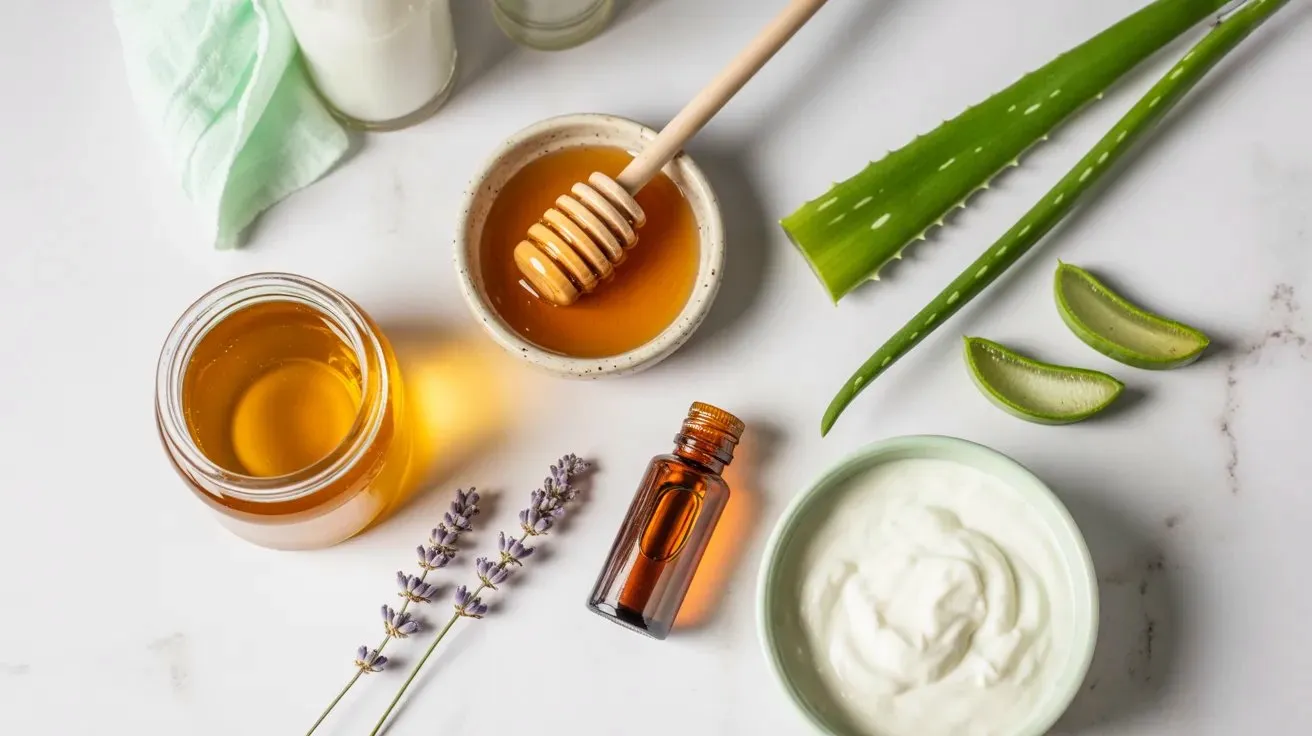
By Doo & Rita – 15 min read – tested on dry, frizzy & damaged hair – 4+ years personal use
Last updated: May 2026
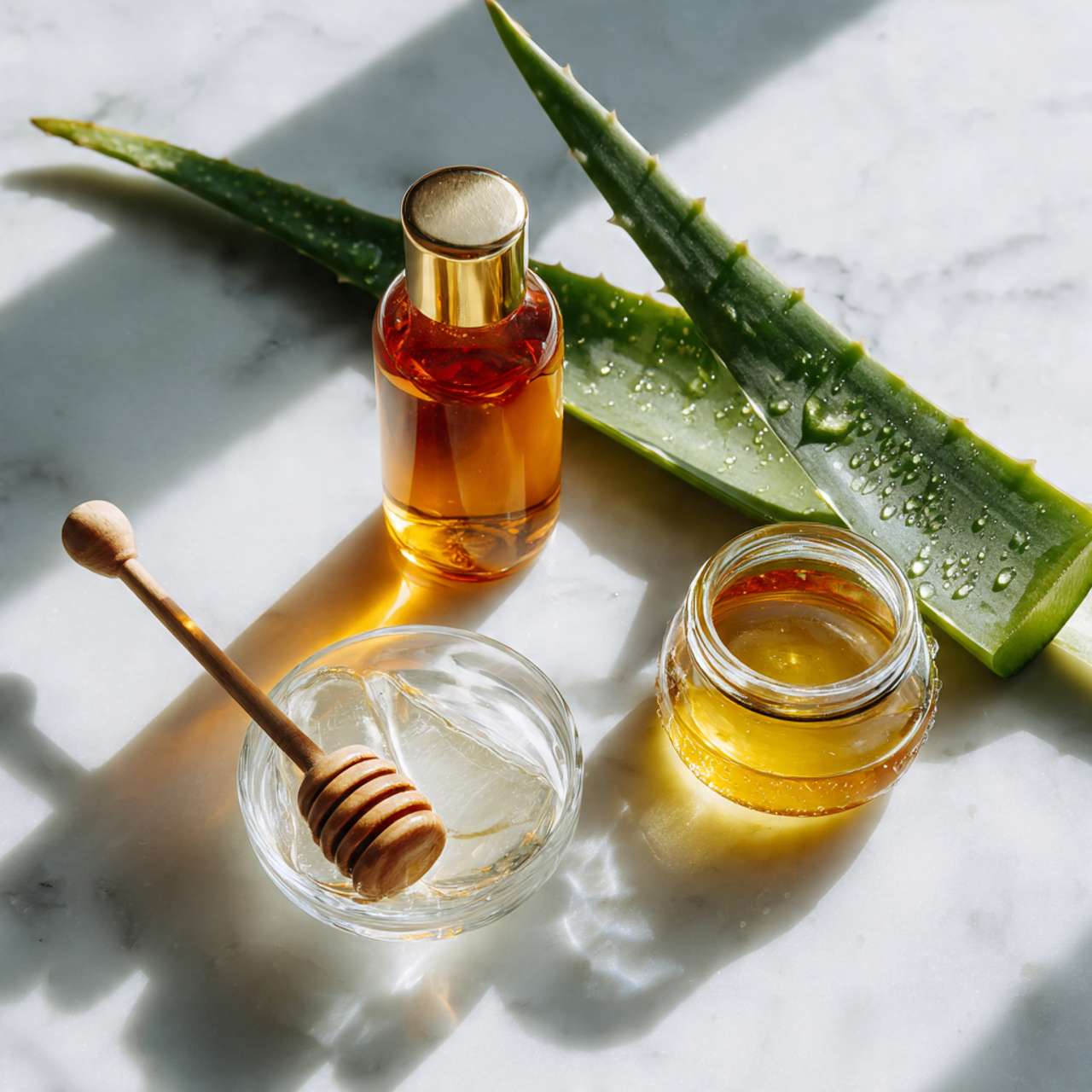
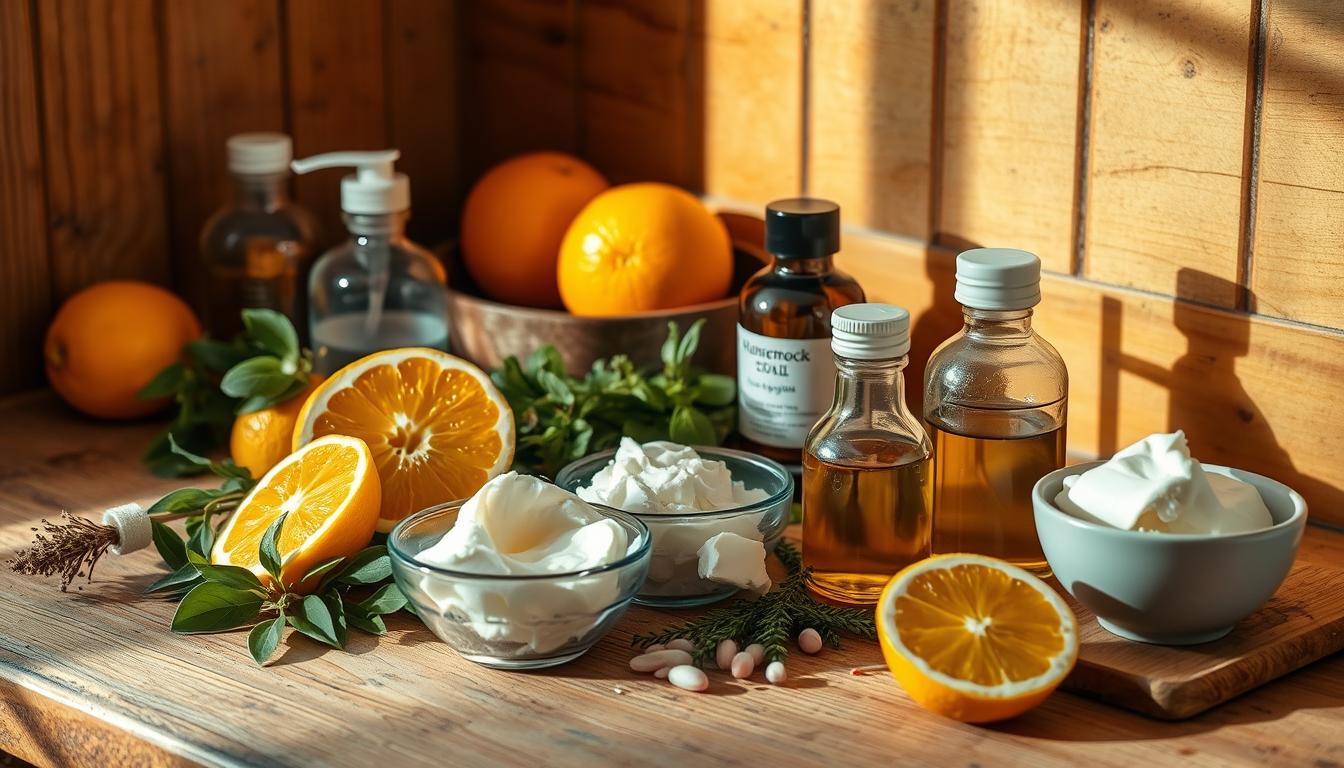
The aloe vera hair mask was the first natural hair ritual Rita ever made at home—and the one she’s kept coming back to for over four years. She started with a simple aloe and coconut oil blend after a particularly harsh winter left her ends brittle and her scalp tight. Within three weeks of weekly use, both had measurably improved. The ends were softer. The scalp stopped feeling reactive. The breakage was reduced.
What started as a single experiment became a proper investigation: What does aloe vera actually do for hair and scalp? Which ingredients pair best with it for different hair concerns? How do you make an aloe vera hair mask at home that actually works, and how long do you leave it on? This guide covers everything we found, plus five tested DIY recipes, the honest mistakes that explain why results are inconsistent, and a clear answer to which hair types benefit most.
Yes — for most hair and scalp concerns caused by dryness, damage, or imbalance. Here’s what matters before you start:
①Pure aloe vera gel fresh leaf or pure bottled
②20–45 min leave-on the window that works
③Once a week consistency beats intensity
④3–4 weeks for results cumulative, not instant
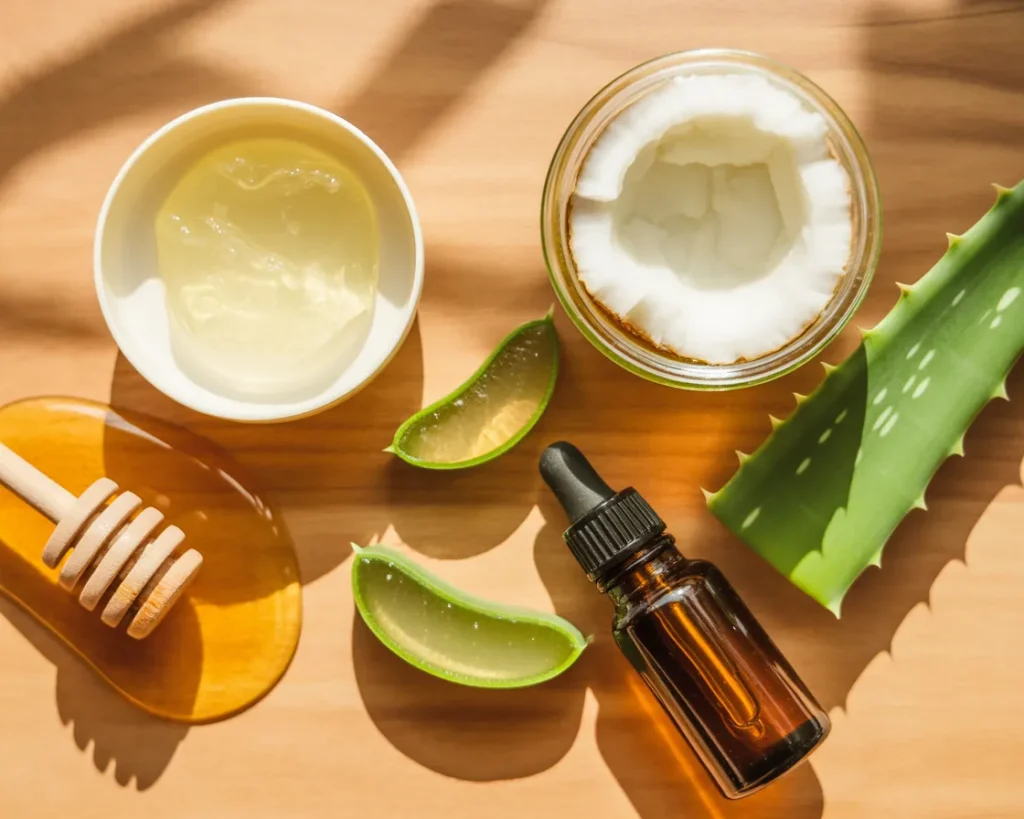
Fastest start: Mix 3 tbsp pure aloe vera gel + 1 tbsp coconut oil → apply to damp hair from roots to ends → cover with shower cap → leave 30 minutes → rinse thoroughly → shampoo once.
An aloe vera hair mask is a leave-on hair care formula applied to the hair and scalp, using aloe vera gel (Aloe barbadensis miller) as its primary active ingredient. Aloe vera’s high water content (around 99%), combined with its polysaccharides, vitamins (A, C, E, B12) and enzymes, makes it one of the most versatile natural conditioning agents available for hair care.
A hair mask with aloe vera works by delivering moisture directly into the hair shaft, supporting scalp balance, and temporarily sealing the cuticle for smoother, shinier results. When paired with complementary ingredients — oils, proteins, or botanicals — it addresses a wide range of hair concerns from dryness and breakage to scalp imbalance and frizz.
Key facts: Suitable for all hair types · 20–45 min leave-on · Results in 3–4 weeks of weekly use · Fresh aloe performs better than formulas with additives.
What Aloe Vera Actually Does for Hair — And Why It Works
An aloe vera hair mask works at multiple levels simultaneously, which is what makes it one of the most versatile natural hair care formulas available. Most conventional hair masks target either moisture or protein, but aloe vera naturally bridges both while also addressing the scalp environment in a way that most conditioning masks don’t reach.
Aloe vera gel is approximately 99% water — but it’s the remaining 1% that does the most work. Proteolytic enzymes in aloe vera remove dead skin cells from the scalp, creating a cleaner environment for the follicle. Its polysaccharides — long-chain sugars — form a lightweight film along the hair shaft that temporarily seals the cuticle, reducing frizz and improving shine. Vitamins A, C, and E support the scalp’s natural renewal process, and the plant’s natural pH (around 4.5) is close to the hair’s own ideal—which is why aloe vera rinses tend to leave hair feeling smooth rather than stripped.
A study published in the Journal of Chemical and Pharmaceutical Research (2015) confirmed aloe vera’s conditioning properties on hair, noting that its mucopolysaccharide content allows it to bind moisture to the hair cortex—the layer beneath the cuticle. This is what separates a genuine moisturizing formula from a surface-coating one: aloe vera penetrates rather than just coats, which is why the results are more lasting than many synthetic conditioners. If you’re looking to carry that same balance into your daily cleansing step, our aloe vera shampoo guide covers exactly how to use aloe vera as a daily cleanser — not just a weekly mask.
💧~99% water
Aloe vera’s composition — delivers deep hydration to the cortex, not just the surface.
🔬Proteolytic enzymes
Remove dead scalp cells and support a cleaner, more balanced follicle environment.
✨Cuticle sealing
Polysaccharides temporarily smooth and seal the cuticle — reducing frizz and boosting shine.
⚖️pH ~4.5
Close to hair’s natural pH — supports balance rather than disrupting it.
Fresh Aloe Leaf vs Bottled Gel—Which One to Use
This is the first question to settle before making any aloe vera hair masks. The answer matters because the two versions perform differently — and using the wrong one can explain why results are underwhelming.
Feature
Fresh Aloe Leaf
Pure Bottled Gel (99%+)
Commercial Gel (with additives)
Active enzyme content
✓ Highest
✓ Good
~ Variable
Shelf life once opened
1–2 days (fridge)
Several months (fridge)
As per label
Additives / fillers
None
Minimal — check label
Often contains alcohol, fragrance, colourants
Best used for
Immediate use — scalp masks, fresh formulas
Regular weekly masks — practical and consistent
Not recommended for DIY hair masks
Our verdict
⭐ Best results
✓ Reliable choice
✗ Avoid for masks
🌱 Fresh Aloe Leaf
Active enzymes✓ Highest
Shelf life1–2 days (fridge)
AdditivesNone
Best forImmediate use, fresh masks
Verdict⭐ Best results
🧴 Pure Bottled Gel (99%+)
Active enzymes✓ Good
Shelf lifeSeveral months (fridge)
AdditivesMinimal — check label
Best forRegular weekly masks
Verdict✓ Reliable choice
⚠️ Commercial Gel (with additives)
Active enzymes~ Variable
Shelf lifeAs per label
AdditivesAlcohol, fragrance, colourants
Best forNot recommended for masks
Verdict✗ Avoid for masks
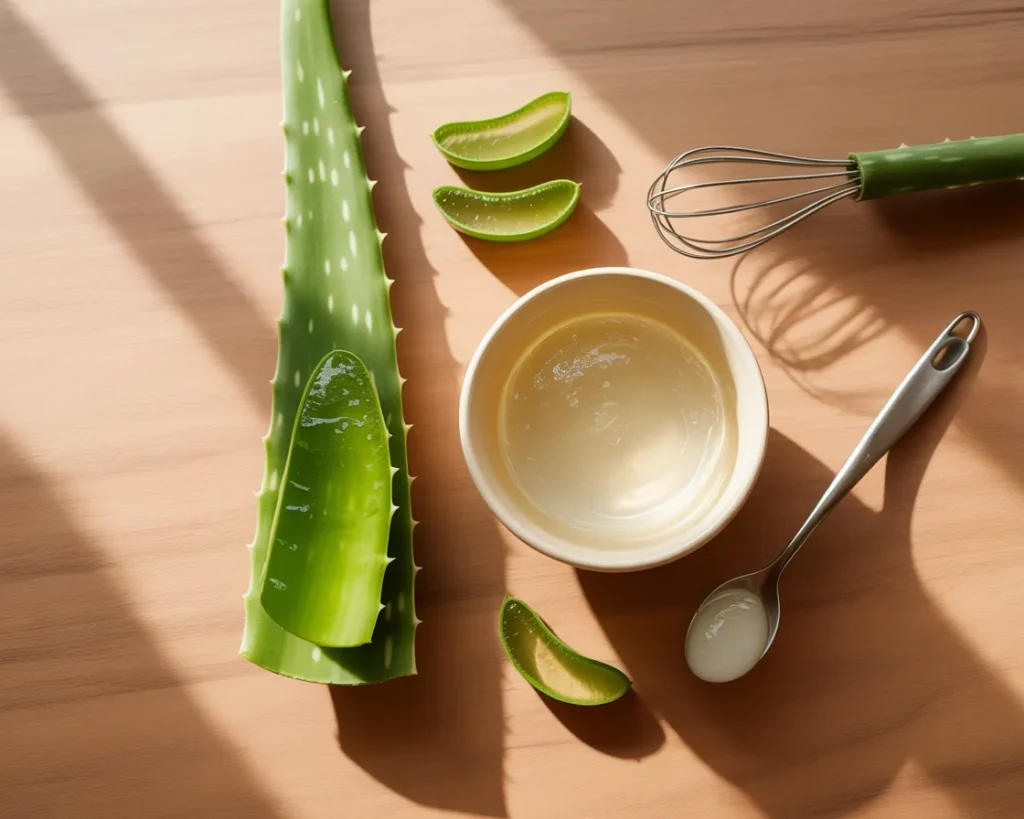
💡 How to extract fresh aloe vera gel: Cut a mature outer leaf close to the base. Stand it upright for 10 minutes to let the yellow latex drain (this is the part you don’t want on your hair or skin). Slice off both flat sides, scoop out the clear gel with a spoon, blend until smooth, and use immediately. Store any remainder in the fridge for up to 2 days. See our complete natural hair mask guide for more on using fresh plant ingredients. And because the same aloe gel works beautifully on skin too, our natural skincare guide covers how to extend your aloe routine beyond hair care.
Which Hair Types Benefit Most from an Aloe Vera Hair Mask
Aloe vera is one of the few natural ingredients genuinely suited to all hair types—but how you use it and what you pair it with change significantly depending on your hair’s specific needs.
💡 Looking for more natural hair care routines? Our complete natural hair care guide covers the full range of plant-based approaches—from scalp masks to shine-boosting rinses—all in one place.
How to Make an Aloe Vera Hair Mask — Step by Step
The basic process for how to make an aloe vera hair mask is the same across all five recipes in this guide. What changes is the additional ingredient — the oil, protein, or botanical that you add to target your specific hair concern. Master the base method once, and every recipe that follows becomes straightforward.
✦ Optional add-in depending on concern (honey, egg, essential oil)
✦ A small bowl + fork or mini whisk
📋 HOW TO MAKE IT
1Measure your aloe vera gel into a small bowl. If using a fresh leaf, extract and blend the gel first. If using a bottle, ensure it reads 99%+ aloe with no alcohol or synthetic additives in the ingredient list.
2Add your chosen oil. If it’s solid at room temperature (coconut oil, shea butter), melt it gently first — either in a warm water bath or 10 seconds in a microwave. Never add hot oil directly to the aloe gel.
3Add any optional ingredients and mix well. Whisk or stir until fully combined. If using honey, the mixture will be sticky — this is normal and washes out easily. If using egg, whisk separately first then combine.
4Use immediately. Aloe vera begins to oxidise once extracted or mixed. All five recipes below should be used within 30 minutes of mixing — do not store mixed masks for later use.
🌿 From our routine: Rita always makes her aloe vera mask while her hair is already damp from a pre-wash rinse. Damp hair absorbs the mask more evenly than dry hair — and it makes the mixing-to-applying process feel like one continuous step rather than two. The mask goes on within minutes of mixing, which is how you get the freshest active compounds on your hair.
How to Apply an Aloe Vera Hair Mask Properly
Knowing how to make an aloe vera hair mask is only half the process. Application technique determines whether the active compounds actually reach the hair and scalp—or just sit on the surface and wash off without doing much. This is the step most people rush, and it’s where most of the results are lost.
🚿 The Correct Application Method
Section by section · Scalp to ends · The 30-minute sit that makes it work
1Start with damp, detangled hair. Wash or rinse your hair first, or simply dampen it with a spray bottle. Damp hair is more porous than dry hair — it absorbs the mask ingredients significantly better. Detangle with a wide-tooth comb before applying.
2Divide your hair into 4 sections. This is the most commonly skipped step — and it’s what determines whether the mask reaches every strand or just the outer layer. Use clips to hold sections out of the way as you work through each one.
3Apply to scalp first, then lengths, then ends. Use fingertips to work the mask into the scalp with gentle circular motions. Then draw the mixture through the lengths with your hands. Give the ends — the oldest and most damaged part — an extra generous application.
4Cover with a shower cap and apply gentle heat. A shower cap traps the body heat that opens the cuticle and helps the mask absorb. For an even better result, wrap a warm towel over the cap for the first 10 minutes. Do not use a blow dryer directly — indirect warmth only.
5Leave on for 20–45 minutes — then rinse with cool water. See the cheat sheet at the top for specific timings per recipe. Rinse thoroughly until the water runs clear. Follow with a gentle shampoo if you’ve used oil-heavy recipes.
🚿 From our routine: Rita applies her aloe mask in sections while listening to a podcast — the sectioning takes about three minutes extra but the difference in coverage is immediately noticeable when rinsing. The ends, which used to feel dry and rough after rinsing, now feel coated and soft. The shower cap plus warm towel combination for the first ten minutes is the single biggest improvement she made to her technique.
5 DIY Aloe Vera Hair Mask Recipes — One for Every Concern
Each of these five recipes uses pure aloe vera gel as the base and adds one or two supporting ingredients to target a specific hair concern. All five have been tested in our own bathroom. Quantities are for shoulder-length hair—adjust proportionally for shorter or longer hair.
Our most-used recipe · Deep moisture · Best for dry, brittle or heat-damaged hair
⏱ 5 min prep⏳ 30–45 min
Coconut oil’s fatty acid structure allows it to penetrate the hair cortex — unlike most oils that can only coat the cuticle surface. Combined with aloe vera’s moisture-binding properties, this is the most comprehensive natural formula for dry or damaged hair. This is also the classic aloe vera and coconut oil for hair combination that underpins most DIY conditioning routines.
🌿 INGREDIENTS
✦ 4 tbsp pure aloe vera gel
✦ 2 tbsp virgin coconut oil (melted)
✦ 1 tsp honey (optional — adds extra moisture)
✦ 3 drops lavender essential oil (optional — for scalp)
📋 INSTRUCTIONS
Melt coconut oil gently. Allow to cool slightly.
Whisk together aloe gel, coconut oil and honey.
Add lavender essential oil if using.
Apply to damp hair using the method above. Cover. Leave 30–45 min. Rinse then shampoo once.
🌿 From our routine: This is the mask Rita used for the first time when her ends were visibly brittle after a harsh winter. By week three of weekly use, her stylist noticed the improvement before Rita mentioned she’d started a new routine. The honey addition makes the texture noticeably thicker and more coating — ideal if your ends are the most damaged part.
Frizz control + shine · Lightweight formula · Works on all hair types
⏱ 5 min prep⏳ 20–30 min
Argan oil is lightweight enough not to weigh down the hair — unlike coconut oil, it doesn’t penetrate the cortex but instead forms a silky coat over the cuticle that reflects light and resists humidity. Combined with aloe’s cuticle-smoothing properties and honey’s humectant action, this is the go-to formula for frizzy hair or hair that lacks shine. Also a strong choice for colour-treated hair, as argan oil is known to support colour longevity.
🌿 INGREDIENTS
✦ 3 tbsp pure aloe vera gel
✦ 1 tbsp argan oil
✦ 1 tsp raw honey
✦ 1 tsp apple cider vinegar (optional — boosts shine)
📋 INSTRUCTIONS
Combine all ingredients in a bowl and whisk well.
Apply to damp hair — focus on mid-lengths and ends for frizz.
Cover with shower cap. Leave 20–30 min.
Rinse with cool water. Shampoo once if needed.
✨ From our routine: Rita uses this formula before events when she wants her hair to look its best. The difference in shine is visible even on the day of the mask — more so than with any other recipe. The ACV addition is optional but if your hair tends to look dull in winter, it makes a noticeable difference. Read more about ACV’s hair benefits in our apple cider vinegar for hair guide.
Scalp + hair in one step · Balancing + conditioning · Use 2x per week for scalp concerns
⏱ 5 min prep⏳ 30 min
This recipe combines three complementary ingredients: aloe vera for scalp moisture and pH balance, tea tree for purifying properties, and rosemary for scalp circulation. It is the natural bridge between a hair mask and a scalp care formula — and the recipe we recommend to anyone also using a tea tree shampoo for scalp balance who wants to extend the routine into their conditioning step.
Add both essential oils. Add rosemary water if using.
Mix well. Apply to scalp first with circular motions, then lengths.
Leave 30 min with shower cap. Rinse thoroughly, then shampoo.
🌿 From our routine: Doo uses this mask on weeks when his scalp feels tight or reactive — alternating with his tea tree shampoo routine. The rosemary water addition turns it from a simple mask into something noticeably more active on the scalp — the circulation effect is tangible within minutes of application.
Protein + moisture balance · Reduces breakage · For weak, over-processed hair
⏱ 5 min prep⏳ 20–25 min only
Egg white delivers a temporary protein boost that helps strengthen the hair shaft from within — useful for hair that snaps or sheds excessively. Olive oil adds moisture to counterbalance the drying effect that too much protein alone can cause. Aloe binds everything together and adds its own set of vitamins and enzymes. Important: do not exceed 25 minutes with this mask — extended protein exposure can make hair feel stiff and brittle.
🌿 INGREDIENTS
✦ 3 tbsp pure aloe vera gel
✦ 1 whole egg (or 2 egg whites for oily hair)
✦ 1 tbsp extra virgin olive oil
✦ 1 tsp honey
📋 INSTRUCTIONS
Whisk the egg separately until fully beaten.
Combine with aloe gel, olive oil and honey.
Apply quickly to damp hair. Do not use heat — egg scrambles above 60°C.
Leave exactly 20–25 min. Rinse with cool water only. Shampoo twice.
⚠ Critical notes for egg masks: Always rinse with cool water — never warm or hot, or the egg will cook in your hair. Do not leave on longer than 25 minutes. Do not use heat (shower cap with warm towel is fine, hairdryer is not). Protein masks should not be used more than once a week — over-proteining hair makes it brittle.
Curly and coily hair needs both moisture and sealing — a two-step process that this recipe delivers simultaneously. Aloe vera hydrates and defines curl pattern. Shea butter seals in that moisture and provides slip for detangling. Castor oil’s thick, coating texture gives the curl cluster definition and helps reduce the shrinkage that frustrates many with naturally textured hair. This is our most generous-quantity recipe — curly hair needs more product to reach every strand.
🌿 INGREDIENTS
✦ 5 tbsp pure aloe vera gel
✦ 2 tbsp shea butter (melted)
✦ 1 tbsp castor oil
✦ 1 tbsp coconut oil (melted)
✦ 5 drops peppermint essential oil (optional)
📋 INSTRUCTIONS
Melt shea butter and coconut oil together gently. Cool to room temperature.
Whisk together with aloe gel, castor oil and peppermint if using.
Apply generously section by section to damp, detangled hair.
Cover. Leave 45–60 min with gentle warmth. Rinse well. Shampoo twice.
💜 From our experience: Several curly-haired readers developed this recipe with us over multiple iterations. The castor oil quantity can feel heavy the first time — some prefer to start with half a tablespoon and build up. After rinsing, don’t towel-dry aggressively; scrunch with a microfibre towel or cotton t-shirt to preserve the curl definition the mask creates. See our full natural hair masks guide for more curl-specific recipes.
What Results to Expect — The Honest Timeline
FIRST USE
Immediate softness
Hair feels softer and more manageable straight away. The cuticle-smoothing effect is noticeable from the first application — especially on frizzy or dry ends.
WEEK 2–3
Sustained improvement
Hair holds moisture longer between washes. Frizz reduces. Scalp feels more balanced. The cumulative effect of weekly use becomes visible.
WEEK 4–6
Structural improvement
Breakage reduces. Shine improves. For scalp-focused recipes, flaking and tightness are noticeably better. Others comment on hair condition without prompting.
WEEK 8+
Maintenance phase
Switch to every two weeks for maintenance. Return to weekly if seasonal dryness or damage returns. The results are cumulative — they continue improving with consistent use.
⚠ If no improvement after 4 weeks: Check the mistakes section below — the most common reasons are using a commercial gel with additives instead of pure aloe, not leaving the mask on long enough, or applying to dry rather than damp hair. If breakage or scalp concerns are persistent and severe, professional guidance is the right step.
7 Mistakes That Explain Why Your Aloe Vera Hair Mask Isn’t Working
❌ Using Gel With Additives
Commercial aloe vera gels containing alcohol, artificial fragrance, or green colourants can dry out the hair rather than condition it. Always check the ingredient list — pure aloe should be the first or only ingredient. If the gel is bright green and smells like perfume, set it aside for sunburn relief and buy a 99%+ formula for hair use.
❌ Applying to Dry Hair
Dry hair has a closed cuticle that resists absorption. Damp hair has an open, porous cuticle that draws in moisture actively. Applying any hair mask to bone-dry hair reduces its effectiveness by roughly half. Always pre-dampen with a spray bottle or light rinse before applying.
❌ Not Sectioning the Hair
Applying a mask to unsectioned hair means the outer layer gets all the product and the inner layers — where breakage often originates — get very little. Four sections takes three minutes and guarantees even coverage. This alone can double the visible results.
❌ Rinsing Too Early
Twenty minutes is the minimum for any meaningful penetration of the hair cortex. Most people leave masks on for 5–10 minutes and wonder why they don’t see results. Set a timer. Use the time productively. The mask cannot do its work if it’s on the hair for less time than it takes to brew a cup of tea.
❌ Skipping the Shower Cap
Body heat trapped by the shower cap gently opens the cuticle and drives ingredients deeper into the hair shaft. Without it, the mask sits on a closed cuticle and absorbs minimally. A shower cap costs almost nothing and makes a measurable difference to how the hair feels after rinsing.
❌ Using Hot Water to Rinse
Hot water opens the cuticle at the rinsing stage — reversing the sealing effect the mask just created. Always rinse aloe vera masks with cool water. The cool rinse seals the cuticle closed with all the moisture locked inside. This single step change makes hair feel notably smoother immediately after rinsing.
❌ Using It Inconsistently
One aloe vera hair mask followed by two months of nothing produces almost no lasting result. The benefits of aloe vera are cumulative — they build with each application. Weekly use for six weeks beats a single intensive application every time. Consistency is the most important variable in any natural hair care routine.
📚 Sources & Scientific References
🔬 Aloe vera — conditioning properties on hair Journal of Chemical and Pharmaceutical Research · 2015
Surjushe, A., Vasani, R., & Saple, D.G. (2008). Aloe vera: A short review. Indian Journal of Dermatology, 53(4), 163–166. — View on PubMed ↗
This review documents aloe vera’s composition and its properties relevant to skin and hair: the mucopolysaccharide content that binds moisture to the hair cortex, the proteolytic enzymes that support scalp cell renewal, and the vitamins A, C, E and B12 that support the hair follicle environment. The review confirms that aloe’s conditioning character is attributable to its unique combination of water content and polysaccharide structure.
💡 Context: a review article — not a randomised trial. Provides the compositional basis for aloe vera’s hair conditioning properties.
🔬 Coconut oil — penetration into the hair shaft Journal of Cosmetic Science · 2003
Rele, A.S., & Mohile, R.B. (2003). Effect of mineral oil, sunflower oil, and coconut oil on prevention of hair damage. Journal of Cosmetic Science, 54(2), 175–192. — View on PubMed ↗
This study compared the penetration of three oils into the hair shaft. Coconut oil — the key pairing ingredient in Recipe 1 — was the only one to significantly penetrate the cortex rather than simply coat the cuticle. This is the scientific basis for using it specifically for dry and damaged hair rather than as a general-purpose hair oil. Mineral oil showed no penetration. Sunflower oil showed partial results.
💡 Context: a laboratory study. Provides the rationale for choosing coconut oil specifically for dry/damaged hair concerns in Recipe 1.
🔬 Hair pH and cuticle behaviour International Journal of Trichology · 2014
Dias, M.F.R.G. (2015). Hair cosmetics: an overview. International Journal of Trichology, 7(1), 2–15. — View on PubMed ↗
This review explains the role of pH in hair cuticle behaviour — confirming that acidic rinses (like aloe vera at pH ~4.5 and apple cider vinegar rinses) close the cuticle and improve smoothness, while alkaline rinses open it. This is the scientific explanation for why aloe vera masks followed by a cool water rinse produce noticeably smoother results than warm water rinsing of alkaline conditioners.
💡 Context: a review article. Provides the mechanism behind aloe vera’s cuticle-smoothing effect and the ACV addition in Recipe 2.
Frequently Asked Questions
❓ Does an aloe vera hair mask actually work?
Yes — for most common hair concerns including dryness, frizz, breakage, and scalp imbalance. Aloe vera’s mucopolysaccharides bind moisture to the hair cortex (not just the surface), its proteolytic enzymes support scalp renewal, and its pH of ~4.5 closes the cuticle for smoother results. The key is using pure aloe gel (fresh or 99%+ bottled), leaving it on for at least 20 minutes, and applying weekly for 4–6 weeks to see cumulative results.
❓ How do you make an aloe vera hair mask at home?
Combine 3–4 tablespoons of pure aloe vera gel with 1–2 tablespoons of a carrier oil suited to your hair concern (coconut oil for dry hair, argan oil for frizz, jojoba oil for scalp balance). Mix well and apply immediately to damp, sectioned hair. Cover with a shower cap, leave for 20–45 minutes, then rinse with cool water and shampoo. See the full step-by-step guide and 5 recipes above for specific ingredient combinations per hair type.
❓ How long should you leave an aloe vera hair mask on?
20–45 minutes is the effective window for most hair types. 20 minutes is the minimum for any meaningful cuticle penetration. 30 minutes is the sweet spot for most recipes. 45–60 minutes is suitable for curly or very dry hair with oil-heavy recipes. Do not exceed 25 minutes for egg-based masks. Overnight use is not recommended — leaving oil-based masks on overnight can clog follicles.
❓ What is the best combination for a hair mask with aloe vera?
It depends on your primary hair concern. Aloe vera and coconut oil is the most effective combination for dry, brittle or heat-damaged hair — coconut oil is one of the only oils proven to penetrate the hair cortex. Aloe and argan oil is better for frizz and shine. Aloe with egg and olive oil targets breakage. Aloe with tea tree and rosemary addresses scalp concerns alongside hair conditioning. The full comparison is in the cheat sheet at the top of this article.
❓ Can I use aloe vera directly from the plant on my hair?
Yes — and it gives the best results. Cut a mature outer leaf, stand it upright for 10 minutes to drain the yellow latex (which you don’t want on your hair), slice off the flat sides, scoop out the clear gel and blend until smooth. Use immediately — fresh aloe oxidises quickly and should be applied to the hair within 30 minutes of extraction. Any remainder can be stored in the fridge for up to 2 days.
❓ How often should I use an aloe vera hair mask?
Once a week is the right frequency for most hair types during the first 6–8 weeks. After that, every two weeks is sufficient for maintenance. For scalp-specific concerns, the tea tree and rosemary recipe can be used twice a week on the scalp. Fine or oily hair should not use oil-heavy masks more than once every 10–14 days to avoid weighing the hair down.
❓ Is aloe vera good for the scalp as well as the hair?
Yes — aloe vera’s proteolytic enzymes gently remove dead skin cells from the scalp, supporting a cleaner follicle environment. Its natural pH of ~4.5 also supports scalp balance. For scalp-specific use, Recipe 3 (aloe + tea tree + rosemary) targets the scalp environment directly. This also connects naturally with a tea tree shampoo routine — the mask and shampoo address the scalp from different angles.
Complete Your Natural Hair Care Routine
An aloe vera hair mask works best as part of a complete routine — addressing moisture, scalp balance, and cleansing together rather than in isolation.
This article covers aloe vera hair masks specifically. For the complete guide to all natural DIY hair masks — banana, avocado, rice water, egg and more — see our main hair mask guide. If you’d like to extend your aloe vera routine to body care, our natural body care guide covers plant-based body care routines using many of the same ingredients.
Doo and Rita are the creators of Nature’s Herbal Remedy, a plant-based haircare and wellness blog. Rita has used aloe vera hair masks as a weekly staple for over four years — the aloe and coconut oil recipe in this guide was the one that started it all. Every method and recipe here has been tested on at least one real head of hair before being written up.
🌿 4+ years personal use🔬 3 peer-reviewed studies cited🧪 5 DIY recipes tested📅 Last updated: May 2026
📌 Note: The information in this article is for general lifestyle and cosmetic inspiration only. It is not intended to diagnose, treat, cure or prevent any health condition. If you have a persistent scalp concern, significant hair loss, or known allergies to any of the ingredients mentioned, please consult a qualified dermatologist or trichologist before changing your hair care routine. Always patch test new DIY formulas on the inner arm 24 hours before first use.