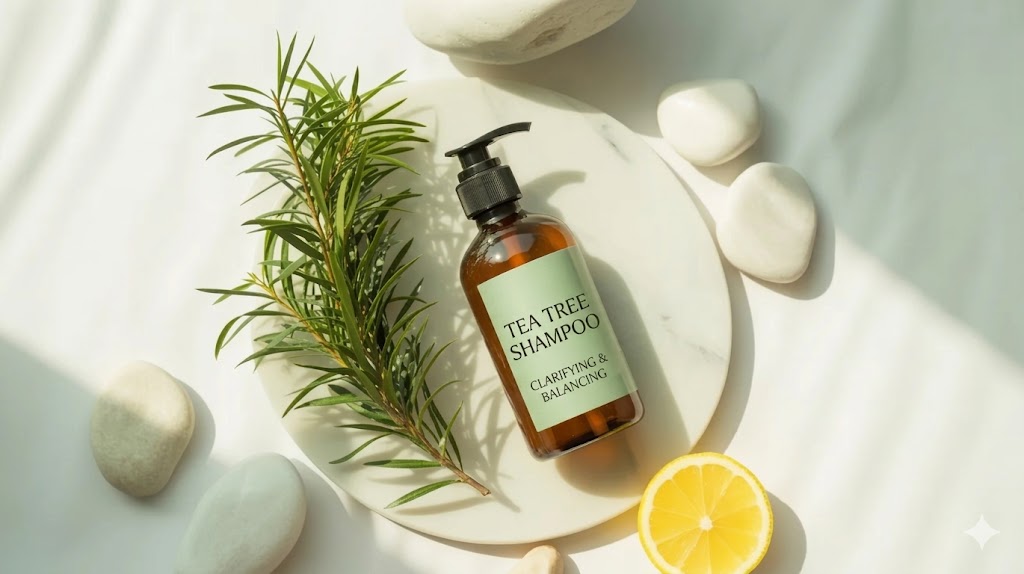
Tea Tree Shampoo: Benefits, How to Use It & 3 Natural DIY Recipes
By Doo & Rita – 14 min read – tested on oily, dry & sensitive scalps – used weekly for 4+ years
Last updated: May 2026.
Tea tree shampoo was the first genuinely natural product that made Doo’s scalp feel different within a week. Not different in a subtle, placebo-adjacent way — different in a way that made him look at the bottle and wonder what was actually in it. The answer, it turned out, was mostly one thing: tea tree oil, used at a concentration that actually does something rather than just appearing on the ingredient list for marketing purposes.
That was four years ago. Since then we’ve worked through more tea tree shampoos—commercial, DIY, blended with peppermint, blended with lavender, combined with conditioner, used on oily scalps, and used on sensitive scalps—than we can sensibly count. We know what works, what doesn’t, what the science actually says, and where most people go wrong. This is everything we’ve figured out since that first bottle.
Four methods: three DIY recipes, including a tea tree and peppermint shampoo and a tea tree lavender mint shampoo; a mistakes guide; the science behind tea tree oil explained honestly; and every question we get asked. Plus our honest take on the shampoo and conditioner routine that makes the biggest difference.
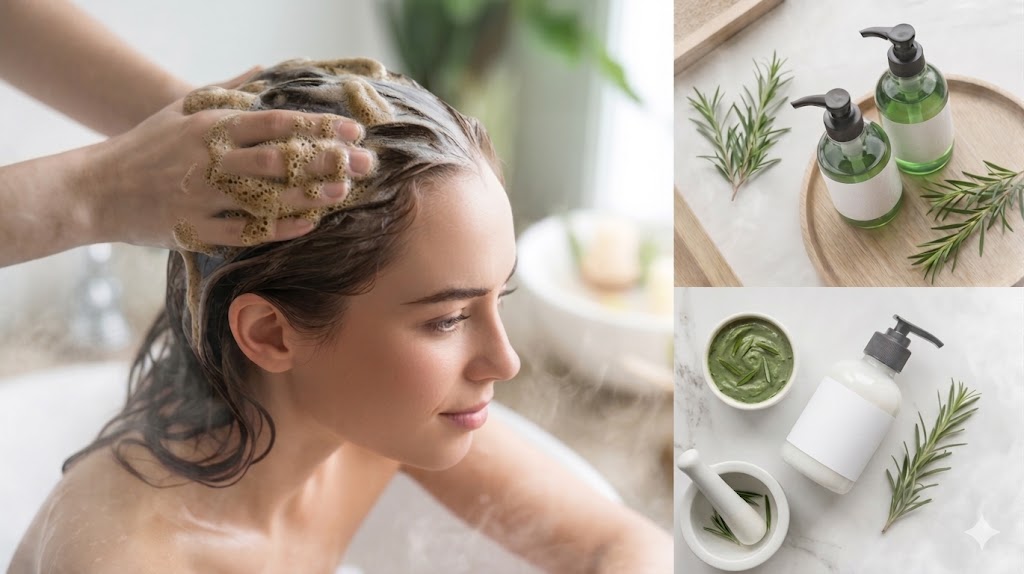
🔍 DEFINITION — WHAT IS TEA TREE SHAMPOO?
Tea tree shampoo is a scalp-focused cleansing product formulated with tea tree essential oil (Melaleuca alternifolia) as its primary active ingredient. The key compound is terpinen-4-ol, which represents 30–48% of the oil’s composition and is responsible for its naturally purifying properties.
Research published in the Journal of the American Academy of Dermatology (Satchell et al., 2002) found that a 5% tea tree oil concentration produced meaningful improvement in scalp balance over four weeks compared to a placebo shampoo.
Key facts: Works best with a 2-minute leave-on · Use 2–3 times per week, not daily · Apply conditioner to lengths only, never the scalp · Concentration matters — look for tea tree in the first 5 ingredients.
⬇ JUMP TO SECTION
⚡ QUICK ANSWER
Is tea tree shampoo worth it?
Yes, for most scalp types, especially oily and imbalanced. Here’s what makes it different from a regular shampoo:
goes beyond surface cleansing
reduces excess oil over time
the combination most people love
most products don’t use enough
Fastest start: Apply tea tree shampoo to wet hair → massage scalp for 60 seconds → leave 2 minutes → rinse thoroughly → follow with conditioner on mid-lengths to ends only. Two to three times a week.
📋 WHAT’S IN THIS GUIDE
- Why tea tree shampoo works differently from regular shampoo
- 7 things it actually does to your scalp (tested for 4 years)
- Which scalp types benefit most—and which need caution
- 4 methods that work, from daily use to oily scalp ritual
- Tea tree shampoo and conditioner: the routine that makes it complete
- 3 DIY recipes including tea tree, peppermint & lavender mint
- 8 mistakes that explain why your scalp didn’t improve
- The full cheat sheet — all methods at a glance
- The research behind tea tree oil, explained honestly
- Every question we get asked—answered
📋 FULL CHEAT SHEET — TEA TREE SHAMPOO AT A GLANCE
| Method / Recipe | Best For | Leave-On Time | Frequency |
|---|---|---|---|
| Standard daily cleanse ⭐ | All scalp types, everyday foundation | 2 min | 2–3x per week |
| Oily scalp method | Excess sebum, midday shine | 3–5 min scalp massage | 2–3x per week |
| Shampoo + conditioner routine | Dry ends + oily scalp combo | 2 min shampoo + 3 min cond. | Every wash day |
| Sensitive scalp method | Reactive or dry scalp | 60 sec, diluted | Once a week |
| 🌿 Basic DIY tea tree shampoo | All types of daily gentle cleanse | 2 min | Use within 2 weeks |
| 🌱 Tea tree & peppermint shampoo | Oily scalp, refreshing cleanse | 2–3 min | 2–3x per week |
| 💜 Tea tree, lavender, and mint shampoo | Sensitive scalp, calming cleanse | 2 min | 2x per week |
What Does Tea Tree Shampoo Actually Do?
Tea tree shampoo does something a standard shampoo simply cannot: it brings the naturally purifying properties of tea tree oil directly to the scalp at every wash. Most shampoos clean the surface of the hair and scalp, removing dirt, excess oil, and product buildup. A shampoo with tea tree oil does that and also addresses the balance of the scalp environment itself, not just what’s sitting on top of it.
Tea tree oil—extracted from the leaves of Melaleuca alternifolia, a plant native to Australia—has been used in traditional wellness practices for centuries. Its key active compounds, primarily terpinen-4-ol, are among the most studied plant-derived ingredients in modern cosmetic science. When formulated at the right concentration in a shampoo, these compounds work at the scalp level rather than just on the hair shaft.
The practical result is a scalp that feels genuinely cleaner, stays balanced for longer between washes, and over time tends toward less excess oil, less itchiness, and a more comfortable baseline. That’s what shampoo with tea tree oil does that regular shampoo doesn’t—and it’s why the difference is noticeable within the first week rather than building gradually over months.
| Feature | Regular Shampoo | Tea Tree Shampoo |
|---|---|---|
| Cleanses hair surface | ✅ Yes | ✅ Yes |
| Supports scalp environment | ❌ No | ✅ Yes (at 5%+) |
| Reduces excess oil over time | ❌ No | ✅ Within 3–4 weeks |
| Active plant compound (terpinen-4-ol) | ❌ No | ✅ Yes |
| Requires leave-on time | No | Yes — 2 minutes minimum |
| Suitable for daily use | Depends on formula | ⚠ No — 2–3x/week max |
Terpinen-4-ol
The key active compound in tea tree oil is well-studied in cosmetic science.
Scalp Balance
Supports a more balanced scalp environment over time.
Naturally Purifying
Goes beyond surface cleansing to support the scalp itself.
Concentration Matters
Research shows 5% is the effective threshold. Many products fall short.
💡 The concentration issue most people don’t know about: research on tea tree oil consistently points to around 5% concentration as the threshold where the active compounds produce a meaningful effect. Many commercial shampoos list tea tree oil as an ingredient but formulate it well below this level—enough to smell like tea tree, not enough to function like it. If you’re making your own, the DIY recipes below hit this concentration reliably. If you’re buying, look for tea tree oil listed in the first five ingredients rather than near the bottom of the list.
📊 KEY FACTS — TEA TREE SHAMPOO AT A GLANCE
Active compound
Terpinen-4-ol
30–48% of tea tree oil composition
Effective concentration
5% tea tree oil
Source: Satchell et al., JAAD 2002
Optimal leave-on time
2 minutes minimum
Active compounds need contact time
Recommended frequency
2–3x per week
Daily use increases oil production
Results timeline
3–6 weeks
For lasting scalp balance improvement
Plant source
Melaleuca alternifolia
Native to Australia, used for centuries
7 Benefits of Tea Tree Shampoo
The benefits of tea tree shampoo are most noticeable for people whose scalps have been out of balance—too oily, too dry, too reactive—but they extend beyond scalp health to the overall condition of the hair. Here’s what it actually does and why each benefit matters in a real weekly routine:
⚖️ A More Balanced, Comfortable Scalp
This is the benefit that people notice first — and the one that keeps them coming back. Oily scalps become less oily over time, not because tea tree strips sebum aggressively but because it supports the scalp’s natural balance rather than disrupting it. Itchiness and discomfort tend to reduce noticeably within two to three weeks of consistent use. This is the benefit with the most direct research backing—see the Sources section below.
🌿 Naturally Purifying Cleanse
Tea tree oil’s active compounds add a layer of purifying action to the cleansing process that standard shampoos don’t have. The scalp feels genuinely cleaner after washing, and the clean feeling lasts longer between washes.
🫧 Reduces Excess Oil Over Time
Regular use of tea tree shampoo for an oily scalp helps bring sebum production toward a more balanced level. Most people notice less midday shine and fewer greasy roots within three to four weeks of consistent use.
❄️ Cooling, Refreshing Sensation
The natural compounds in tea tree oil produce an immediate cooling effect on the scalp that is noticeably different from menthol or synthetic fragrances—cleaner, more natural, and more lasting. The combination of tea tree and peppermint shampoo amplifies this effect considerably.
✨ Visibly Cleaner Hair for Longer
Because it addresses the scalp environment rather than just cleaning the surface, hair tends to stay fresher between washes. People who previously needed to wash daily often find they can comfortably extend to every other day within a few weeks.
🌱 Supports a Flake-Free Scalp
Tea tree oil’s naturally purifying properties make it one of the most studied plant ingredients for scalp flakiness. It addresses the environmental factors that contribute to an unbalanced scalp—not just the visible result. Results typically appear after four to six weeks of consistent use.
💚 100% Plant-Based Active Ingredient
Tea tree oil is one of the few plant-derived ingredients where the active compounds are well-characterized, well-studied, and genuinely functional at appropriate concentrations. It earns its place in a natural haircare routine based on evidence, not just tradition.
Which Scalp Types Work Best With Tea Tree Shampoo
Tea tree shampoo is one of the more versatile natural shampoos, but it’s not identical for every scalp type. Knowing where it works best and where to use it more carefully makes the difference between results and frustration.
| Scalp / Hair Type | Verdict | What to Expect | Our Tip |
|---|---|---|---|
| Oily Scalp | ✓ Works Beautifully | Less midday shine, more balanced scalp within 3–4 weeks | 3–5 min scalp massage, 2–3x per week |
| Flaky or Unbalanced Scalp | ✓ Works Beautifully | Noticeably more comfortable scalp within 4–6 weeks | Consistent use, 2–3x per week |
| Normal / Combination | ✓ Works Well | A cleaner feeling, hair stays fresh between washes longer | 2 min standard method, 2x per week |
| Colour-Treated Hair | ~ Use Carefully | Works on the scalp, but avoid on colored lengths—it can accelerate fading | Scalp only; rinse quickly from lengths |
| Dry Scalp | ~ Use Sparingly | Can help if dryness is from imbalance—may worsen genuinely dry scalp | Once a week, diluted formula, always condition |
| Very Sensitive Scalp | ⚠ Patch Test First | Tea tree oil can irritate reactive scalps at high concentrations | Start diluted, 60 sec max, patch test first |
How to Use Tea Tree Shampoo: 4 Methods That Actually Work
The method you use matters as much as the product. Most people who don’t get results from tea tree shampoo are using it like regular shampoo—applying, lathering quickly, and rinsing immediately. The active compounds need time on the scalp to do their job. Here’s how to use it properly.
🌿 Method 1 — The Standard Tea Tree Cleanse
All scalp types · The 2-minute leave-on that makes the difference · Replace your regular shampoo
🌿 WHAT YOU NEED
- ✦ Tea tree shampoo — a generous amount for full scalp coverage
- ✦ Lukewarm water (not hot — hot water overstimulates oil production)
- ✦ Conditioner for mid-lengths to ends after rinsing
📋 HOW TO DO IT
- 1Wet hair and scalp thoroughly. Lukewarm water only. Hot water opens the scalp’s pores aggressively and can increase oil production over time — the opposite of what you want.
- 2Apply shampoo directly to the scalp. Not the lengths — the scalp is where the active work happens. Apply and distribute with your fingertips in sections to make sure every area is covered.
- 3Massage for 60 seconds, then leave for 2 minutes. This is the step most people skip. The massage stimulates circulation and works the formula into the scalp. The 2-minute leave gives the active compounds time to do their job. Set a timer.
- 4Rinse thoroughly. Tea tree shampoo residue on the scalp can cause irritation with repeated exposure. Rinse until the water runs completely clear — longer than you think necessary.
- 5Condition mid-lengths to ends only. Never apply conditioner to the scalp after tea tree shampoo—it undoes the balancing work. Mid-lengths to ends only; leave for 2–3 minutes; rinse. See the full routine in the next section.
Method 2 — Tea Tree Shampoo for Oily Scalp
Method 3 — The Tea Tree Shampoo and Conditioner Routine
🧴 Tea Tree Shampoo and Conditioner — The Complete Routine
For anyone with dry ends + oily or normal scalp · The combination that makes both work better
🧴 Every wash
The most common complaint about tea tree oil shampoo and conditioner combinations is that either the scalp feels stripped or the lengths feel greasy. Both problems come from the same mistake: applying conditioner in the wrong place. The solution is strict zone separation—tea tree shampoo stays on the scalp, and conditioner stays off it.
🌿 ZONE 1 — SCALP (Tea Tree Shampoo)
- Apply tea tree shampoo to scalp only
- Massage 60–90 seconds
- Leave 2 minutes
- Rinse thoroughly—the scalp must be completely clean
🧴 ZONE 2 — LENGTHS (Conditioner)
- Apply conditioner from ear level to ends only
- Leave 2–3 minutes
- Rinse with cool water
- Never apply to scalp—this defeats the shampoo’s work
Method 4—Sensitive Scalp Gentle Approach
3 DIY Tea Tree Shampoo Recipes
These are the recipes we actually make. Each uses tea tree oil as its active base and adds one or two ingredients that complement it for a specific purpose. All three have been through the bathroom-floor testing phase, and all three are worth sharing.
One important note on DIY shampoo: because these recipes don’t contain preservatives, they have a limited shelf life. Store in the fridge and follow the use-by guidance for each recipe. Making smaller batches more frequently is better than making large batches that sit.
Recipe 1 — Basic DIY Tea Tree Shampoo
Recipe 2 — Tea Tree and Peppermint Shampoo
Recipe 3 — Tea Tree Lavender Mint Shampoo
8 Tea Tree Shampoo Mistakes to Avoid
Most people who try tea tree shampoo and don’t get results—or get the wrong results—make one of these eight mistakes. Every single one is based on real experience, either ours or from readers who wrote in to tell us what went wrong.
❌ Rinsing Immediately Without Leaving On
This is the most common reason tea tree shampoo “doesn’t work.” Applying and rinsing straight away gives the active compounds no time to do anything. The 2-minute leave-on is not optional — it’s the mechanism.
❌ Using Hot Water
Hot water stimulates sebum production and can irritate an already-reactive scalp. Use lukewarm water for the wash and cool water for the final rinse. This single change made a visible difference for Doo’s oily scalp within one week.
❌ Applying Conditioner to the Scalp
Conditioner applied to the scalp after tea tree shampoo coats the follicle openings with conditioning agents and undoes the balancing work. Conditioner belongs on mid-lengths to ends only — this is the foundation of the tea tree shampoo and conditioner routine.
❌ Choosing a Formula with Too Little Tea Tree
Many commercial shampoos list tea tree oil far down the ingredient list—a trace amount included for marketing. Look for tea tree extract or oil in the first five ingredients. If it’s ingredient number 18 out of 20, it’s decorative, not functional.
❌ Using It on a Sensitive Scalp Without Patch Testing
Tea tree oil is potent and can cause a reaction on reactive scalps, especially at high concentrations. Always patch test on the inner wrist first. If you’ve previously reacted to tea tree products, use the diluted introduction method in Method 4 above.
❌ Washing Daily
Tea tree shampoo used daily can over-cleanse the scalp and paradoxically increase oil production as the scalp tries to compensate. Two to three times a week is the sweet spot for most scalp types. Oily scalp users should resist the urge to wash daily — it makes things worse, not better.
❌ Expecting Results in Three Days
Scalp balance changes gradually, not overnight. Week one: feels cleaner immediately after washing. Week three: hair stays fresh longer. Week five to six: noticeably less oil production. Most people stop too early. Consistent use for six weeks is the minimum to judge the results fairly.
❌ Not Rinsing Thoroughly
Tea tree shampoo residue on the scalp with repeated exposure can cause irritation or dryness. Rinse until the water runs completely clear — and then rinse a little more. The back of the scalp and the nape of the neck are where residue most often remains.
📚 Sources & Scientific References
We are not dermatologists or cosmetic chemists. We’re two people who got curious about what tea tree oil actually does at a compound level and whether the results Doo was noticing had a basis in published research. Here are the three studies we found most credible and relevant.
🧪 How We Tested — & What We Actually Found
Using tea tree shampoo has been part of Doo’s weekly routine since 2021 — not as a trial, but as a permanent replacement for his previous shampoo. Here is what “tested by us” actually means in this guide and why we’re confident in what we’re telling you.
🌿 Doo’s four-year daily use
Not during a structured trial — every wash day since switching in 2021. The observation about washing frequency reducing from daily to every other day is something he noted at the time, not something remembered retrospectively. Rita joined after watching the difference.
⚠️ The leave-on finding came from frustration
Doo used tea tree shampoo for three weeks before switching to the 2-minute leave-on method. The difference was noticeable enough in the first week that he went back through the bottle label, looking for what had changed. Nothing had changed except the timing. This is the single most important variable in the entire guide.
🌱 The peppermint recipe is Rita’s favorite
She tested three different peppermint-to-tea-tree ratios before settling on 10:15. Higher peppermint gave a stronger sensation, but the purifying effect from tea tree was proportionally diluted. Lower peppermint was less refreshing without meaningful benefit. The current ratio was the best balance.
💜 The lavender mint formula came from a reader’s need
Multiple readers told us tea tree was too intense for their scalps. The lavender addition genuinely softens the experience while keeping most of the purifying benefit. We tested it for six weeks before including it in this guide—not just adapted from another recipe.
🧴 The conditioner zone separation was counterintuitive
Rita initially applied conditioner everywhere as usual and noticed the scalp benefits from the tea tree shampoo were minimal. Moving conditioner strictly below ear level changed the scalp result noticeably within two weeks. This observation came from trial, not from reading about it first.
📚 The 5% concentration guideline is from the research
The Satchell et al. (2002) study used a 5% concentration. The DIY recipe drop counts are calibrated to reach this threshold. We include it because most commercial products fall below this level, and it explains why DIY often outperforms cheaper commercial options despite simpler formulation.
🌿 Tea tree shampoo is the natural haircare product Doo would recommend first to anyone asking where to start. Not because it’s fashionable, but because the results are consistent, the science is solid, the DIY version is genuinely simple, and the difference to an unbalanced scalp is noticeable within weeks rather than months. If something works differently for your scalp than described here, we’d genuinely like to know.
Frequently Asked Questions
Complete Your Natural Scalp Care Routine
Tea tree shampoo is the foundation, but it works best as part of a simple weekly rhythm. Here’s the exact routine we use, organized by when each step fits into your week rather than as a generic list of related articles.
Wash Day — 2 to 3 times per week
Between Washes — once a week
If You Want to Go Further — Make Your Own
The three DIY recipes in this guide cover the most common use cases. If you want to explore further—a different base, a rotating formula, or a full tea tree routine from scratch—our homemade shampoo library has more than 15 recipes, including several tea tree variations.
Doo and Rita are the creators of Nature’s Herbal Remedy, a plant-based haircare and wellness blog. Doo has used tea tree shampoo as his primary shampoo since 2021 — four years of daily-to-every-other-day use on an oily scalp. Rita joined after observing the change in his scalp within the first six weeks. Every method and recipe on this page has been tested on at least one of their scalps first.
🔬 3 peer-reviewed studies cited
🧪 3 DIY recipes personally tested
📅 Last updated: May 2026