Natural Lip Balm: Complete Guide + Best Organic Options (2026)
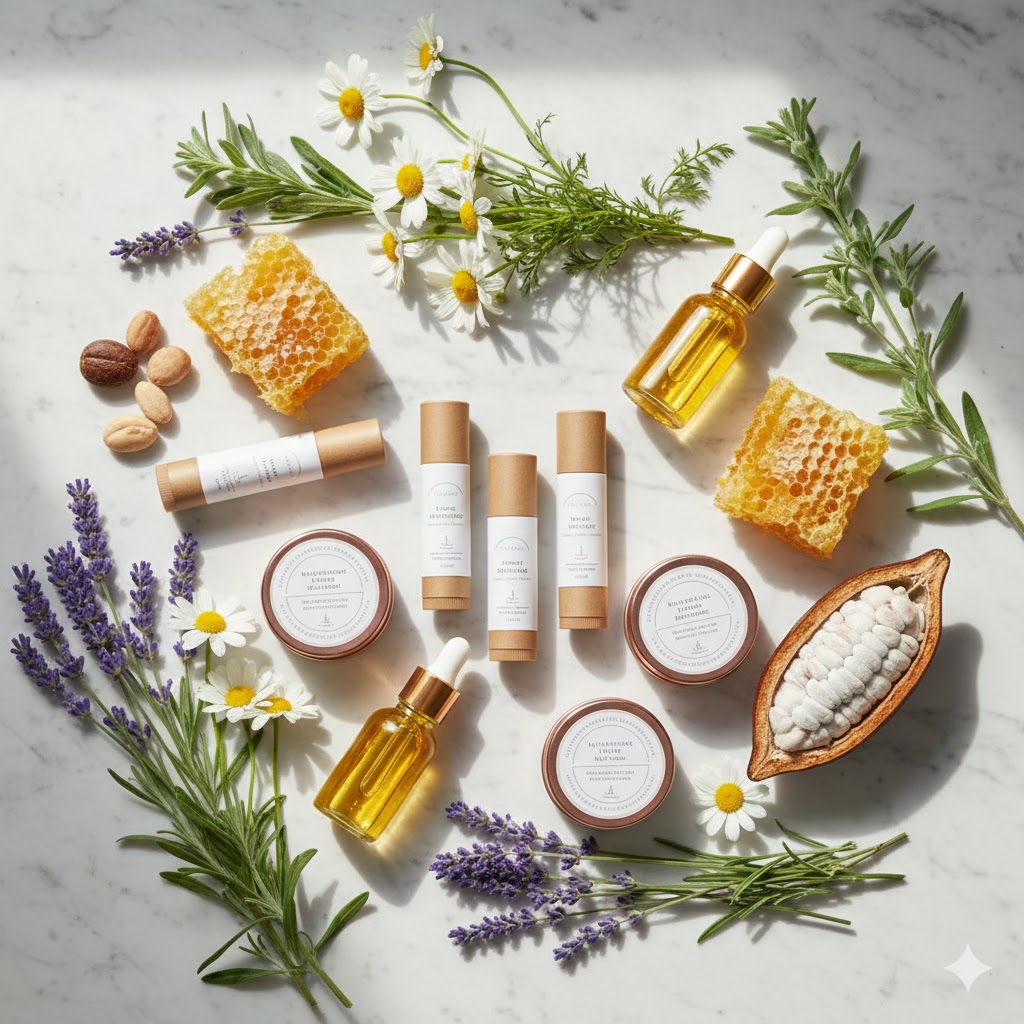
You’re about to start a journey into the world of natural lip balm. This gentle, plant-based approach to lip care is celebrated worldwide for its nourishing ingredients and its place in mindful, wellness-conscious lifestyles.
As a beginner, knowing how to choose natural lip balm and understanding the best ingredients lip balm should contain is the first step. This complete guide will walk you through everything — from choosing the right formulas and understanding ingredient labels, to DIY organic lip balm for chapped lips recipes, and answers to common questions like what makes lip balm non-toxic.
With natural lip care becoming more popular worldwide, learning how to select the right products or make your own at home is both exciting and rewarding. It’s a wonderful way to explore plant-based beauty and incorporate mindful self-care into your daily life.
💡 Quick Answer: What Makes Lip Balm Natural?
Natural lip balm uses plant-derived ingredients (beeswax, plant oils, butters) instead of petroleum-based or synthetic compounds. Look for: organic plant oils, natural waxes, botanical extracts, NO petroleum, parabens, or artificial fragrances. Best choice: USDA Organic certified products or DIY with quality ingredients.
| Key Ingredients Beeswax, Oils, Butters | Avoid Petroleum, Parabens | Shelf Life 12-18 months | DIY Time 20 minutes |
Table of Contents
What Is Natural Lip Balm? Understanding Plant-Based Lip Care
Natural lip balm uses plant-derived ingredients instead of petroleum-based or synthetic compounds. But “natural” isn’t a regulated term in cosmetics, so understanding what to look for is essential when choosing the best natural lip moisturizer for your needs.
A genuine natural lip balm features plant-based waxes (beeswax, candelilla, carnauba), cold-pressed botanical oils (coconut, jojoba, olive), natural butters (shea, cocoa, mango), plant extracts for soothing, and essential oils for scent — NOT petroleum, mineral oil, synthetic emollients, or artificial fragrances.
The best organic chapstick goes a step further with certified organic ingredients, meaning the plants were grown without synthetic pesticides or fertilizers. This commitment to purity aligns with broader natural skincare principles.
💡 Quick Tip: Reading Labels
Look for USDA Organic, EcoCert, or Cosmos Organic certification seals. These require third-party verification and ensure ingredients meet strict organic standards.
Why Natural Ingredients Outperform Synthetic Alternatives
Here’s the key difference: petroleum-based balms create a barrier that temporarily seals moisture, but they don’t actually nourish your lips. This creates the “lip balm addiction” cycle where you constantly reapply without seeing real improvement.
All natural lip moisturizer formulas work differently:
- Plant oils penetrate the lip tissue to deliver fatty acids and vitamins at a cellular level
- Natural waxes create a breathable protective layer while allowing moisture exchange
- Botanical extracts provide soothing and nourishing compounds
- Your lips gradually restore their natural moisture balance instead of depending on external products
Best Ingredients for Natural Lip Balm: The Essential Components
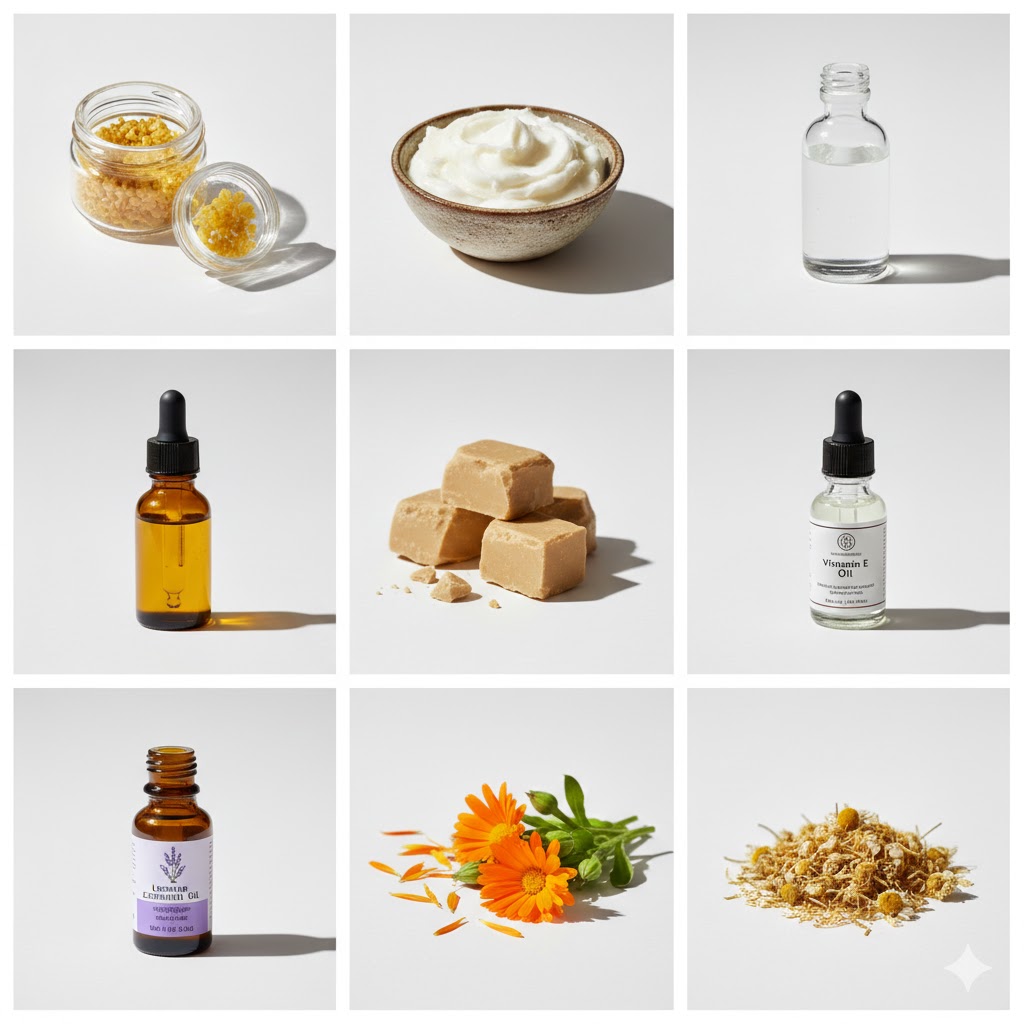
Understanding the best ingredients lip balm should contain helps you evaluate products and make informed choices. Here’s what actually makes a difference in creating an effective non-toxic lip balm:
The Wax Base: Structure & Protection
Beeswax (4-8% of formula) — The gold standard for natural lip balm. Creates a protective yet breathable barrier, contains vitamin A, and has natural antibacterial properties. Look for organic or sustainably harvested beeswax in premium products.
Candelilla Wax (3-6% of formula) — The best vegan natural lip moisturizer alternative. Harder than beeswax, so formulas need less. Creates a smooth, glossy finish. Particularly good for those seeking plant-based options.
Carnauba Wax (1-3% of formula) — The hardest natural wax, often combined with softer waxes. Adds shine and helps balm withstand higher temperatures.
Therapeutic Oils: Deep Moisture & Repair
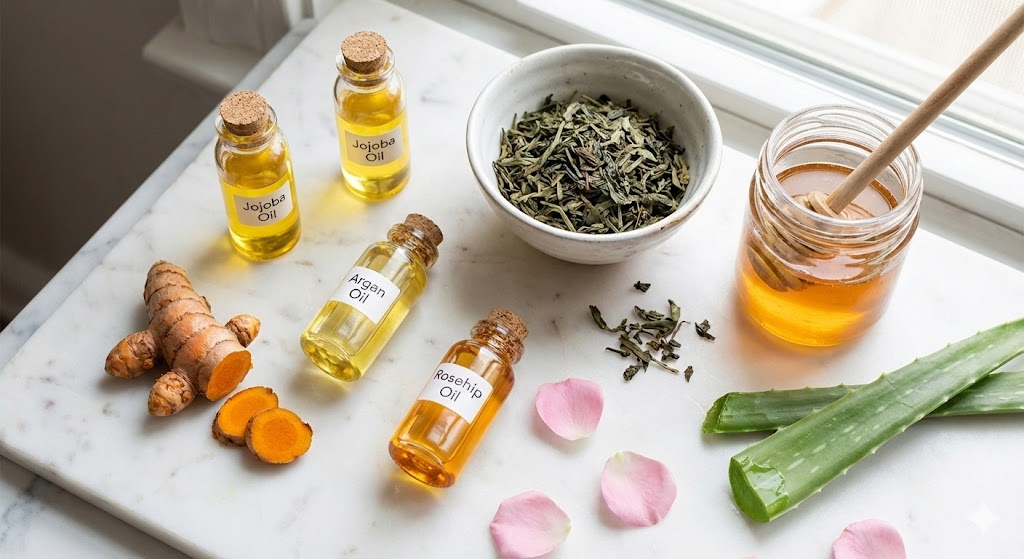
Jojoba Oil — Technically a liquid wax that mirrors your skin’s natural sebum. Absorbs quickly without feeling greasy. Rich in vitamin E and minerals. Non-comedogenic (won’t clog pores). A key ingredient in the best natural lip balm formulas.
Coconut Oil — Contains medium-chain fatty acids with protective properties. Helps prevent irritation in dry lips. Melts at body temperature for smooth application.
Sweet Almond Oil — Lightweight and easily absorbed. High in vitamins A, E, and D plus omega-3 fatty acids. Particularly gentle for sensitive lips.
Rosehip Seed Oil — Contains natural vitamin A for skin renewal. Rich in essential fatty acids. Excellent for improving the appearance of dry, chapped lips. Often featured in herbal wellness formulations.
Nourishing Butters: Rich, Lasting Hydration
Shea Butter — Extracted from African shea tree nuts. Contains vitamins A, E, and F plus essential fatty acids. Soothing properties calm irritation. Look for unrefined, fair-trade certified in the best natural lip balm products.
Cocoa Butter — From cocoa beans, creates a rich protective layer. High in antioxidants and polyphenols. Natural chocolate scent. Particularly effective for severely dry lips.
Mango Butter — Lighter than shea or cocoa, melts at body temperature. Rich in vitamins A and C. Non-greasy feel. Good choice for those who find other butters too heavy.
Why Choose Natural Over Conventional Lip Balm?
Many people wonder if natural lip products truly perform better than conventional options. The answer lies in how ingredients interact with your lip tissue and align with holistic natural body care practices.
The Petroleum Dependency Cycle
Conventional lip balms often contain petroleum jelly or mineral oil as their base. While these ingredients create a barrier on your lips, they don’t actually moisturize. Instead, they sit on the surface, temporarily relieving dryness without addressing the underlying issue. This creates a dependency cycle where you need to reapply constantly.
Natural alternatives work differently. Plant-based oils and butters penetrate the lip tissue, delivering nutrients and moisture at a cellular level. This creates lasting hydration rather than temporary relief — a key benefit of choosing non-toxic lip balm over conventional options.
What Makes a Lip Balm “Non-Toxic”?
When searching for a non toxic lip balm, you’re looking to avoid ingredients that could potentially be harsh on your body. Remember, you ingest small amounts of lip product throughout the day—the average person consumes about 4 pounds of lip product in their lifetime.
Ingredients to avoid:
- Petrolatum/Petroleum Jelly — Petroleum derivative that creates dependency
- Parabens (methylparaben, propylparaben) — Preservatives that may disrupt hormones
- Synthetic Fragrances/Parfum — Can contain dozens of undisclosed chemicals
- Phenol, Menthol, Salicylic Acid (in high concentrations) — Create tingling but dry lips over time
- Oxybenzone — Chemical sunscreen linked to hormone disruption
- Artificial Colors (FD&C, D&C dyes) — Petroleum-derived
| Characteristic | High-Quality Natural | Low-Quality/Conventional |
|---|---|---|
| Color | Natural tint from botanicals | Artificial bright colors |
| Ingredients | Plant oils, waxes, butters | Petroleum, synthetic chemicals |
| Texture | Smooth, absorbs well | Greasy or overly thick |
| Scent | Natural botanical aroma | Chemical fragrance or no scent |
How to Choose the Best Natural Lip Balm for Your Needs
With hundreds of products claiming to be “natural,” how do you identify the truly effective ones? Here’s your evaluation framework for finding the best organic chapstick:
Decoding Product Labels
Check the First 5 Ingredients — These make up 80-90% of the product. You want to see plant-based oils, butters, and waxes here—NOT petrolatum, mineral oil, or synthetic ingredients.
Understand Certifications — USDA Organic means 95%+ organic ingredients. EcoCert and Cosmos Organic are European equivalents. Leaping Bunny confirms cruelty-free testing.
Watch for Red Flags — “Natural” or “organic” in the product name doesn’t guarantee anything. Avoid products listing “fragrance” or “parfum” (code for synthetic chemicals).
Matching Products to Specific Needs
For Severely Dry Lips: Look for formulas with higher butter content (30-40%) and soothing botanicals like calendula or comfrey. Avoid menthol or camphor. The best natural lip balm for chapped lips will include intensive moisturizing ingredients.
For Daily Maintenance: Balanced formulas with 15-20% wax, 40-50% oils, and 20-30% butters provide everyday protection without feeling heavy.
For Sun Protection: Seek products with non-nano zinc oxide or natural ingredients like red raspberry seed oil or carrot seed oil which provide mild SPF.
For Sensitive Skin: Choose minimal ingredient formulas (5-8 ingredients maximum). Avoid essential oils if you have fragrance sensitivities. Consider exploring more gentle natural skincare options for overall face care.
For Vegan Preferences: Ensure candelilla or carnauba wax (not beeswax). Check that formulas exclude honey, lanolin, and carmine. Look for vegan natural lip moisturizer recipe options if making your own.
Top Natural Lip Balm Brands Available in 2026
Finding trustworthy natural lip balm brands can be overwhelming. We’ve researched and tested these companies that align with plant-based, organic, and sustainable values. Each brand prioritizes transparency, quality ingredients, and ethical practices.
Our Top Picks for Natural & Organic Lip Balm
Burt’s Bees — The pioneer in natural lip care since 1991. Uses beeswax, botanical oils, and vitamin E. 100% natural origin ingredients. Widely available and affordable ($4-6). Perfect for beginners transitioning to non-toxic lip balm. Certified by the Natural Products Association.
Badger Balm — USDA Organic certified and family-owned since 1995. Uses organic extra virgin olive oil, beeswax, and herbs like calendula and lavender. All ingredients fair-trade when possible. Price: $5-8. Known for healing formulas ideal for severely dry lips. B-Corporation certified.
Hurraw! — 100% vegan and raw. Uses organic, cold-pressed oils and premium ingredients. No beeswax (uses candelilla wax instead). Extensive flavor range using essential oils and natural extracts. Price: $4-5. Perfect vegan natural lip moisturizer option. Cruelty-free certified.
EOS Organic (Organic Smooth Sphere line) — USDA Organic certified option from EOS. Uses organic shea butter, coconut oil, and jojoba. Sustainable packaging. Price: $3-5. Accessible drugstore option for best organic chapstick. Note: Only their “Organic” line meets natural standards.
Dr. Bronner’s — Organic, fair-trade, and ethically sourced. Uses organic avocado oil, beeswax, jojoba, and hemp oil. USDA Organic and Fair Trade certified. Price: $4-5. Company known for social justice commitment. Aligns with herbal wellness philosophy.
Alaffia — Fair Trade certified, empowers West African communities. Uses organic shea butter, coconut oil, and baobab oil. USDA Organic. Price: $4-6. Portion of profits supports community projects. Ethical choice for conscious consumers.
Sky Organics — 100% organic and minimalist formulas. Uses only 3-5 ingredients: organic beeswax, organic coconut oil, organic vitamin E. USDA Organic certified. Price: $8-10. Perfect for sensitive skin. No essential oils option available.
Brand Comparison Chart
| Brand | Certifications | Key Ingredients | Vegan? | Price Range | Best For |
|---|---|---|---|---|---|
| Burt’s Bees | Natural Products Association | Beeswax, botanical oils, vitamin E | No | $4-6 | Beginners, wide availability |
| Badger Balm | USDA Organic, B-Corp | Organic olive oil, beeswax, calendula | No | $5-8 | Healing, severely dry lips |
| Hurraw! | Cruelty-Free Certified | Cold-pressed oils, candelilla wax | Yes | $4-5 | Vegan, flavor variety |
| EOS Organic | USDA Organic | Organic shea butter, coconut oil | Yes options | $3-5 | Budget-friendly organic |
| Dr. Bronner’s | USDA Organic, Fair Trade | Organic avocado, jojoba, hemp | No | $4-5 | Ethical, fair-trade conscious |
| Alaffia | USDA Organic, Fair Trade | Organic shea butter, baobab oil | No | $4-6 | Social impact, African ingredients |
| Sky Organics | USDA Organic | Minimalist: beeswax, coconut, vit E | No | $8-10 | Sensitive skin, minimalist |
How to Choose Between Brands
For Strict Organic Standards: Choose Badger Balm, Dr. Bronner’s, or Sky Organics. All carry USDA Organic certification ensuring ingredients meet rigorous standards.
For Vegan Options: Hurraw! is 100% vegan. EOS Organic offers vegan varieties. Check individual product labels as formulas vary by line.
For Budget-Conscious: Burt’s Bees and EOS Organic offer quality natural ingredients at accessible drugstore prices ($3-6).
For Ethical Sourcing: Dr. Bronner’s and Alaffia prioritize fair-trade ingredients and support community development projects. Portion of profits give back.
For Sensitive Skin: Sky Organics uses minimal ingredients (3-5 only) and offers unscented options. Badger Balm also excellent for reactive skin with healing calendula.
For Healing Properties: Badger Balm excels with calendula-infused formulas specifically designed for severely dry, chapped lips.
Where to Buy Natural Lip Balm
- Whole Foods — Carries all brands listed, extensive natural beauty section
- Target — Burt’s Bees, EOS Organic in most locations
- CVS/Walgreens — Burt’s Bees widely available
- Amazon — All brands available, often with Subscribe & Save discounts
- iHerb — International shipping, competitive prices on natural brands
- Thrive Market — Membership required, 25-50% off retail prices
- Brand Websites — Direct purchase, often freshest stock
💡 Pro Shopping Tips
Check Expiration Dates: Natural products have shorter shelf lives (12-18 months). Buy from stores with good turnover.
Read Beyond the Front Label: “Natural” on the package doesn’t guarantee quality. Always check the actual ingredient list on the back.
Start with Singles Before Multipacks: Try one tube first to ensure you like the texture and scent before buying sets.
Look for Sustainable Packaging: Paper tubes (Hurraw!), recyclable plastic, or reusable tins reduce environmental impact.
Brands to Approach with Caution
While these brands market themselves as “natural,” they may not meet strict organic or clean beauty standards:
- ChapStick “Naturals” — Contains some natural ingredients but also synthetic additives. Check ingredients carefully.
- Blistex — Primarily conventional formulas with petroleum base, even in “natural” varieties
- Carmex — Contains petroleum jelly, phenol, and synthetic fragrances despite “natural” marketing
- EOS Regular Line — Only their “Organic” line is truly natural. Standard EOS contains synthetic ingredients.
Remember: “Natural” isn’t regulated, so always read ingredient lists. Look for third-party certifications (USDA Organic, Fair Trade, Leaping Bunny) for verification.
These trusted brands align with natural skincare values and deliver on their promises of clean, effective, plant-based lip care.
🛒 Best Natural Lip Balm on Amazon — Our Top Picks
If you prefer the convenience of ordering online, Amazon offers excellent options for natural lip balm. These are our top recommendations based on ingredients, certifications, and customer reviews. All links below are affiliate links — we earn a small commission at no extra cost to you.
🥇 Best Overall: Burt’s Bees Ultra Conditioning Lip Balm (4-Pack)
A step up from the classic formula, this ultra-conditioning version from Burt’s Bees combines 100% natural origin ingredients with a rich blend of shea, cocoa, and kokum butter for deep, lasting hydration. The 4-pack makes it a practical everyday staple — and a beautiful Valentine’s Day gift idea for anyone who loves clean beauty.
✅ 100% natural origin ingredients
✅ Enriched with shea, cocoa & kokum butter
✅ No petrolatum, parabens, or phthalates
✅ Great value 4-pack
🥈 Best USDA Organic: Badger Unscented Classic Lip Balm (2-Pack)
Perfect for sensitive skin and fragrance-free lifestyles, this unscented formula from Badger is USDA Certified Organic and uses just a handful of clean, recognizable ingredients. The 2-pack is ideal for keeping one at home and one in your bag. A top choice for anyone healing dry, chapped lips without any irritating additives.
✅ USDA Certified Organic
✅ Fragrance-free — ideal for sensitive lips
✅ Minimal, clean ingredient list
✅ B-Corporation certified brand
🥉 Best Natural & Organic: EOS 100% Natural & Organic Lip Balm — Sweet Mint (2-Pack)
This EOS organic stick (not to be confused with their standard line) is 100% natural and certified organic, with a refreshing Sweet Mint flavor that feels clean and light. Dermatologist recommended and designed for all-day moisture, it’s a great option for those who want a trusted, accessible brand with verified natural credentials.
✅ 100% natural & organic certified
✅ Dermatologist recommended
✅ All-day moisture formula
✅ Convenient 2-pack
🎁 Best Value Set: Sky Organics Organic Lip Balm 6-Pack — Assorted Flavors
If you love variety — or want to stock up for the whole family — Sky Organics delivers six assorted flavors in one USDA Certified Organic set. Each balm is formulated with organic beeswax and plant-based oils to moisturize, soothe, and soften. With a minimalist ingredient list and no synthetic additives, it’s especially well-suited for sensitive skin and those new to non-toxic lip balm.
✅ USDA Certified Organic
✅ 6 assorted flavors in one set
✅ Minimalist, clean formula
✅ Great for sensitive skin or as a gift
🌿 Best Vegan: Hurraw! Coconut Lip Balm
For anyone following a fully vegan lifestyle, Hurraw! Coconut sets the standard. Certified vegan, cruelty-free, and gluten-free, it’s also Non-GMO and completely free of beeswax, shea, soy, and palm oil — a rare combination that makes it suitable for nearly every dietary and ethical preference. Made in the USA with 100% natural ingredients and a light, nourishing coconut flavor.
✅ Certified vegan & cruelty-free
✅ Gluten-free & Non-GMO
✅ Free of beeswax, shea, soy & palm oil
✅ Made in USA
🌿 Best Multi-Use: Dr. Bronner’s Organic Lip Balm — Peppermint (6-Pack)
Dr. Bronner’s takes lip care beyond the lips. This peppermint formula, made with organic beeswax, avocado oil, and jojoba oil, is designed for dry lips, hands, chin, and cheeks — a true multi-purpose balm. The cooling peppermint sensation and deeply hydrating formula make it a daily essential. The 6-pack offers outstanding value and ensures you’re never without this versatile organic staple.
✅ USDA Organic & Fair Trade certified
✅ Organic avocado & jojoba oil formula
✅ Multi-use: lips, hands, dry skin
✅ Cooling & hydrating — great 6-pack value
💡 Amazon Shopping Tips
Buy multipacks for savings: Most brands offer 2-packs, 4-packs, or 6-packs at a significant discount. Great for keeping one in your bag, one at home, and one at work.
Subscribe & Save: Use Amazon’s Subscribe & Save feature for an extra 5-15% off and never run out of your favorite natural lip moisturizer.
Check seller ratings: Buy directly from the brand or an Amazon-fulfilled seller to ensure freshness and authentic products.
Prefer to skip the shopping and mix up your own custom formula? The next section walks you through everything you need to make your own natural lip balm at home in under 20 minutes — for as little as $0.50 a tube.
💄DIY Natural Lip Balm Recipes: Make Your Own at Home
Making your own natural lip balm ensures you know exactly what’s in your all natural lip moisturizer. These recipes use the best ingredients lip balm formulas need and cost significantly less than store-bought options. DIY beauty is a rewarding part of any natural body care routine — and if you enjoy making your own lip care, you’ll love our guide on how to make whipped body butter at home, which uses many of the same nourishing ingredients.
🍛 Basic All-Purpose Natural Lip Balm
⏱ Prep: 10 min 🕐 Total: 45 min 📊 Yields: 12 tubes 💰 Cost: ~$0.50/tube
Ingredients:
- 2 tablespoons organic beeswax pellets (or candelilla for vegan)
- 2 tablespoons coconut oil (cold-pressed, organic)
- 2 tablespoons shea butter (unrefined, fair-trade)
- 10 drops vitamin E oil (natural, not synthetic)
- Optional: 8-10 drops lavender or peppermint essential oil
Instructions:
- Set up double boiler: Place heat-safe glass bowl over pot of simmering water
- Add beeswax to bowl; stir occasionally until completely melted (3-4 minutes)
- Add coconut oil and shea butter; stir until fully combined and smooth
- Remove from heat; let cool 1 minute
- Add vitamin E oil and essential oils (if using); stir thoroughly
- Quickly pour into containers (mixture hardens fast)
- Let cool completely at room temperature (30-45 minutes)
- Label with ingredients and date; use within 12 months
💡 Customization Tips
For softer balm, reduce beeswax to 1.5 tablespoons. For firmer balm, increase to 2.5 tablespoons. Adjust ratios based on climate—use more wax in hot weather.
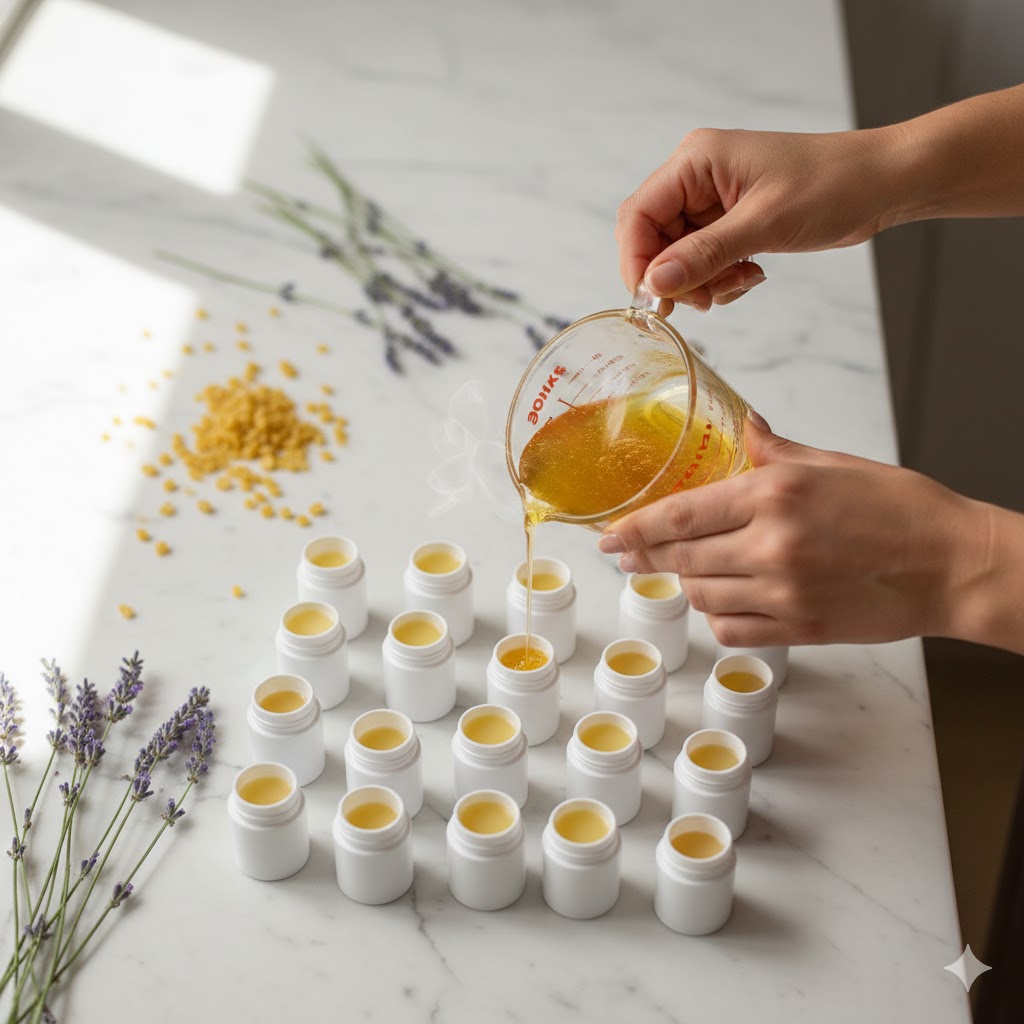
🍛 Intensive Moisturizing Formula for Dry Lips
Perfect for winter or dry climates. This DIY organic lip balm for chapped lips formula uses calendula and honey to accelerate improvement.
Ingredients:
- 1 tablespoon beeswax
- 1.5 tablespoons cocoa butter
- 1 tablespoon calendula-infused oil
- 1 teaspoon raw honey
- 5 drops lavender essential oil
- 3 drops tea tree essential oil
Follow the same method as basic recipe. The extra cocoa butter creates a richer barrier; honey adds protective properties and helps seal in moisture.
🍛 Tinted Natural Lip Balm
Ingredients:
- 2 tablespoons beeswax
- 2 tablespoons sweet almond oil
- 1 tablespoon shea butter
- 1/4 teaspoon beetroot powder (for pink/red tint)
- OR 1/4 teaspoon cacao powder (for brown/nude tint)
Mix powder into melted oils thoroughly before pouring. Start with less color; you can always add more. Test on wrist to preview shade before filling containers.
⚠️ Safety Note for DIY
Always use clean, sanitized equipment when making lip balm. Properly sterilize containers before filling. If you have sensitivities to any ingredients, omit them or substitute. Conduct a patch test before full use.
Frequently Asked Questions About Natural Lip Balm
Q: What’s the difference between ‘natural’ and ‘organic’ lip balm?
A: “Natural” typically means plant-derived ingredients, but it’s not a regulated term. “Organic” (when certified by USDA, EcoCert, etc.) means ingredients were grown without synthetic pesticides or fertilizers and meet strict processing standards. The best organic chapstick carries third-party certification proving organic claims.
Q: How can I tell if a lip balm is truly non-toxic?
A: Check the ingredient list for petroleum derivatives (petrolatum, mineral oil), synthetic fragrances (listed as “parfum” or “fragrance”), parabens, and artificial colors. A non toxic lip balm should list every ingredient by its actual name. Resources like EWG’s Skin Deep database rate products for safety.
Q: Why does my conventional lip balm make my lips feel drier?
A: Petroleum-based balms create a barrier but don’t moisturize. They prevent your lips from producing natural oils, creating dependency. When you switch to all natural lip moisturizer, there’s often a 1-2 week adjustment period as your lips relearn to self-balance.
Q: Do natural lip balms provide sun protection?
A: Some natural ingredients offer mild UV protection: red raspberry seed oil (estimated SPF 28-50), carrot seed oil (SPF 38-40). However, these aren’t FDA-regulated SPF claims. For reliable protection, choose products with non-nano zinc oxide.
Q: How long does natural lip balm last?
A: Shelf life: 12-18 months for store-bought (with vitamin E or other natural preservatives); 6-12 months for homemade. Store in cool, dry places away from direct sunlight. Discard if you notice changes in color, texture, or smell.
Q: How often should I apply natural lip balm?
A: With quality natural products, 3-4 times daily is typical: morning, after eating, midday, and before bed. The best natural lip balm should last 2-4 hours between applications.
Q: Can natural lip balm help severely dry lips?
A: Yes, with the right formula. Look for products high in soothing ingredients (calendula, comfrey) and rich butters (30-40% shea or cocoa butter). Exfoliate gently first, then apply a thick layer. Reapply every 2-3 hours. Most people see improvement within 3-5 days.
Q: Is beeswax lip balm vegan?
A: No, beeswax is an animal-derived ingredient, so lip balms containing it are not considered vegan. If you follow a vegan lifestyle, look for formulas that use candelilla wax or carnauba wax as the base instead. Brands like Hurraw! and certain EOS Organic varieties offer fully vegan options. The rest of the formula — plant oils, butters, and essential oils — is typically vegan-friendly.
Q: Can I use natural lip balm on my children?
A: Yes — in fact, natural lip balm is often the better choice for children precisely because it avoids synthetic chemicals and petroleum derivatives. Choose a simple, unscented formula with minimal ingredients (beeswax or candelilla wax, coconut oil, shea butter). Avoid products with essential oils like peppermint or eucalyptus for very young children, as these can be too stimulating. Brands like Badger Balm and Sky Organics offer gentle options suitable for kids.
Q: What is the best natural lip balm for nighttime use?
A: Nighttime is the ideal time for intensive lip repair, as your body naturally regenerates during sleep. Look for a richer formula with a high butter content — cocoa butter and shea butter are especially effective overnight. A thick layer of Badger Balm Healing Lip Balm or a DIY intensive formula with calendula-infused oil and raw honey works wonderfully as an overnight treatment. You can also apply a generous layer of your DIY recipe from this guide for a spa-like overnight lip mask.
Q: Why does natural lip balm sometimes feel waxy compared to conventional ones?
A: The slight waxy feel comes from beeswax or candelilla wax, which form a natural protective layer on your lips. Unlike synthetic silicones and petroleum, which create a slick, artificial slip, natural waxes provide a genuine barrier while still allowing your lip tissue to breathe. Most users find this feeling normalizes within a week as their lips adjust. Choosing a formula with a higher oil-to-wax ratio (more coconut or jojoba oil relative to wax) will give a lighter, less waxy feel if that’s your preference.
Q: Can I use natural lip balm if I have a nut allergy?
A: This depends on the specific allergy and the product’s ingredients. Common natural lip balm ingredients derived from tree nuts include shea butter (from shea tree nuts), sweet almond oil, macadamia oil, and mango butter. If you have a known tree nut allergy, always read the full ingredient list and consult your allergist before trying a new product. A simple formula based on coconut oil and beeswax (or candelilla wax) with vitamin E is generally a safer starting point, but professional advice is always recommended for allergy concerns.
Complete Natural Lip Balm Routine: Beyond Just the Product
Even the best natural lip balm works better when you address these factors as part of your holistic wellness routine:
Lifestyle Factors That Impact Lip Health
- Hydration — Drink 8-10 glasses of water daily; dehydration shows first in lips
- Nutrition — B vitamins, iron, omega-3s, and vitamin E support lip health. Consider incorporating nutrient-rich foods for overall skin and hair health
- Stop licking lips — Saliva contains enzymes that can dry delicate lip tissue
- Breathe through nose — Mouth breathing constantly dries lips
- Use humidifier — Especially in winter (aim for 40-50% humidity)
- Protect from sun — UV exposure causes premature aging
- Avoid irritants — Certain toothpastes, spicy foods, or citrus can irritate
Gentle Exfoliation for Better Results
Exfoliating 1-2 times weekly removes dead skin so your all natural lip moisturizer penetrates better:
DIY Sugar Scrub Recipe
Mix 1 part raw honey + 2 parts organic sugar. Gently massage on lips for 30 seconds. Rinse with warm water. Apply balm immediately while lips are damp to seal in moisture.
Important: Don’t exfoliate if lips are cracked or bleeding—this will cause more discomfort. Wait until initial improvement begins.
Conclusion: Why Natural Lip Balm Is the Best Choice for Healthy Lips
Choosing natural lip balm is more than switching products — it’s a meaningful step toward taking better care of yourself and the planet. By understanding the best ingredients lip balm should contain, learning to identify truly natural formulations, and selecting products that match your specific needs, you’re taking real control of your self-care routine.
Natural lip care is genuinely safer and healthier. Plant-based oils and butters nourish your lips from within, rather than creating the petroleum dependency cycle that leaves you reapplying conventional balms all day. Once your lips experience that lasting hydration, going back to synthetic formulas becomes hard to imagine.
Switching to natural lip care is one of the simplest, most impactful upgrades you can make in your daily beauty routine. Whether you purchase the best organic chapstick from a trusted brand like Badger Balm or Hurraw!, shop conveniently on Amazon, or create your own custom all natural lip moisturizer at home for just $0.50 a tube — you’re making a choice that benefits your body and reduces your environmental footprint.
Remember: the healthiest-looking lips start from within. Combine your quality non toxic lip balm with proper hydration, good nutrition, and protective habits for the best results. This aligns beautifully with broader natural body care practices that support your overall wellbeing.
Ready to take the next step? Start with one of our recommended Amazon picks above, or try the basic DIY recipe with ingredients you may already have at home. Your lips — and the planet — will thank you.
👉 Discover more natural skincare guides on our site to continue your journey.
To continue your plant-based beauty journey, explore our in-depth guides on natural skincare for your full face routine, discover how to make your own whipped body butter with the same nourishing butters used in these lip balm recipes, and browse our natural body care collection for more DIY skincare ideas that align with a clean, conscious lifestyle.
📋 Important Note
This article is for educational and informational purposes only. The content provided shares personal experiences and research about natural lip care products and ingredients. It is not intended to replace professional advice.
If you have persistent lip concerns, severe dryness, or sensitivities, we recommend consulting with a qualified skincare professional or healthcare provider for personalized guidance.
This article contains affiliate links. If you purchase through our Amazon links, we earn a small commission at no additional cost to you. We only recommend products we genuinely believe in.
📚 References & Resources
This article was researched using trusted resources, scientific studies, and our hands-on experience with natural lip balm ingredients:
- Environmental Working Group (EWG) — Cosmetic ingredient safety database
- USDA National Organic Program — Organic certification standards
- International Journal of Cosmetic Science — Research on natural skincare ingredients
- American Herbalists Guild — Information on botanical safety
- Our personal testing and experimentation with plant-based formulations
Note: We share what works for us based on research and personal experience with DIY organic lip balm recipes. Always do your own research and patch test new ingredients. For more natural beauty inspiration, visit our natural skincare collection.
✍️ Written by Doo & Rita
Doo and Rita are sisters, herbal wellness enthusiasts, and DIY beauty lovers who explore plant-based ingredients through hands-on experiments. We share tips and recipes we personally test, always with a gentle, nature-first approach. Our passion extends to natural haircare and holistic beauty practices.