
Infusion Recipes Made Easy: How to Make Fruit Infused Water
Last updated: January 2026
Quick Answer: Infusion recipes combine fresh fruits, herbs, or vegetables with water, steeped for 2-12 hours in the refrigerator. Popular infusion recipes include lemon-mint, strawberry-basil, and cucumber-lime. Use 1-2 cups of fruit per quart of water for best results.
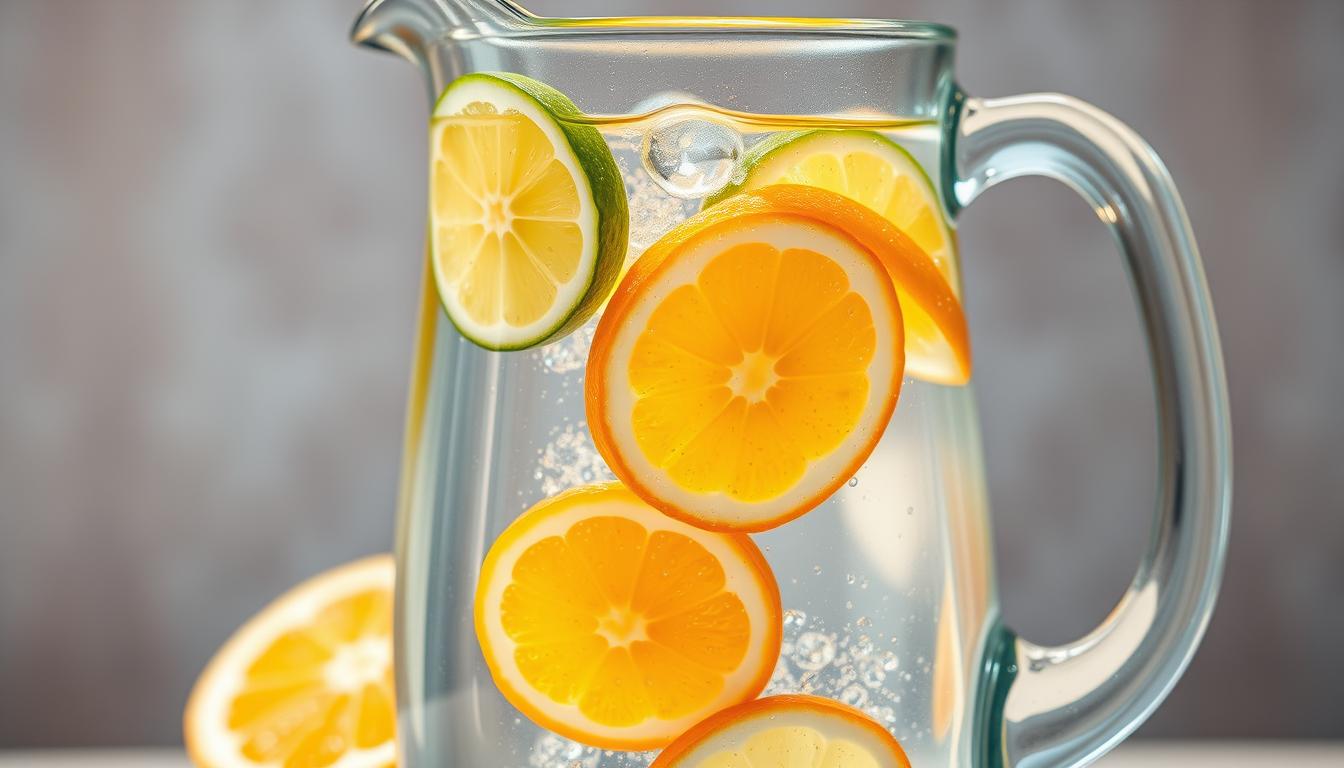
Staying hydrated is key, and what’s better than a refreshing glass of fruit-infused water? You can make your own infused water ideas at home with just a few simple ingredients.
With creative infusion recipes, you can try out different fruits, herbs, and spices. This lets you create unique flavors that you’ll love.
Making fruit-infused water is easy and doesn’t take much time. It’s a great way to make your daily hydration routine more exciting.
Table of Contents
At a Glance: Key Information
| Question | Answer |
|---|---|
| How long to infuse? | 2-4 hours for citrus, 4-6 hours for berries, overnight for deeper flavors |
| Best fruits for beginners? | Lemon, strawberry, cucumber, watermelon, mint |
| How long does it last? | 24 hours with fruit, 48 hours after removing fruit (refrigerated) |
| Fruit to water ratio? | 1-2 cups fruit per quart (4 cups) of water |
| Can I reuse fruits? | Yes, once for milder flavor |
| Best containers? | Glass infuser pitchers, BPA-free bottles, mason jars |
Table of Contents
- The Rising Popularity of Fruit Infused Water
- Better Hydration and Enjoyable Taste
- A Lighter Alternative to Sugary Drinks
- Essential Equipment for Making Infused Water
- Step-by-Step Guide: How to Make Fruit Infused Water
- Best Fruits, Herbs, and Vegetables for Infusion Recipes
- Top 10 Fruit Infusion Recipes for Beginners
- Seasonal Infusion Recipes for Year-Round Enjoyment
- Advanced Techniques for Flavor-Packed Infused Water
- Common Mistakes to Avoid When Making Fruit Infused Water
- Conclusion: Elevating Your Hydration with Delicious Infusion Recipes
The Rising Popularity of Fruit Infused Water
More and more people are choosing fruit-infused water and creative infusion recipes. They want lighter, refreshing drinks. This shift comes as people become more aware of what they’re consuming daily.
According to beverage industry reports, the infused water market has grown significantly, with consumers actively seeking alternatives that offer both taste and simplicity. People appreciate the straightforward nature of adding fresh ingredients to water without complicated processes.
Why People Are Choosing Infused Water Over Sugary Drinks
Fruit-infused water is low in calories and free from artificial additives. It’s a practical choice compared to sugary drinks, which can add hundreds of unnecessary calories to your daily intake. Infusion recipes let you pick your favorite fruits and customize flavors to your preferences.
The American Beverage Association notes that consumers are increasingly reading labels and choosing drinks with recognizable ingredients. Simple infusion recipes fit perfectly into this preference, as you control exactly what goes into your glass.
The Lifestyle and Refreshment Trend
Fruit-infused water has become part of the broader wellness trend. People are learning how lifestyle choices impact their daily energy and overall routine. Fruit-infused water fits naturally into this movement because it’s made from recognizable, whole ingredients.
Social media platforms showcase countless infused water combinations, with users sharing their favorite recipes and creative presentations. This community-driven approach has made hydration more engaging and accessible to everyone.
| Benefits | Features |
|---|---|
| Low in calories | No artificial additives |
| Customizable flavors | Naturally flavorful |
| Promotes hydration | A refreshing daily choice |
Choosing fruit-infused water means you get a flavorful drink made from ingredients you recognize. With the right infusion recipes, you can create combinations that match your taste preferences perfectly.
Better Hydration and Enjoyable Taste
Adding fruit-infused water to your daily routine can make hydration more enjoyable. By using different fruits in your infusion recipes, you make your water naturally more flavorful. This makes it an appealing choice compared to plain water or sugary alternatives.
Research published in nutrition journals suggests that people drink more water when it’s flavored naturally, helping them meet their daily hydration goals more consistently.
Improved Hydration and Extra Variety
Drinking natural infused water encourages better hydration habits. Its appealing flavor makes you more likely to reach for your water bottle throughout the day. The fruits release their natural essence, giving your water a refreshing twist without added sugars or calories.
Studies from hydration research centers indicate that flavor variety helps people maintain consistent water intake, which is essential for daily functioning and energy levels.
Hydration Benefits:
- A touch of natural fruit flavor that makes water more appealing
- A variety of refreshing tastes to prevent boredom
- Better hydration habits thanks to enjoyable water
- No added sugars or artificial sweeteners
- Easy to customize based on seasonal availability
A Lighter Alternative to Sugary Drinks
Fruit-infused water serves as a practical option if you’re looking for a lighter alternative to sugary beverages. It’s a flavorful swap that naturally contains fewer calories. Its appealing taste can also make it easier to choose water over other options throughout the day.
Nutritionists often recommend flavored water as a transitional drink for those looking to reduce their sugar intake gradually. Another refreshing option to consider is Shot Immune Drinks, which provide quick and natural flavors in concentrated portions.
Simple Tips for Lighter Choices
- Replace one sugary drink per day with infused water
- Enjoy infused water before meals as a refreshing starter
- Experiment with different fruit combinations to keep the flavor exciting
- Keep a pitcher of infused water in your refrigerator for easy access
- Try different infusion times to find your preferred flavor strength
Freshness and Flavor Variety
Fruit-infused water offers a naturally refreshing and light drinking experience. Different fruits and herbs create clean, crisp tastes that make hydration more enjoyable. Their natural qualities enhance your drink without artificial ingredients or excessive sweetness.
Culinary experts note that fresh herbs like mint and basil release aromatic compounds that enhance the sensory experience of drinking water, making hydration feel more like a treat than a chore.
Understanding the refreshing qualities of fruit-infused water helps you make informed choices. It’s a simple way to boost hydration, opt for lighter drinks, and enjoy natural flavor variety throughout your day.
The right tools can enhance your infused water experience. You’ll need a few basic items and containers to create delicious, flavorful drinks at home. Having the proper equipment makes the process easier and more enjoyable.
Step-by-Step Guide: How to Make Fruit Infused Water
Making fruit-infused water is straightforward and rewarding. You need fresh ingredients and basic tools. This guide walks you through selecting fruits, the infusion process, and finding optimal steeping times for the best flavor.
Selecting and Preparing Your Fruits
Start by choosing high-quality, fresh ingredients. Visit local farmers’ markets or grocery stores for seasonal produce. You can combine fruits, herbs, and vegetables to create unique flavor profiles.
Fruit Selection Tips:
- Choose firm, ripe fruits without bruises or soft spots
- Organic produce is preferable when using peels (citrus, apples)
- Seasonal fruits typically offer the best flavor and value
- Mix textures: combine soft berries with crisp cucumbers or firm citrus
Preparation Steps:
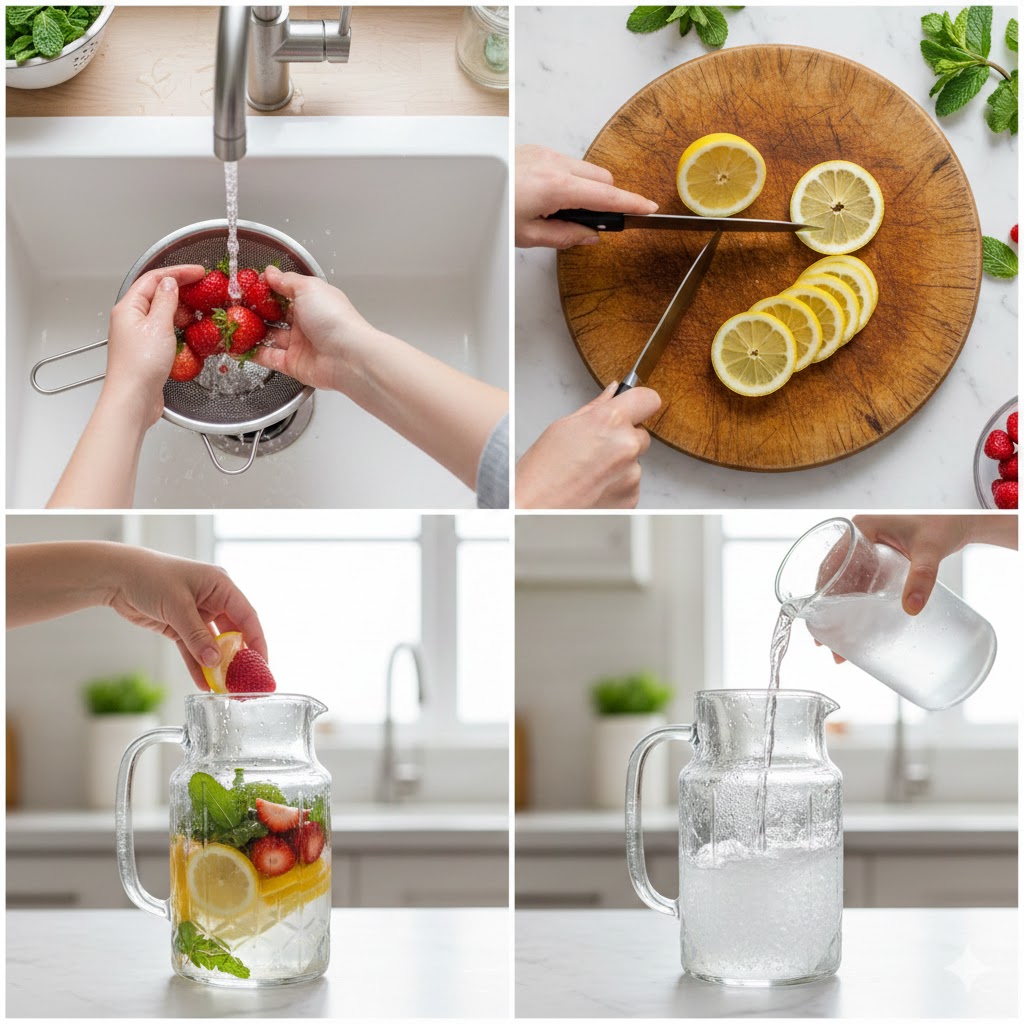
- Wash thoroughly – Rinse all fruits and herbs under cold running water
- Remove inedible parts – Take out stems, seeds, and any damaged sections
- Slice strategically – Cut citrus into wheels or wedges; berries can be halved or left whole
- Size matters – Smaller pieces release flavor faster; larger pieces provide subtle infusion
For citrus fruits, slicing into wheels (with peel on) provides both flavor and visual appeal. Berries can be gently muddled to release more juice. Herbs should be bruised lightly by clapping between your hands to release aromatic oils.
The Basic Infusion Process
Once your ingredients are prepared, you’re ready to create your infused water. The process is simple but allows for creativity.
Step-by-Step Instructions:
- Layer your ingredients – Place fruits and herbs in your pitcher or bottle
- Add cold water – Fill with filtered or tap water, leaving space at the top
- Gently stir – Mix ingredients to distribute flavors evenly
- Refrigerate – Place in the refrigerator to chill and infuse
Fruit to Water Ratio:
The ideal ratio depends on your taste preference. As a starting point:
- Light flavor: 1 cup of fruit per quart (4 cups) of water
- Medium flavor: 1.5 cups of fruit per quart of water
- Strong flavor: 2+ cups of fruit per quart of water
Tip: Start with less fruit and add more if needed. You can always strengthen the flavor, but you can’t easily dilute it once infused.
Optimal Infusion Times
The steeping duration varies based on ingredients and desired intensity. Some fruits release flavor quickly, while others need more time.
Infusion Time Guide:
| Ingredient Type | Quick Infusion (30 min – 2 hrs) | Full Infusion (2-4 hrs) | Overnight (8-12 hrs) |
|---|---|---|---|
| Citrus (lemon, lime, orange) | Light, fresh flavor | Balanced citrus taste | Strong, bold citrus |
| Berries (strawberry, raspberry) | Subtle sweetness | Noticeable berry flavor | Very fruity, rich |
| Cucumber | Mild, refreshing | Crisp cucumber taste | Strong, spa-like |
| Herbs (mint, basil) | Gentle herbal notes | Aromatic, balanced | Intense, possibly bitter |
| Melon | Light sweetness | Pleasant melon flavor | Very sweet |
Quick Infusions vs. Overnight Steeping
Quick Infusions (30 minutes – 2 hours):
- Perfect when you need flavored water fast
- Ideal for delicate ingredients like herbs
- Produces lighter, more subtle flavors
- Best for immediate consumption
Overnight Steeping (8-12 hours):
- Develops deeper, more complex flavors
- Convenient to prepare before bed for morning enjoyment
- Better for harder fruits like apples and pears
- May become too intense with citrus peels
Pro Tips:
- Taste your water periodically to check flavor strength
- Remove fruits after 12-24 hours to prevent bitterness
- Citrus can become bitter if left too long; remove after 4 hours or peel first
- Herbs should be removed after 2-3 hours to avoid overwhelming bitterness
By following these steps, you can create delicious and refreshing fruit-infused water recipes at home. Experiment with different fruits, herbs, and vegetables to discover your favorite combinations. The process is forgiving, so don’t hesitate to adjust based on your preferences.
Best Fruits, Herbs, and Vegetables for Infusion Recipes
Infused water offers endless possibilities with a wide variety of ingredients. You can use tangy citrus fruits, aromatic herbs, and crisp vegetables. This versatility makes creating infused water recipes enjoyable as you explore different flavor combinations.
Citrus Fruits: Lemons, Limes, and Oranges
Citrus fruits rank among the most popular choices for infused water. They provide refreshing, naturally tangy flavors that pair well with almost anything.
Lemon – The classic choice, offering bright acidity and vitamin C. Works in both sweet and savory combinations.
Lime – Provides a sharper, more intense citrus flavor than lemon. Excellent in tropical blends.
Orange – Delivers a sweeter, milder citrus taste. Adds natural sweetness without sugar.
Grapefruit – Offers a unique bitter-sweet profile. Pairs beautifully with rosemary or mint.
Blood Orange – Provides stunning color and a slightly raspberry-like flavor.
Preparation Tip: For less bitterness, remove the white pith before adding citrus to your water. For maximum flavor, include the peel but limit infusion time to 2-4 hours.
Berries and Stone Fruits
Berries like strawberries, blueberries, and raspberries bring natural sweetness and vibrant color to your water. Stone fruits such as peaches, nectarines, and plums add aromatic sweetness. Mix different berries and stone fruits to create complex, layered flavors.
Popular Berry Choices:
- Strawberries – Sweet and mild, universally appealing
- Blueberries – Subtle flavor that strengthens over time
- Raspberries – Tart and bold, releases flavor quickly
- Blackberries – Rich, slightly earthy sweetness
- Cranberries – Tart and festive, especially popular in fall
Stone Fruit Options:
- Peaches – Sweet and aromatic, perfect for summer
- Nectarines – Similar to peaches but with smoother skin
- Plums – Range from sweet to tart depending on variety
- Cherries – Sweet or tart options available, beautiful color
- Apricots – Delicate, honey-like sweetness
Tip: Slightly crush berries before adding them to release more juice and flavor. Stone fruits should be sliced to expose the flesh to water.
Herbs and Spices That Enhance Flavor
Fresh herbs transform simple fruit-infused water into sophisticated beverages. Spices add warmth and complexity to your creations.
Fresh Herbs:
- Mint – Classic refreshing herb, pairs with almost everything
- Basil – Sweet and slightly peppery, excellent with berries
- Rosemary – Aromatic and pine-like, pairs well with citrus
- Lavender – Floral and calming, use sparingly
- Cilantro – Bright and fresh, perfect with lime and cucumber
- Thyme – Earthy and subtle, works with lemon
- Lemongrass – Citrusy and aromatic, popular in Asian-inspired blends
Warming Spices:
- Cinnamon Sticks – Adds warmth without sweetness
- Ginger – Spicy and invigorating, aids digestion
- Star Anise – Licorice-like flavor, visually beautiful
- Cardamom Pods – Aromatic and slightly sweet
- Cloves – Intense and warming, use 1-2 whole cloves only
Usage Guide: Start with small amounts of herbs and spices. Herbs can be added generously, but remove after 2-3 hours to prevent bitterness. Spices are potent—one cinnamon stick or a few slices of fresh ginger is sufficient for a quart of water.
Vegetables for Infused Water
While fruits and herbs dominate infused water recipes, vegetables offer unique flavors and visual appeal.
Cucumber – The most popular vegetable for infused water. Refreshing and hydrating, it provides a clean, spa-like quality. Pairs excellently with mint, lemon, or lime. Slice thinly or cut into ribbons for maximum surface area.
Celery – Provides a subtle, savory note. Contains natural sodium and works well with apple or lemon. Use 1-2 stalks per quart.
Carrots – Add natural sweetness and beautiful color. Slice thin or use a vegetable peeler for ribbons. Pairs nicely with ginger or orange.
Beets – Create stunning pink or red water. Earthy flavor that pairs well with citrus or berries. Use sparingly as they color the water intensely.
Bell Peppers – Surprisingly refreshing, especially sweet varieties. Add mild flavor and nutrients. Combine with cucumber and lime for a savory option.
Jalapeño – For those who enjoy spice. Remove seeds for mild heat, keep them for more intensity. One or two slices is sufficient.
Exploring different fruits, herbs, and vegetables lets you create countless infused water recipes and water infuser recipes. Whether you prefer refreshing combinations or bold, complex flavors, there’s an infused water recipe perfect for every taste and occasion.
Top 10 Fruit Infusion Recipes for Beginners
Answer: What’s the easiest fruit-infused water recipe for beginners? Lemon mint is the easiest infusion recipe—just add 1 sliced lemon and 10 mint leaves to a quart of water, refrigerate 2-4 hours. It requires only 2 ingredients and tastes refreshing.
Start your hydration journey with these top 10 infusion recipes. They’re easy to make and delicious to drink. These simple infusion recipes will introduce you to natural flavors and make staying hydrated enjoyable.
Classic Combinations
Answer: What are classic infused water combinations? Classic infusion recipes that always work include lemon-mint, cucumber-lime, and strawberry-kiwi. These pairings are popular because the flavors complement each other naturally.
Begin with timeless infusion recipes that have stood the test of time
Recipe 1: Classic Lemon Mint Infusion
- Ingredients:
- 1 medium lemon (organic preferred)
- 10-12 fresh mint leaves
- 1 quart (4 cups) cold water
- Ice for serving
- Step-by-Step Instructions:
- Wash lemon thoroughly under running water
- Slice lemon into ¼-inch wheels
- Rinse mint leaves and pat dry
- Bruise mint by clapping between your hands
- Add lemon slices to pitcher or bottle
- Add bruised mint leaves
- Fill with cold water
- Refrigerate 2-4 hours
- Important: Remove mint after 3 hours to prevent bitterness
- Serve over ice with fresh mint garnish
- Flavor Profile: Bright, refreshing, universally appealing
- Best For: All-day hydration, post-workout refreshment
- Prep Time: 5 minutes | Infusion Time: 2-4 hours
- Storage: Drink within 24 hours with fruit, 48 hours after removing ingredients
- Cost: Under $2 per pitcher
Recipe 2: Strawberry Kiwi Water
- Ingredients:
- 1 cup fresh strawberries
- 2 medium kiwis
- 1 quart cold water
- Instructions:
- Wash strawberries, remove stems
- Slice strawberries into quarters
- Peel kiwis (use a spoon to scoop out flesh)
- Slice kiwis into ½-inch rounds
- Layer strawberries at bottom of pitcher
- Add kiwi slices on top
- Pour cold water over fruit
- Refrigerate 3-4 hours
- Gently stir before serving
- Pour over ice
- Flavor Profile: Sweet, tangy, tropical notes
- Best For: Breakfast hydration, afternoon refreshment
- Vitamin Boost: High in vitamin C from both fruits
- Prep Time: 7 minutes | Infusion Time: 3-4 hours
Recipe 3: Cucumber Lime Cooler
- Ingredients:
- ½ medium cucumber
- 1 lime
- 1 quart cold water
- Optional: 5-6 mint leaves
- Instructions:
- Wash cucumber and lime
- Slice cucumber into thin rounds (use a mandoline for consistent slices)
- Slice lime into wheels
- Layer cucumber in pitcher
- Add lime slices
- Add mint if using
- Fill with cold water
- Refrigerate 2-3 hours for light flavor
- Or refrigerate overnight for stronger taste
- Serve chilled
- Flavor Profile: Crisp, clean, spa-like quality
- Best For: Hot summer days, wellness routines
- Hydration Bonus: Cucumber adds extra hydration
- Prep Time: 5 minutes | Infusion Time: 2-8 hours
Berry-Based Infusions
Answer: What berries work best in infused water? Strawberries, blueberries, raspberries, and blackberries all work excellently. Strawberries provide mild sweetness, while raspberries offer bold tartness. Mix them for complex flavors.
Berry-infused water is naturally flavorful and visually stunning. Try these combinations for sweet and tart experiences that make hydration exciting.
Recipe 4: Triple Berry Blend
- Ingredients:
- ⅓ cup fresh strawberries
- ⅓ cup fresh blueberries
- ⅓ cup fresh raspberries
- 1 quart cold water
- Optional: 1 tablespoon honey for extra sweetness
- Instructions:
- Rinse all berries thoroughly
- Slice strawberries in half
- Leave blueberries and raspberries whole
- Add all berries to pitcher
- Gently muddle berries with wooden spoon to release juice (don’t crush completely)
- Add water
- Stir gently
- Refrigerate 4-6 hours
- Strain if you prefer no berry bits
- Serve over ice
- Flavor Profile: Sweet, tart, deeply fruity, antioxidant-rich
- Best For: Special occasions, antioxidant boost
- Color: Beautiful deep pink/purple hue
- Prep Time: 8 minutes | Infusion Time: 4-6 hours
Recipe 5: Strawberry Watermelon Refresher
- Ingredients:
- 1 cup strawberries
- 1 cup watermelon cubes
- 1 quart cold water
- Optional: fresh basil leaves
- Instructions:
- Wash and halve strawberries
- Cut watermelon into 1-inch cubes (seedless variety works best)
- Add watermelon to bottom of pitcher
- Layer strawberries on top
- Add basil if using (2-3 leaves, bruised)
- Pour cold water over fruit
- Refrigerate 2-3 hours
- Stir gently before serving
- Serve immediately for best taste
- Garnish with watermelon wedge
- Flavor Profile: Sweet, juicy, pure summer essence
- Best For: Pool parties, outdoor gatherings, kids love it
- Prep Time: 6 minutes | Infusion Time: 2-3 hours
Recipe 6: Blackberry Sage Infusion
- Ingredients:
- ¾ cup fresh blackberries
- 6-8 fresh sage leaves
- 1 quart cold water
- Instructions:
- Rinse blackberries and sage
- Lightly crush blackberries with fork (don’t pulverize)
- Add crushed blackberries to pitcher
- Bruise sage leaves by rubbing between fingers
- Add sage to pitcher
- Pour water over ingredients
- Refrigerate 3-4 hours
- Remove sage after 4 hours maximum
- Blackberries can stay up to 12 hours
- Strain before serving for smooth texture
- Flavor Profile: Sophisticated, slightly earthy, berry-forward
- Best For: Evening relaxation, dinner parties
- Unique Quality: Sage adds unexpected herbal depth
- Prep Time: 6 minutes | Infusion Time: 3-4 hours
Tropical Fruit Blends
Answer: How do you make tropical infused water? Use pineapple, mango, or coconut with citrus fruits. Combine 1 cup diced pineapple with ½ cup mango chunks in a quart of water. Refrigerate overnight for intense tropical flavor.
Transport yourself to paradise with these recipes featuring exotic flavors.
Recipe 7: Pineapple Coconut Water
- Ingredients:
- 1 cup fresh pineapple chunks
- ¼ cup unsweetened coconut flakes (optional)
- 1 quart coconut water OR regular water
- Optional: lime slices for extra zing
- Instructions:
- Cut fresh pineapple into ½-inch chunks
- If using coconut flakes, place in tea infuser or cheesecloth bag
- Add pineapple chunks to pitcher
- Add coconut flakes in infuser
- Add lime slices if desired
- Pour coconut water or regular water over ingredients
- Refrigerate 4-6 hours
- Remove coconut flakes after 4 hours
- Pineapple can stay up to 12 hours
- Strain and serve over ice
- Flavor Profile: Tropical, sweet, island-inspired
- Best For: Post-exercise hydration, tropical-themed events
- Electrolyte Bonus: Coconut water adds natural electrolytes
- Prep Time: 8 minutes | Infusion Time: 4-6 hours
Recipe 8: Mango Pineapple Fusion
- Ingredients:
- ½ cup fresh mango chunks
- ½ cup fresh pineapple chunks
- 1 quart cold water
- Optional: ½ inch fresh ginger
- Instructions:
- Peel and dice mango into ½-inch cubes
- Cut pineapple into similar-sized chunks
- Peel and thinly slice ginger if using
- Layer mango in pitcher
- Add pineapple chunks
- Add ginger slices
- Fill with cold water
- Refrigerate overnight (8-12 hours) for best flavor
- Tropical fruits need longer to release sweetness
- Serve well-chilled
- Flavor Profile: Intensely sweet, tropical, vibrant
- Best For: Breakfast alternative to juice, vitamin boost
- Natural Sweetness: No added sugar needed
- Prep Time: 10 minutes | Infusion Time: 8-12 hours
Herb and Fruit Pairings
Answer: What herbs go well with fruit in water? Mint pairs with almost everything, basil works beautifully with berries and citrus, rosemary complements citrus and apples, and lavender adds floral notes to berry combinations.
Elevate your drinks with sophisticated herb and fruit combinations.
Recipe 9: Basil Lemon Refresher
- Ingredients:
- 1 lemon
- 8-10 fresh basil leaves
- 1 quart cold water
- Instructions:
- Wash lemon thoroughly
- Slice lemon into thin wheels
- Rinse basil leaves
- Bruise basil by clapping between hands
- Add lemon slices to pitcher
- Layer bruised basil on top
- Pour cold water over ingredients
- Refrigerate 2-3 hours
- Critical: Remove basil after 3 hours to prevent bitterness
- Lemon can stay for 4-6 hours total
- Flavor Profile: Herbaceous, citrusy, surprising and sophisticated
- Best For: Culinary enthusiasts, afternoon pick-me-up
- Unique Factor: Basil’s sweet-peppery notes transform simple lemon water
- Prep Time: 5 minutes | Infusion Time: 2-3 hours
Recipe 10: Cucumber Mint Spa Water
- Ingredients:
- ½ medium cucumber
- 12-15 fresh mint leaves
- 1 quart cold water
- Optional: lemon slices
- Instructions:
- Wash cucumber thoroughly
- Use vegetable peeler to create cucumber ribbons OR slice thinly
- Rinse mint leaves
- Bruise mint between your hands
- Layer cucumber in pitcher (ribbons create beautiful presentation)
- Add mint leaves
- Add lemon if desired
- Fill with cold water
- Refrigerate 3-4 hours
- Remove mint after 4 hours, cucumber can stay 12 hours
- Flavor Profile: Cool, refreshing, premium spa-quality
- Best For: Relaxation, wellness routines, hot weather
- Spa Secret: This is the classic spa water served at luxury resorts
- Prep Time: 7 minutes | Infusion Time: 3-4 hours
Bonus Recipe: Orange Rosemary Infusion
- Ingredients:
- 1 orange
- 2-3 fresh rosemary sprigs (4-5 inches each)
- 1 quart cold water
- Instructions:
- Wash orange and rosemary
- Slice orange into wheels
- Bruise rosemary with back of knife
- Add orange slices
- Add rosemary sprigs
- Pour water over ingredients
- Refrigerate 3-5 hours
- Remove rosemary after 5 hours
- Orange can stay up to 8 hours
- Serve chilled or at room temperature
- Flavor Profile: Citrusy with pine notes, Mediterranean-inspired
- Best For: Fall and winter hydration
- Prep Time: 5 minutes | Infusion Time: 3-5 hours
These top 10 recipes provide an excellent starting point. With a water infuser bottle or pitcher, you can enjoy these refreshing drinks anywhere. Don’t hesitate to adjust quantities based on your taste preferences—these recipes are meant to be customized!
Seasonal Infusion Recipes for Year-Round Enjoyment
As seasons change, embrace new infusion recipes to keep your water interesting. Each season offers unique fruits, herbs, and flavors for creating refreshing, timely drinks.
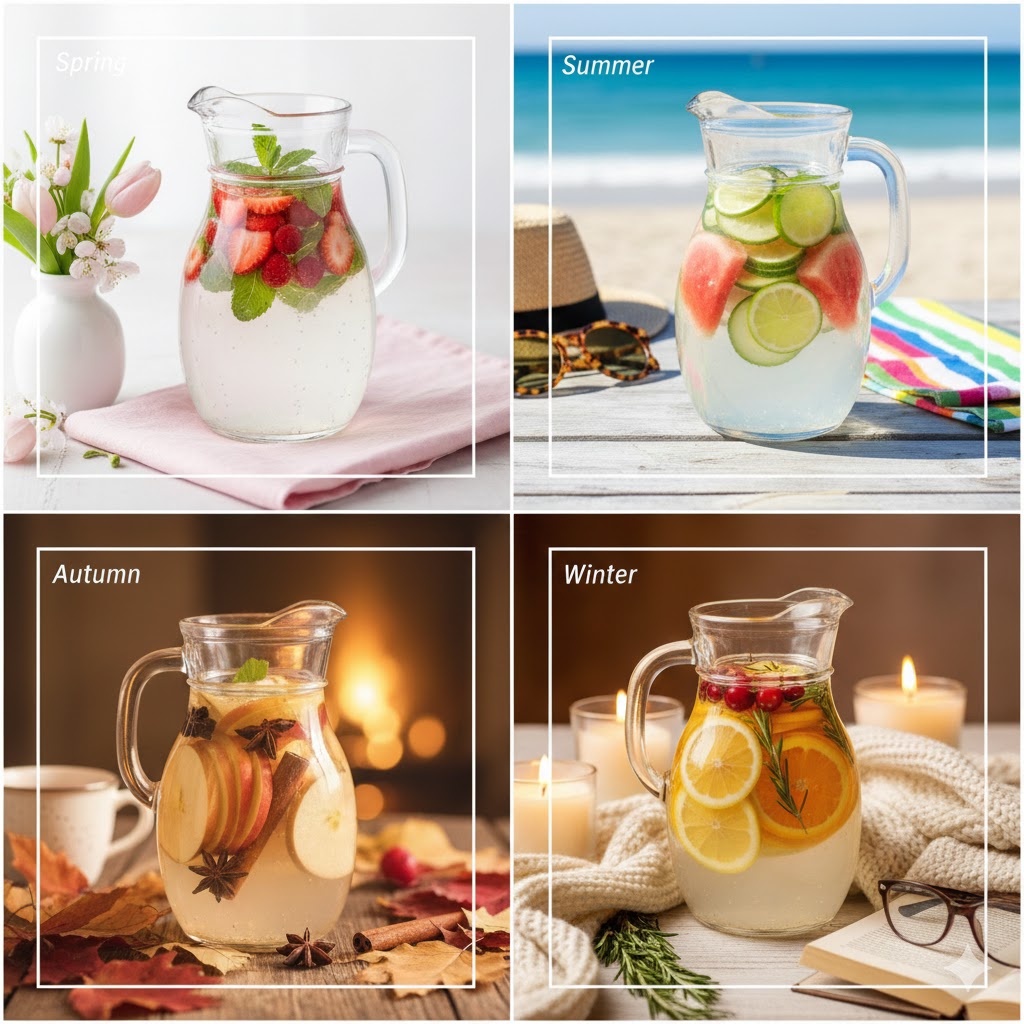
Spring Infusions with Fresh Berries
Answer: What are the best spring infused water recipes? Spring infused water works best with fresh strawberries, raspberries, mint, and basil—ingredients that peak in late spring and early summer.
Spring brings the first fresh berries of the year, perfect for light and energizing water.
Recipe 1: Spring Berry Medley
- Ingredients: ½ cup strawberries (sliced), ¼ cup raspberries, 10 fresh mint leaves, 1 quart cold water
- Instructions:
- Rinse all berries and mint thoroughly
- Slice strawberries into quarters
- Layer berries in bottom of pitcher
- Add mint leaves (bruise them lightly first)
- Fill with cold water
- Refrigerate 3-4 hours
- Serve over ice, garnish with extra mint
- Best Time: Late April through June
- Flavor Profile: Sweet, refreshing, garden-fresh
- Pro Tip: Use locally-sourced berries for maximum flavor
Recipe 2: Strawberry Basil Spring Water
- Ingredients: 1 cup strawberries (halved), 6-8 fresh basil leaves, 1 quart water
- Instructions:
- Wash and halve strawberries
- Clap basil leaves between hands to release oils
- Layer strawberries in pitcher
- Add bruised basil leaves
- Pour cold water over ingredients
- Refrigerate 2-3 hours
- Important: Remove basil after 3 hours to prevent bitterness
- Can continue drinking for 24 more hours
- Best Time: May through early July (when basil grows abundantly)
- Flavor Profile: Herbaceous sweetness, sophisticated
- Serving Suggestion: Perfect for spring brunch or garden parties
Summer Refreshers
Answer: What’s the most refreshing summer infused water? Watermelon cucumber mint is the most hydrating summer infused water, combining high water-content fruits with cooling herbs. It’s perfect for hot days and outdoor activities.
Summer demands cooling, hydrating drinks to combat heat and enjoy outdoor activities.
Recipe 3: Watermelon Cucumber Mint Cooler
- Ingredients: 2 cups watermelon cubes (seedless), ½ cucumber (sliced), 10-12 fresh mint leaves, 1 quart cold water
- Instructions:
- Cut watermelon into 1-inch cubes
- Slice cucumber into thin rounds or ribbons
- Layer watermelon at bottom of pitcher
- Add cucumber slices
- Bruise mint leaves and add
- Fill with ice-cold water
- Refrigerate 2-3 hours minimum
- Serve extra cold over crushed ice
- Best Time: June through August (peak watermelon season)
- Flavor Profile: Intensely cooling, hydrating, naturally sweet
- Nutritional Note: High water content aids summer hydration
- Perfect For: Pool parties, picnics, post-workout refreshment
Recipe 4: Citrus Blueberry Summer Splash
- Ingredients: 1 lemon (sliced), 1 lime (sliced), ½ cup fresh blueberries, 1 quart water
- Instructions:
- Wash all fruits thoroughly
- Slice lemon and lime into thin wheels
- Add half the citrus to pitcher
- Add blueberries
- Top with remaining citrus
- Pour cold water over all
- Refrigerate 3-4 hours
- Remove citrus after 4 hours if you prefer less tartness
- Best Time: July through September (peak blueberry season)
- Flavor Profile: Tart, sweet, energizing, vitamin C-rich
- Pro Tip: Freeze extra blueberries to use as edible ice cubes
Recipe 5: Peach Ginger Iced Water
- Ingredients: 2 ripe peaches (sliced), 1-inch piece fresh ginger (sliced thin), 1 quart water, ice
- Instructions:
- Choose ripe, fragrant peaches
- Slice peaches and remove pits
- Peel and thinly slice fresh ginger
- Layer peaches in pitcher
- Add ginger slices (start with less, add more if needed)
- Fill with cold water
- Refrigerate 4-6 hours for best flavor
- Strain before serving if you prefer no ginger bits
- Best Time: Late June through August (peak stone fruit season)
- Flavor Profile: Sweet with gentle warming spice, aromatic
- Health Benefit: Ginger supports digestion during summer BBQs
Fall Harvest Infusions
Answer: What are the best fall infused water flavors? Apple cinnamon, pear rosemary, and cranberry orange are the top fall infused water recipes, using seasonal harvest fruits and warming spices.
Autumn brings apples, pears, and warming spices that create comforting infused waters perfect for cooler weather.
Recipe 6: Apple Cinnamon Fall Water
- Ingredients: 1 medium apple (Honeycrisp or Gala work best), 1 cinnamon stick, 1 quart water, optional: 2-3 whole cloves
- Instructions:
- Wash apple thoroughly
- Slice apple thinly (¼ inch), leaving skin on
- Remove any seeds
- Add apple slices to pitcher
- Add cinnamon stick (break in half to release more flavor)
- Add cloves if using
- Pour cold water over ingredients
- Refrigerate overnight (8-12 hours) for best flavor
- Can be enjoyed warm too—heat gently, don’t boil
- Best Time: September through November (apple harvest season)
- Flavor Profile: Gently sweet, warming, cozy, reminiscent of apple pie
- Serving Option: Serve warm for a comforting fall beverage
- Storage: Apple can stay in water up to 24 hours
Recipe 7: Pear Rosemary Autumn Infusion
- Ingredients: 1 ripe pear (Bartlett or Bosc), 2-3 fresh rosemary sprigs (4-5 inches each), 1 quart water
- Instructions:
- Choose a ripe but firm pear
- Wash and slice pear thinly
- Rinse rosemary and bruise lightly with back of knife
- Layer pear slices in pitcher
- Add rosemary sprigs
- Fill with cold water
- Refrigerate 4-6 hours
- Remove rosemary after 6 hours max
- Pear can stay longer (up to 12 hours)
- Best Time: September through December (pear season)
- Flavor Profile: Delicate, aromatic, elegant, sophisticated
- Perfect For: Thanksgiving gatherings, autumn dinner parties
Recipe 8: Cranberry Orange Harvest Water
- Ingredients: ½ cup fresh cranberries (not dried), 1 orange (sliced), 1 quart water, optional: 1 cinnamon stick
- Instructions:
- Rinse fresh cranberries
- Lightly crush cranberries with muddler or fork (don’t pulverize)
- Slice orange into wheels
- Add crushed cranberries to pitcher
- Layer orange slices on top
- Add cinnamon stick if desired
- Pour cold water over all
- Refrigerate overnight for full cranberry flavor extraction
- Strain before serving if you prefer no cranberry bits
- Best Time: October through January (cranberry harvest and holiday season)
- Flavor Profile: Tart, festive, vitamin C-rich, holiday-inspired
- Holiday Tip: Perfect for Thanksgiving and Christmas gatherings
- Color Bonus: Beautiful ruby-red color for festive presentations
Winter Warming Blends
Answer: What infused water is good for winter? Citrus-based waters with ginger, cinnamon, or rosemary work best in winter. They can be enjoyed cold or gently warmed for a comforting beverage during cold months.
Winter calls for citrus fruits and warming spices that provide comfort during cold months.
Recipe 9: Grapefruit Rosemary Winter Tonic
- Ingredients: 1 ruby red grapefruit (sliced), 2-3 fresh rosemary sprigs, 1 quart water, optional: thin lemon slices
- Instructions:
- Slice grapefruit into wheels (½ inch thick)
- Remove any large seeds
- Rinse and bruise rosemary sprigs
- Layer grapefruit in pitcher
- Add rosemary
- Add lemon slices if using
- Fill with cold water
- Refrigerate 3-4 hours
- Can be gently warmed (don’t boil) for a cozy winter drink
- Best Time: December through March (peak citrus season)
- Flavor Profile: Bright, herbaceous, invigorating, slightly bitter-sweet
- Winter Benefit: High vitamin C content during cold season
- Serving Suggestion: Serve at room temperature or gently warmed
Recipe 10: Orange Ginger Cinnamon Warmth
- Ingredients: 1 orange (sliced), 1-inch piece fresh ginger (sliced thin), 1 cinnamon stick, 1 quart water, optional: 2-3 whole cloves
- Instructions:
- Slice orange into wheels
- Peel and thinly slice fresh ginger
- Add orange slices to pitcher
- Add ginger slices
- Add cinnamon stick (break it for more flavor)
- Add cloves if using
- Pour cold water over all
- Refrigerate overnight (8-12 hours) for deep, complex flavor
- Winter Special: Heat gently for 5-10 minutes for a warm, tea-like drink
- Best Time: November through February
- Flavor Profile: Spicy, sweet, comforting, warming from within
- Pro Tip: This tastes amazing when gently heated—perfect for cold winter mornings
- Reuse: Can refill with water once for a milder second batch
Recipe 11: Pomegranate Mint Holiday Water
- Ingredients: Seeds from ½ fresh pomegranate (about ½ cup), 8-10 fresh mint leaves, 1 quart water, optional: lime slices
- Instructions:
- Extract pomegranate seeds (arils) from fruit
- Rinse mint leaves
- Add pomegranate seeds to pitcher
- Bruise mint leaves and add
- Add lime slices if desired
- Pour cold water over ingredients
- Refrigerate 4-6 hours
- The seeds will sink and gradually release flavor
- Strain before serving or leave seeds in for texture
- Best Time: November through January (pomegranate season and holidays)
- Flavor Profile: Tart, refreshing, antioxidant-rich, jewel-toned
- Holiday Perfect: Beautiful ruby-red color for Christmas and New Year celebrations
- Nutritional Bonus: Pomegranate provides antioxidants during winter months
Winter Infused Water Tips:
- Many winter infused waters taste excellent when gently warmed (heat to 140-160°F, don’t boil)
- Warming spices like cinnamon, ginger, and cloves are more prominent in winter recipes
- Citrus fruits peak in winter, making them affordable and flavorful
- Winter waters can infuse longer (overnight) due to heartier ingredients
Seasonal Wellness Connection: Just as our bodies naturally adjust to seasonal changes in temperature and daylight, our hydration needs and flavor preferences shift throughout the year. Learning to work with these natural rhythms rather than against them supports overall wellness—discover more about adapting your lifestyle to seasonal changes for a more balanced approach to year-round health.
| Season | Peak Fruits | Best Herbs/Spices | Flavor Profile |
|---|---|---|---|
| Spring | Strawberries, Raspberries | Mint, Basil | Sweet, Refreshing |
| Summer | Watermelon, Peaches, Blueberries | Mint, Lemongrass | Cooling, Hydrating |
| Fall | Apples, Pears, Cranberries | Cinnamon, Rosemary | Warm, Comforting |
| Winter | Citrus (oranges, grapefruit), Pomegranate | Ginger, Cinnamon | Invigorating, Spicy |
Using seasonal fruits and herbs in your infusion recipes ensures maximum flavor and freshness while supporting local agriculture. Experiment with what’s available at your local farmers’ market to discover unique regional combinations.
Advanced Techniques for Flavor-Packed Infused Water
Take your infused water recipes to the next level with these advanced techniques. These methods enhance flavor intensity and create more complex drinking experiences.
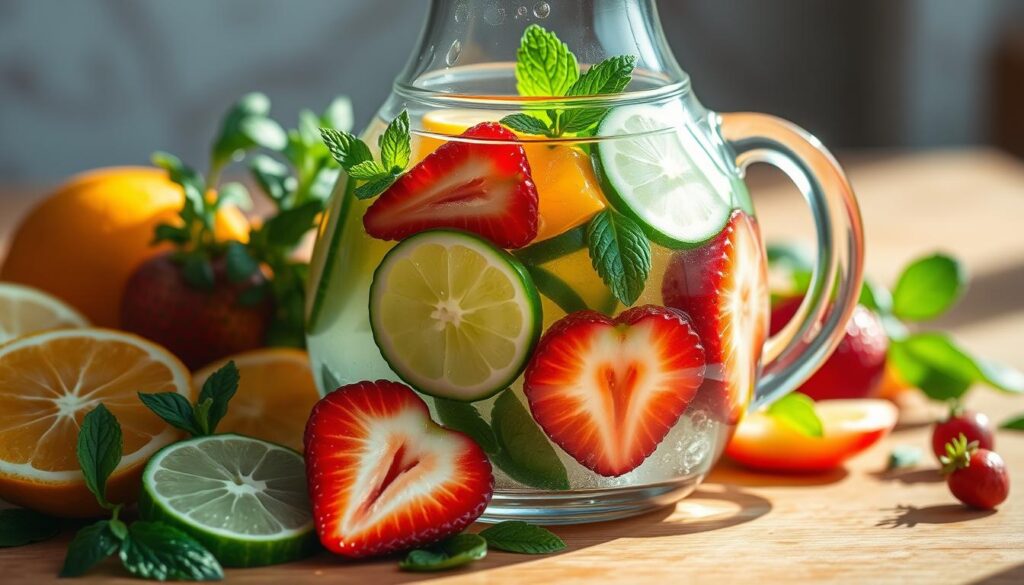
Muddling and Crushing Methods
Muddling releases essential oils, juices, and flavors from fruits and herbs more effectively than simple slicing.
How to Muddle Properly:
- Place herbs or soft fruits in the bottom of your container
- Use a muddler or the back of a wooden spoon
- Apply gentle pressure with a twisting motion
- Avoid crushing too hard—you want to bruise, not pulverize
- Look for visible juice release and aromatic oils
Best Ingredients for Muddling:
- Fresh herbs (mint, basil, cilantro)
- Berries (strawberries, raspberries, blackberries)
- Citrus (to release more juice, muddle after slicing)
- Soft fruits (kiwi, peaches)
Muddled Mint Lemonade Water:
- Muddle 15 mint leaves with 3 lemon wedges
- Add remaining lemon slices and water
- Infuse 1-2 hours for intense flavor
- Result: Significantly stronger than non-muddled version
Using Frozen Fruits
Frozen fruits serve multiple purposes in infused water: they chill your drink, slowly release flavor as they thaw, and are available year-round.
Benefits of Frozen Fruits:
- Available when fresh isn’t in season
- Often frozen at peak ripeness
- Act as ice cubes without diluting flavor
- Release flavor gradually for long-lasting taste
- Cost-effective option
How to Use Frozen Fruits:
- Direct Addition: Add frozen berries directly to water—no thawing needed
- Partial Thaw: Let fruits thaw 10-15 minutes for faster flavor release
- Crush First: Partially crush frozen fruits to expose more surface area
- Mix Fresh and Frozen: Combine for texture variety
Frozen Berry Burst:
- 1 cup mixed frozen berries (no need to thaw)
- 1 quart water
- Add berries to water, they’ll slowly release flavor over 4-6 hours
- Bonus: Berries keep water cold
Pro Tip: Freeze fresh herbs in ice cube trays with a small amount of water. Add these herb cubes to your infused water for instant flavor.
Creating Layered Flavor Profiles
Layering involves adding ingredients in stages to create complexity and depth.
The Layering Technique:
Stage 1 (Base Layer, 8-12 hours before):
- Add sturdy fruits that need longer infusion: apples, pears, citrus peels
- Infuse overnight in refrigerator
Stage 2 (Middle Layer, 3-4 hours before):
- Add medium-strength ingredients: cucumber, melon, whole berries
- Continue refrigerating
Stage 3 (Final Layer, 30 min – 1 hour before):
- Add delicate ingredients: fresh herbs, muddled berries, citrus juice
- These provide bright top notes
Example: Layered Citrus Garden Water
- 12 hours before: Add orange slices and lemon peel
- 3 hours before: Add cucumber ribbons
- 30 minutes before: Add fresh mint leaves
- Result: Complex flavor with distinct notes
Flavor Layering Combinations:
- Base: Pineapple chunks + Middle: Strawberry slices + Top: Basil leaves
- Base: Apple slices + Middle: Pear slices + Top: Cinnamon stick
- Base: Grapefruit + Middle: Cucumber + Top: Rosemary
Carbonated Infusions
Adding carbonation transforms ordinary infused water into a sophisticated sparkling beverage.
Methods for Carbonation:
Method 1: Pre-Infuse, Then Carbonate
- Infuse water with fruits/herbs as usual
- Strain out solids
- Carbonate using a SodaStream or similar device
- Serve immediately
Method 2: Add to Sparkling Water
- Prepare fruit/herb mixture
- Add to pre-carbonated water
- Infuse 15-30 minutes only (carbonation accelerates infusion)
- Serve quickly to preserve bubbles
Method 3: Fruit-Infused Ice Cubes
- Make concentrated infused water
- Freeze in ice cube trays
- Add cubes to sparkling water
- Flavor releases as cubes melt
Sparkling Cucumber Lemon Mint:
- Infuse cucumber, lemon, and mint in still water for 4 hours
- Strain and carbonate, OR add to sparkling water
- Serve over ice with fresh garnish
Important Notes:
- Carbonation is delicate—minimize handling
- Infuse for shorter times when using sparkling water
- Remove fruits/herbs before carbonating if using a SodaStream (prevents clogging)
- Serve in chilled glasses to maintain bubbles
Carbonated Infusion Ideas:
- Berry medley in sparkling water (tastes like natural soda)
- Citrus blend with sparkling water (alternative to commercial citrus sodas)
- Cucumber mint sparkler (sophisticated refreshment)
Using these advanced techniques—muddling for intensity, frozen fruits for convenience, layering for complexity, and carbonation for sophistication—you can create fruit-infused water recipes that rival commercial beverages. Experiment with combinations to find your signature drinks.
Common Mistakes to Avoid When Making Fruit Infused Water
To create the best fruit-infused water, avoid these common errors that can affect taste, safety, and enjoyment.
Overinfusion Issues
Leaving fruits and herbs in water too long can lead to unpleasant results.
Problems Caused by Overinfusion:
- Bitterness: Citrus peels and herbs release bitter compounds after extended steeping
- Mushiness: Fruits break down and create unappealing texture
- Off Flavors: Some fruits develop unpleasant tastes after 12-24 hours
- Cloudy Water: Fruit breakdown creates cloudiness
Solutions:
- Follow Time Guidelines:
- Citrus with peel: 2-4 hours maximum
- Herbs: 2-3 hours for delicate herbs, up to 4 for hardier ones
- Soft berries: 4-6 hours
- Firm fruits: Up to 12 hours
- Remove and Refresh:
- Take out fruits after recommended time
- You can drink the water for 1-2 more days
- Add fresh fruits for continued flavor
- Use a Removable Infuser:
- Makes it easy to remove ingredients at the right time
- Prevents forgetting about steeping fruits
Taste Test Regularly: Check your water every hour when trying new recipes to find your perfect infusion time.
Proper Storage and Shelf Life
Incorrect storage can lead to spoilage and food safety issues.
Storage Guidelines:
Temperature:
- Always refrigerate infused water
- Never leave at room temperature for more than 2 hours
- Bacteria multiply rapidly in room-temperature fruit water
Duration:
- With fruit inside: Consume within 24 hours
- Fruit removed: Up to 48 hours
- Fresh herbs inside: Remove after 3 hours, drink within 48 hours
- Opened frequently: Consume same day
Container Type:
- Use clean, food-safe containers
- Glass is preferred (doesn’t retain flavors)
- Ensure lids seal properly
- Wash containers thoroughly between batches
Signs of Spoilage (Discard Immediately):
- Cloudy appearance with sediment
- Slimy texture on fruits
- Off or fermented smell
- Visible mold
- Fizzing (unless intentionally carbonated)
Food Safety Tips:
- Wash hands before preparing
- Use clean utensils
- Don’t drink directly from shared pitchers
- Label containers with date prepared
- When in doubt, throw it out
Fruit Selection and Preparation Errors
Choosing and preparing fruits incorrectly impacts both flavor and safety.
Common Selection Mistakes:
Using Overripe or Damaged Fruit:
- Problem: Breaks down quickly, creates off flavors, higher spoilage risk
- Solution: Choose firm, fresh fruits at peak ripeness
Unwashed Produce:
- Problem: Pesticides, dirt, bacteria enter your water
- Solution: Rinse all fruits and herbs thoroughly under running water
Wrong Organic vs. Conventional Choices:
- If using peels (citrus, apples): Choose organic when possible to avoid pesticide residue
- If removing peels/skin: Conventional is fine
Preparation Errors:
Leaving Inedible Parts:
- Remove stems from strawberries and herbs
- Take out seeds from fruits when practical
- Remove tough cores from pineapple
Incorrect Cutting:
- Too large: Won’t release enough flavor
- Too small: Can create pulpy texture
- Solution: Aim for uniform slices (¼ inch thick for most fruits)
Not Bruising Herbs:
- Simply placing whole herb leaves releases minimal flavor
- Gently clap herbs between your hands or lightly muddle to release oils
Using Citrus Incorrectly:
- Mistake: Leaving thick white pith on citrus
- Problem: Creates bitter flavor
- Solution: Either peel citrus completely or limit infusion time to 2-4 hours
| Common Mistake | Consequence | Solution |
|---|---|---|
| Overinfusion (>12 hours) | Bitter, unpleasant flavor | Follow time guidelines; remove fruits promptly |
| Room temperature storage | Bacterial growth, spoilage | Always refrigerate; consume within 2 hours if left out |
| Unwashed produce | Pesticides, dirt in water | Wash all ingredients thoroughly |
| Damaged fruit | Off flavors, quick spoilage | Select firm, fresh produce |
| Not removing herbs | Excessive bitterness | Remove delicate herbs after 2-3 hours |
| Leaving citrus peel too long | Bitter, medicinal taste | Remove after 4 hours or peel before adding |
Avoiding these common mistakes ensures your fruit-infused water is safe, delicious, and refreshing every time. Pay attention to ingredient quality, preparation techniques, and storage practices for the best results.
Essential Equipment for Making Infused Water
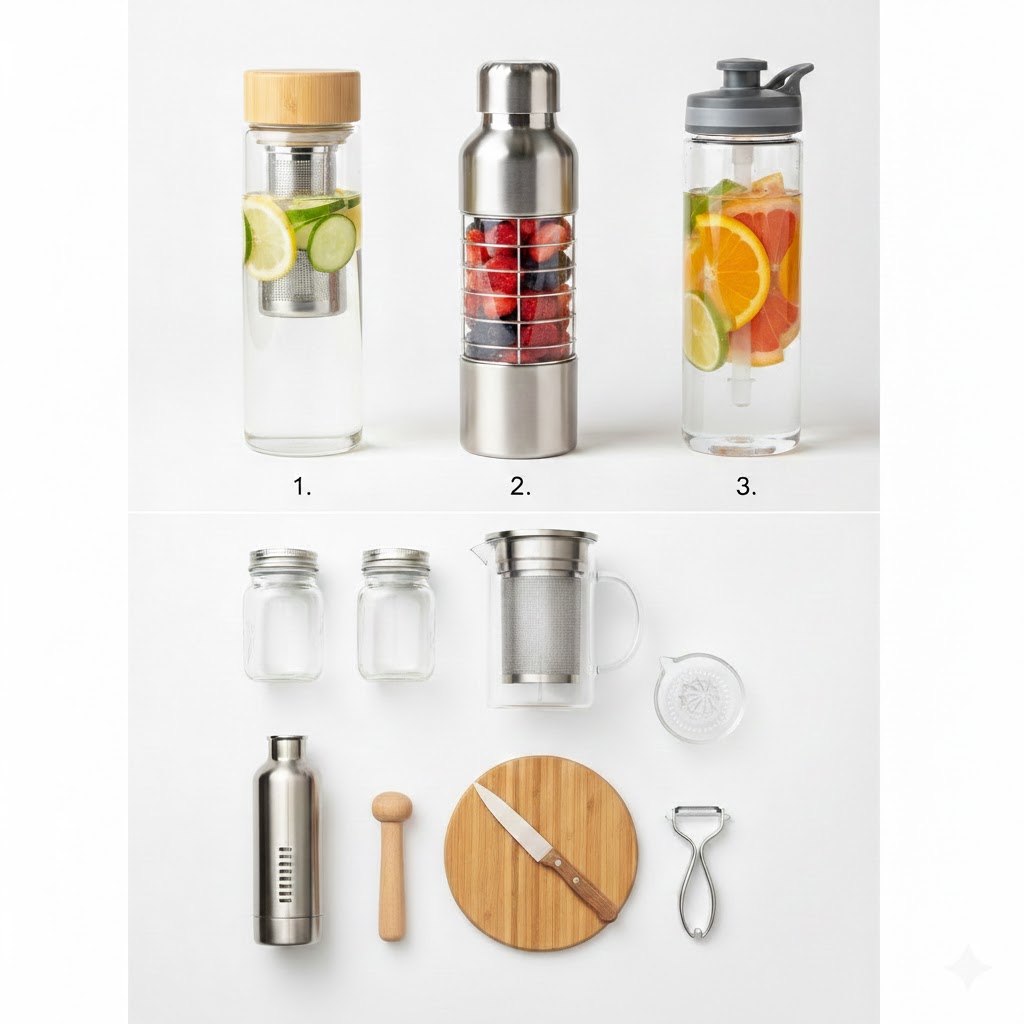
The right tools can enhance your infused water experience. You’ll need a few basic items and containers to create delicious, flavorful drinks at home. Having the proper equipment makes the process easier and more enjoyable.
Infuser Bottles and Pitchers
Infuser bottles and pitchers are specifically designed for making fruit-infused water. They feature built-in strainers that keep fruits, herbs, or vegetables separate from the drinking water while allowing flavors to blend.
Recommended Infuser Bottles:
- Glass Infuser Pitchers (2-quart capacity) – Perfect for family-size batches, features removable fruit basket, dishwasher-safe glass construction
- Stainless Steel Infuser Bottles (24-32 oz) – Ideal for on-the-go hydration, keeps water cold for hours, leak-proof design
- BPA-Free Plastic Infusers (32 oz) – Lightweight option for gym or travel, wide mouth for easy fruit insertion, affordable entry point
When selecting an infuser, look for BPA-free materials, durable construction, and leak-proof seals. Popular brands offer ergonomic designs that make pouring and cleaning straightforward.
Key Features to Consider:
- Wide opening for easy fruit addition and cleaning
- Removable infusion basket for versatility
- Secure lid to prevent spills
- Clear material to showcase your colorful creations
- Dishwasher-safe components for convenience
Mason Jars and Other Containers
Mason jars work excellently for fruit-infused water because they’re affordable, versatile, and readily available. You can also use glass pitchers, carafes, or wide-mouth jugs. The transparency of glass containers lets you admire your colorful creations.
Alternative Container Options:
- Half-Gallon Mason Jars – Perfect for overnight infusions, vintage aesthetic appeal
- Glass Carafes with Cork Lids – Elegant presentation for entertaining
- Beverage Dispensers (1-2 gallon) – Ideal for parties and gatherings, includes spout for easy serving
Make sure all containers are thoroughly cleaned and made from food-safe materials. Glass is preferred by many because it doesn’t retain flavors and is environmentally friendly.
Cutting Tools and Accessories
Proper preparation tools help you create better-tasting infused water. You’ll need quality knives and cutting boards to prep your ingredients effectively.
Essential Preparation Tools:
- Sharp Paring Knife – For precise citrus slicing and berry prep
- Bamboo Cutting Board – Dedicated surface for fruit preparation
- Citrus Juicer (optional) – Extract extra flavor from lemons and limes
- Muddler – Release essential oils from herbs and soft fruits
- Fine Mesh Strainer – Remove seeds and pulp if desired
- Herb Scissors – Quick cutting of fresh herbs
Some infuser sets include muddlers or crushers to release more flavor from ingredients. A vegetable peeler helps remove citrus zest, while a simple citrus juicer can add concentrated flavor when needed.
Pro Tip: Invest in a dedicated cutting board for fruits to prevent flavor transfer from other foods like onions or garlic.
Hydration and Wellness: Making infused water is just one aspect of a holistic wellness approach. For comprehensive guidance on incorporating natural ingredients into your daily routine, explore our complete Herbal Wellness guides covering everything from herbal teas to natural remedies.
With these tools, you can explore endless infusion recipes and water infuser recipes. Having the right equipment makes the process smooth and enjoyable, encouraging you to experiment with new flavor combinations regularly.
Conclusion: Elevating Your Hydration with Delicious Infusion Recipes
Now that you’ve explored the world of infusion recipes, you’re equipped to make it a regular part of your daily routine. Learning how to make fruit infused water opens up endless possibilities for natural, refreshing hydration.
Key Takeaways:
- Infusion recipes offer a practical alternative to sugary beverages while making hydration more enjoyable
- Simple combinations of fresh fruits, herbs, and vegetables create naturally flavorful drinks
- Proper equipment like infuser pitchers and bottles makes the process convenient
- Following basic guidelines for ingredient selection, preparation, and storage ensures the best results
- Seasonal ingredients keep your infusion recipes interesting year-round
- Advanced techniques like muddling, layering, and carbonation add variety to your repertoire
Making It a Habit:
Start with one or two favorite infusion recipes and make them regularly. As you become comfortable, experiment with new combinations based on seasonal availability and your taste preferences. Keep a pitcher in your refrigerator so flavored water is always ready to enjoy.
Health and Enjoyment Balance:
The beauty of infusion recipes lies in their simplicity—just water enhanced with natural ingredients. This makes them suitable for almost everyone as a refreshing beverage choice. The natural flavors encourage more consistent hydration without added sugars or artificial ingredients.
Expanding Your Wellness Journey:
Infusion recipes are an excellent entry point into natural wellness practices. If you’re interested in exploring more ways to incorporate natural ingredients into your lifestyle, consider these complementary approaches:
- Herbal Wellness – Discover various herbal remedies and natural wellness practices
- Chai Tea Benefits – Learn about warming spice blends for energy and wellness
- Matcha vs Green Tea – Compare antioxidant-rich tea options for daily hydration
Whether you prefer the classic lemon-mint combination, adventurous tropical blends, or sophisticated herb pairings, there’s an infusion recipe for every preference. The recipes and techniques in this guide provide a foundation, but your creativity determines the final results.
Beyond Just Hydration:
For those interested in exploring other natural wellness beverages, concentrated wellness shots offer complementary benefits. Learn more in our guide on Shot Immune Drinks.
Related Wellness Topics:
If you’re enjoying the benefits of natural fruit-infused water, you might also be interested in:
- Types of Green Tea – Explore 15 varieties of antioxidant-rich green tea
- Easy Chai Tea Concentrate Recipe – Make your own spiced tea concentrate at home
Your Next Steps:
- Choose 2-3 infusion recipes from this guide to try this week
- Invest in a quality infuser pitcher or bottle
- Visit your local market for fresh, seasonal ingredients
- Experiment with infusion times to find your perfect flavor intensity
- Share your creations with friends and family
Which infusion recipe will you try first? Share your favorite combinations and creative experiments in the comments below! Your discoveries might inspire others on their hydration journey.
FAQ
What are some popular infused water ideas?
Popular combinations include lemon with ginger, strawberry with basil, cucumber with mint, and mixed berry blends. Citrus fruits, berries, cucumber, and fresh herbs like mint and basil create refreshing drinks that make staying hydrated more enjoyable. Experiment with seasonal fruits for variety throughout the year.
How do I make fruit-infused water?
Add your chosen fruits, herbs, or vegetables to a pitcher or infuser bottle. Fill with cold water and refrigerate for 2-12 hours depending on desired flavor intensity. Remove ingredients after recommended steeping time to prevent bitterness. Start with 1-2 cups of fruit per quart of water and adjust to taste.
What are the best fruits to use for infused water?
Lemons, limes, oranges, strawberries, blueberries, raspberries, watermelon, pineapple, and cucumber work excellently. Citrus fruits infuse quickly with bright flavors, while berries create sweet, colorful water. Choose fresh, firm fruits at peak ripeness for the best taste and maximum flavor release.
Can I use frozen fruits for infused water?
Yes—frozen fruits work great and double as ice cubes while slowly releasing flavor as they thaw. They’re convenient when fresh fruits aren’t in season and are often frozen at peak ripeness. Add them directly to water without thawing, or partially thaw for faster flavor infusion.
How long can I store infused water?
Store infused water in the refrigerator and consume within 1-2 days for optimal taste and safety. Remove fruits after recommended infusion time—water can last up to 48 hours after fruits are removed. If you notice off smells, cloudiness, or sliminess, discard immediately.
Can I reuse the fruits and herbs after making infused water?
You can typically reuse ingredients once for a milder second batch, as most flavor is released during the first infusion. The intensity will be noticeably lighter. Alternatively, repurpose used fruits in smoothies, salads, or compost them rather than discarding.
What are some tips for making the best infused water?
- Use fresh, quality ingredients and wash them thoroughly
- Adjust fruit amounts and infusion time to match your taste preferences
- Try muddling herbs or lightly crushing fruits for enhanced flavor release
- Remove citrus peels or limit their infusion time to avoid bitterness
- Use filtered water if your tap water has strong flavors
- Keep infused water refrigerated at all times
Can I make infused water with vegetables?
Yes—cucumbers, carrots, celery, and beets add interesting flavors and nutrients. Cucumber with mint is a classic, spa-like combination. Vegetables provide subtle, refreshing tastes that pair well with fruits and herbs. Slice vegetables thinly or use a peeler for ribbons to maximize surface area.
How long should I infuse water with different ingredients?
Citrus with peel: 2-4 hours (can become bitter if longer). Fresh herbs: 2-3 hours for delicate herbs like mint and basil. Berries: 3-6 hours for balanced sweetness. Firm fruits (apples, pears): 4-12 hours. Hard spices (cinnamon sticks): 4-8 hours. Taste periodically to find your preferred strength.
What equipment do I need to make infused water?
Essential items include an infuser pitcher or bottle with built-in strainer, or alternatively, mason jars or glass containers. You’ll also need a sharp knife, cutting board, and optionally a muddler for crushing herbs and fruits. Choose BPA-free, food-safe materials for all containers and equipment.
Written by Doo & Rita
Doo and Rita are sisters, herbal wellness enthusiasts, and DIY beauty lovers who explore plant-based ingredients through hands-on experiments. We share tips and recipes we personally test, always with a gentle, nature-first approach.
Disclaimer: The information provided in this article is for educational and lifestyle purposes only and is not intended as medical advice. It does not diagnose, treat, cure, or prevent any disease. Always listen to your body and consult a qualified healthcare professional for personal health concerns.