Natural Hair Colors: Complete Guide to Plant-Based Dye 2026
By Doo & Rita February 17, 2026
Last Updated: February 2026
You’re about to discover the world of natural hair colors—a gentle, plant-based approach to hair transformation that’s been used for thousands of years. From vibrant henna reds to soft chamomile blondes, natural hair dye offers beautiful results without harsh chemicals.
Whether you’re looking to cover grays, enhance your natural shade, or completely transform your look, this complete guide will walk you through everything—from understanding different organic hair color options and choosing the right shade, to step-by-step application techniques and maintaining your color naturally.
With natural hair coloring gaining popularity worldwide, learning about plant-based alternatives to conventional dyes is both empowering and rewarding. It’s a wonderful way to explore botanical beauty while honoring your hair’s health and the planet’s wellbeing.
💡 Quick Answer: What Are Natural Hair Colors?
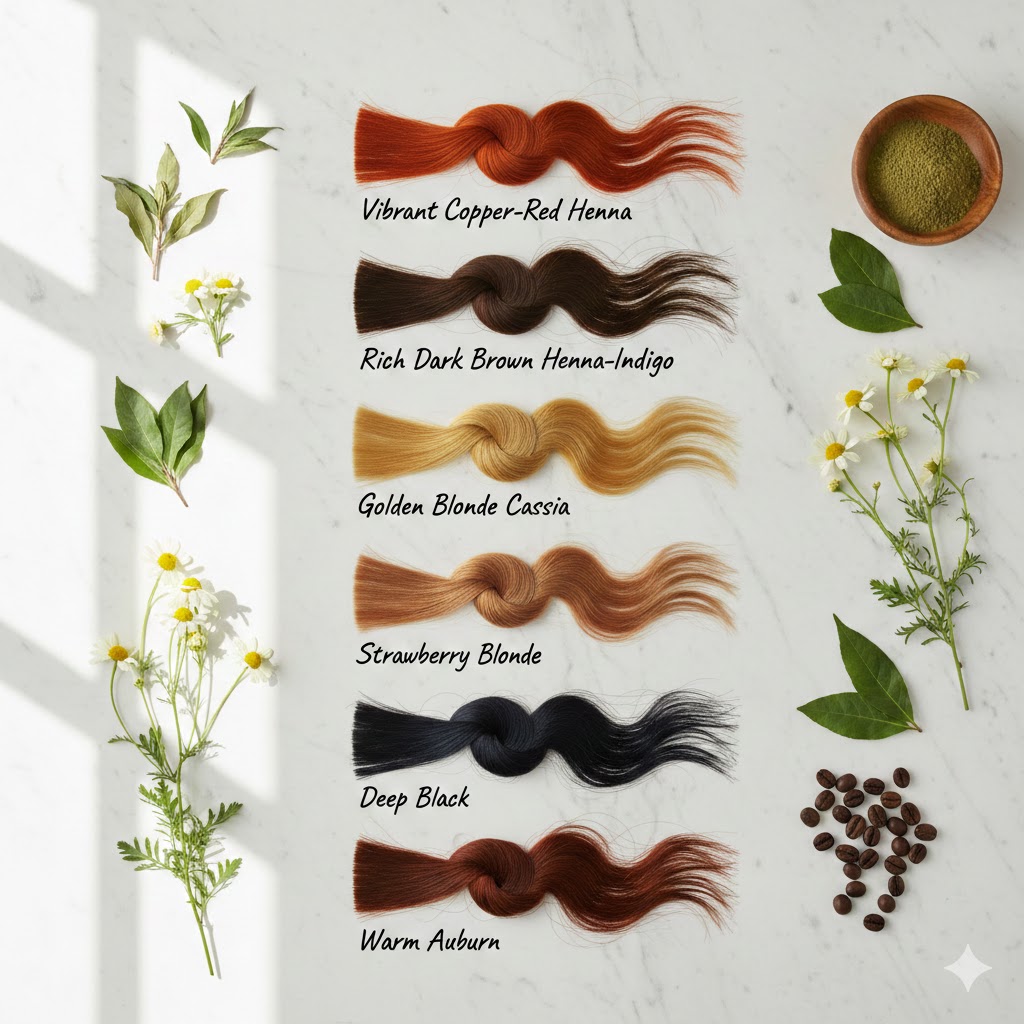
Natural hair colors are plant-based dyes derived from herbs, roots, flowers, and minerals. Unlike chemical dyes, they coat the hair shaft rather than penetrating it, making them gentler. Popular options include henna (reds), indigo (blacks/browns), cassia (blondes), and herbal infusions. Best choice: Pure, body-art quality henna or certified organic brands.
| Type Henna, Indigo, Herbs | Best For All hair types | Lasts 4-6 weeks | Processing 2-4 hours |
Table of Contents
What Are Natural Hair Colors? Understanding Plant-Based Hair Dye
Natural hair colors are dyes created from plants, minerals, and herbs that have been used for thousands of years across cultures worldwide. Unlike conventional chemical dyes that penetrate and alter the hair’s internal structure, natural hair dye works by coating the hair shaft with color molecules.
The most common natural hair colors come from:
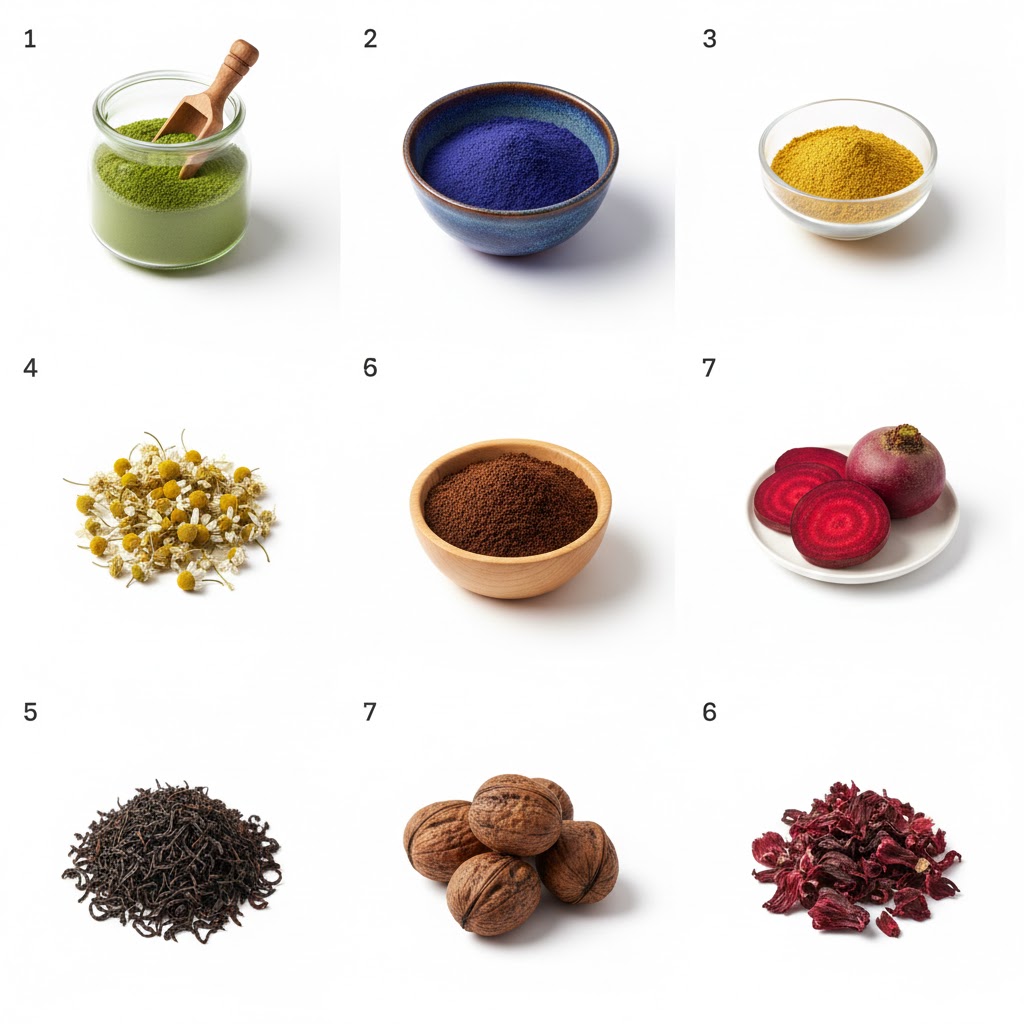
- Henna (Lawsonia inermis) — Creates reds, coppers, and auburns
- Indigo (Indigofera tinctoria) — Produces blacks and dark browns
- Cassia (Cassia obovata) — Adds golden tones to blonde hair
- Herbal infusions — Coffee, tea, chamomile, walnut hulls
- Vegetable extracts — Beetroot, carrot, hibiscus
These organic hair color options align with broader natural body care principles and offer a gentler alternative to synthetic dyes.
💡 Quick Tip: Body-Art Quality Matters
Always choose “body-art quality” or “BAQ” henna, which is pure and finely sifted. Avoid henna labeled “for hair only” as it may contain metallic salts or additives that can damage hair or react unpredictably.
How Natural Hair Dye Differs from Chemical Dye
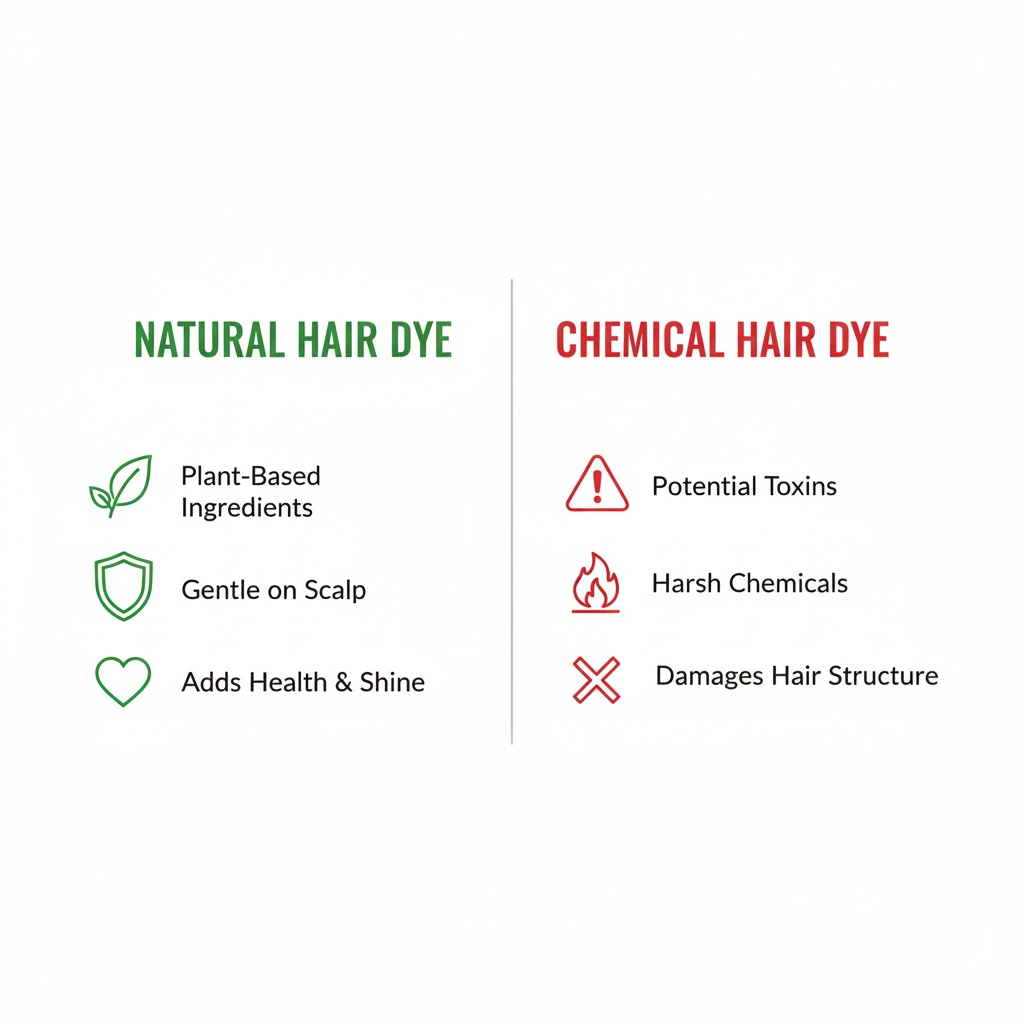
The key difference lies in how they interact with your hair:
Chemical dyes use ammonia or similar alkaline agents to open the hair cuticle, then peroxide to strip natural pigment before depositing synthetic color molecules deep inside the hair shaft. This process permanently alters hair structure.
Natural hair colors work differently. Plant dyes like henna contain lawsone molecules that bind to the keratin protein in hair, creating a translucent coating around each strand. This means:
- Hair structure remains intact and may help hair feel stronger
- Color is semi-permanent, gradually fading over time
- Results are more translucent and multi-dimensional
- Each application builds upon previous color
Types of Natural Hair Colors: Complete Guide by Shade
Choosing the right natural hair color depends on your starting shade and desired result. Here’s a comprehensive breakdown of options for every hair color goal.
Natural Blonde Hair Color Options
Achieving and maintaining natural blonde hair color requires gentle lightening and brightening techniques. While true lightening is difficult with plant-based methods alone, you can enhance blonde tones beautifully.
Natural Dirty Blonde Hair Color
For natural dirty blonde hair color, combine cassia obovata with a touch of henna to create warm, sandy tones. This works best on light brown to medium blonde hair, adding golden dimension without going too red or too bright.
Recipe for Dirty Blonde:
- 90% cassia obovata powder
- 10% henna powder
- Brew with chamomile tea instead of water
- Add 1 tablespoon honey for moisture
Natural Strawberry Blonde Hair Color
The secret to natural strawberry blonde hair color is using a very light henna application on blonde or light brown hair. Choose a henna variety that produces lighter coppers rather than deep reds.
Best approach: Use 25% henna mixed with 75% cassia for subtle strawberry tones. Start with a strand test to ensure you achieve the soft, peachy-pink blonde you’re seeking.
Natural Dark Blonde Hair Color
For natural dark blonde hair color, pure cassia obovata works beautifully on medium blonde to light brown hair. It adds golden warmth and incredible shine while subtly deepening the shade.
Enhancement tip: Regular chamomile rinses between cassia applications maintain brightness and prevent brassiness.
Honey Blonde Color on Natural Hair
Creating honey blonde color on natural hair requires layering techniques:
- Start with cassia base for golden foundation
- Add very light henna gloss (10% henna, 90% cassia)
- Finish with chamomile vinegar rinse for brightness
This three-step approach builds the warm, sun-kissed dimension characteristic of honey blonde shades.
Natural Brown Hair Colors
Brown tones are among the easiest to achieve with natural hair colors, offering rich, multi-dimensional results.
Light Brown & Chestnut
Coffee method: Brew strong coffee and apply as a final rinse after shampooing. Repeat weekly to gradually build soft brown tones.
Note: Coffee provides a temporary color boost rather than a permanent dye. It lacks the natural fixing tannins found in henna, making it an ideal “refresher” between full color treatments.
Henna-cassia blend: Mix 40% henna with 60% cassia for warm chestnut browns that catch the light beautifully.
Medium to Dark Brown
For deeper browns, use pure henna followed by an indigo layer (two-step process):
- Apply henna, process 2-4 hours, rinse
- Next day, apply indigo over henna, process 1-2 hours
- Result: Rich chocolate to mahogany brown
The ratio of henna to indigo processing time determines whether you get warmer or cooler browns.
Natural Red Hair Colors
Henna is synonymous with red natural hair dye, producing stunning results from copper to deep auburn.
Copper & Bright Reds
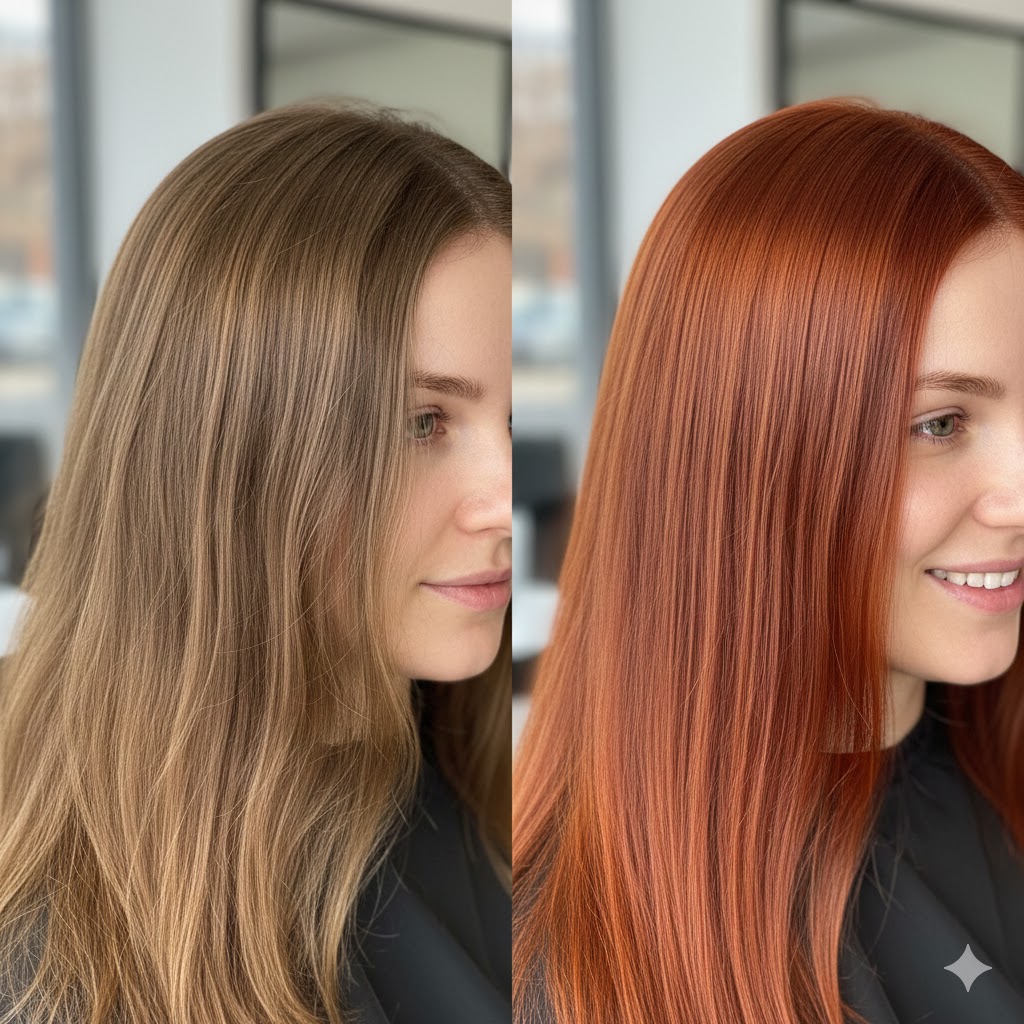
Pure henna on blonde or light brown hair creates vibrant copper to orange-red tones. The lighter your starting shade, the brighter the result.
Best henna varieties for bright reds:
- Rajasthani henna (bright orange-red)
- Yemeni henna (deep copper)
- Moroccan henna (warm red-brown)
Auburn & Burgundy
For deeper reds, apply henna multiple times to build color intensity, or mix henna with small amounts of indigo (90% henna, 10% indigo) for burgundy tones.
Natural Black Hair Color
Indigo produces true black when layered over henna, creating the deepest natural hair colors possible.
Two-step black process:
- Apply henna for 2 hours (creates base for indigo to bind to)
- Next day, apply pure indigo for 2-3 hours
- Result: Deep blue-black that oxidizes to pure black over 48 hours
This combination is often called “black henna” but should not be confused with dangerous chemical products marketed as black henna.
How to Apply Natural Hair Colors: Step-by-Step Guide
Proper application technique ensures even coverage and beautiful results with natural hair dye. This differs significantly from chemical dye application.
Preparation (Day Before)
- Strand test: Always test on a small section first to preview results
- Clarify hair: Wash with clarifying shampoo to remove buildup
- Gather supplies: Mixing bowl (not metal), applicator brush, gloves, old towels, shower cap Crucial: Always use a non-metallic bowl. (glass, ceramic, or plastic). Metal can react with plant pigments—especially if your hair has traces of previous chemical treatments—leading to unpredictable color results
- Protect workspace: Cover surfaces; henna stains everything!
Mixing Your Natural Hair Color
For Henna:
- Mix powder with warm water or herbal tea to yogurt consistency
- Add 1-2 tablespoons lemon juice or apple cider vinegar (helps dye release)
- Let sit 8-12 hours at room temperature for dye release
- Before application, add a bit more liquid if mixture has thickened
For Indigo:
- Mix powder with warm water only (no acid needed)
- Use immediately—indigo degrades quickly once mixed
- Keep warm during application for best results
Application Technique
- Section hair: Divide into 4-6 sections for thorough coverage
- Start at roots: Apply generously with brush or gloved hands
- Saturate completely: Natural dyes need thick application—don’t be shy!
- Work through lengths: Ensure every strand is coated
- Pile hair on head: Twist into a bun or coil
- Cover with shower cap: Keeps mixture moist and warm
- Wrap in towel: Additional warmth helps color development
Processing Time
- Henna: 2-4 hours (longer = deeper color)
- Cassia: 1-2 hours
- Indigo: 1-3 hours (don’t exceed 3 hours)
- Herbal infusions: 30 minutes to 1 hour
Rinsing & Aftercare
- Rinse thoroughly: Use warm water until water runs clear
- Skip shampoo: Wait 24-48 hours before shampooing
- Condition deeply: Natural dyes can be drying; deep condition after rinsing
- Expect color shift: Henna oxidizes over 2-3 days, getting deeper
- Indigo oxidation: Takes 24-48 hours to develop from green to final color
DIY Natural Hair Color Recipes
Create salon-quality natural hair colors at home with these tested recipes. Each formula uses pure ingredients and proven techniques for beautiful, lasting results.
🍛 Classic Red Henna Recipe
⏱ Prep: 20 min | 🕐 Dye Release: 8-12 hours | 💆 Process: 2-4 hours | 📊 Best For: All hair colors (results vary by base)
Ingredients:
- 100g body-art quality henna powder (adjust for hair length)
- 300-400ml warm water or brewed black tea
- 2 tablespoons lemon juice or apple cider vinegar
- 1 tablespoon olive oil or coconut oil (optional, for moisture)
- Few drops essential oil like lavender or tea tree (optional, for scent)
Instructions:
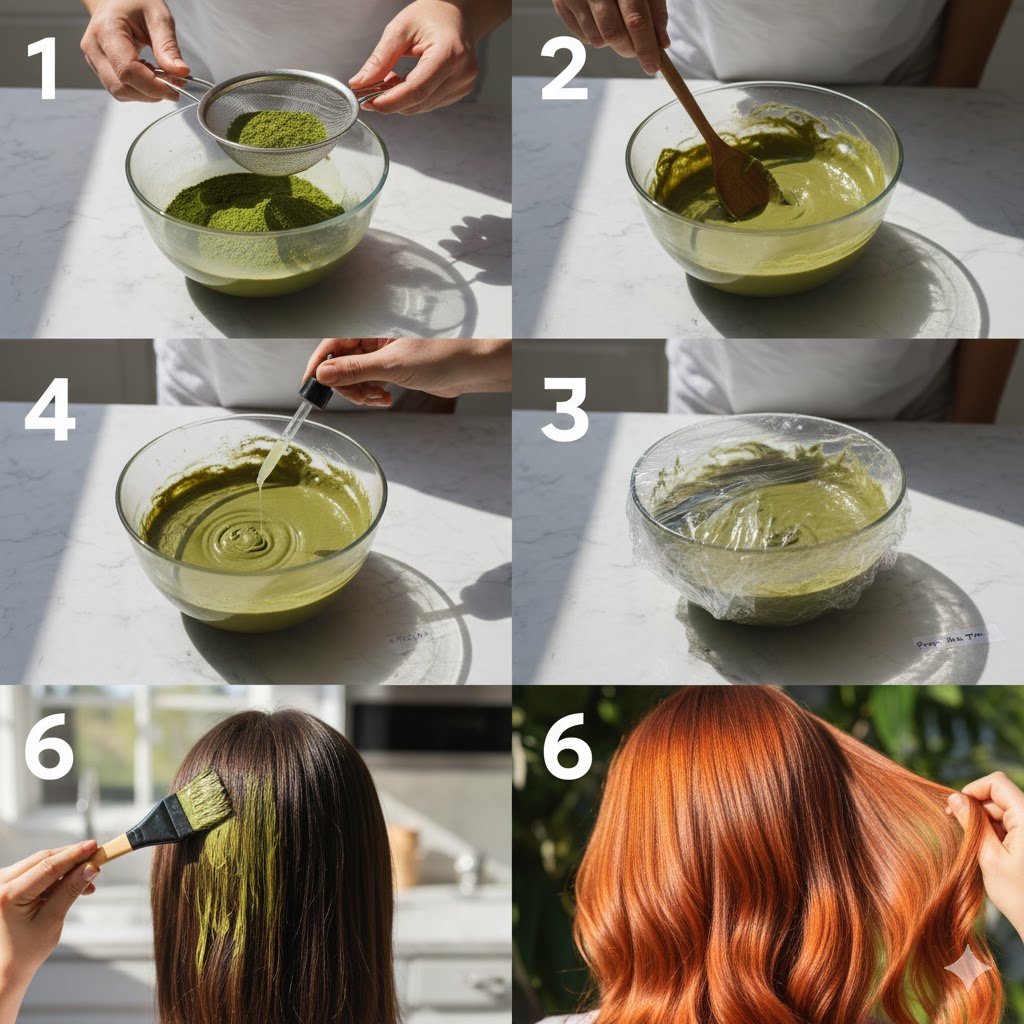
- Mix henna powder with warm liquid to create thick, pudding-like consistency
- Stir in lemon juice or vinegar thoroughly
- Cover bowl with plastic wrap directly touching surface (prevents oxidation)
- Let sit at room temperature 8-12 hours for dye release
- Before application, stir in oil if using, and thin with water if too thick
- Apply to clean, dry hair following technique above
- Process 2-4 hours under shower cap
- Rinse thoroughly with warm water, no shampoo
Expected Results:
- Blonde hair: Bright copper to orange-red
- Light brown: Warm red-brown
- Dark brown: Auburn highlights
- Black hair: Subtle red tones in sunlight
🍛 Natural Dark Brown Recipe (Henna + Indigo)
⏱ Total Time: 2 days | 💆 Process: Day 1 (2-3 hours), Day 2 (1-2 hours) | 📊 Best For: Covering grays, darkening hair
Day 1 – Henna Application:
- 100g henna powder
- Prepare and apply as in Classic Red recipe above
- Process 2-3 hours
- Rinse thoroughly, no shampoo
- Let hair dry naturally or gently blow-dry
Day 2 – Indigo Application:
- 100g indigo powder
- 300ml warm water (NO acid for indigo)
- 1 teaspoon salt (helps color adherence) – (Pro Tip: Adding salt is a crucial, often overlooked step that helps the indigo molecules “bite” and adhere more effectively to the hair fiber for a longer-lasting dark result.)
- Mix to yogurt consistency immediately before use
- Apply to dry, henna’d hair
- Process 1-2 hours (don’t exceed 3 hours)
- Rinse with cool water
Expected Result: Rich chocolate to dark brown that develops over 48 hours
🍛 Chamomile Blonde Brightening Treatment
⏱ Prep: 10 min | 🕐 Process: 1 hour | 📊 Best For: Blonde to light brown hair
Ingredients:
- 6 chamomile tea bags or 1/2 cup dried chamomile flowers
- 2 cups boiling water
- 2 tablespoons lemon juice (optional, for extra brightening)
- 1 tablespoon honey
Instructions:
- Steep chamomile in boiling water for 30 minutes
- Strain and let cool to warm (not hot)
- Stir in lemon juice and honey
- Saturate clean, damp hair with mixture
- Sit in sunlight if possible (enhances lightening)
- Leave on 1 hour
- Rinse with cool water
- Repeat weekly for gradual brightening
Expected Result: Subtle golden highlights and overall brightness boost
Best Natural Hair Dye Brands in 2026
While DIY offers maximum control, quality brands provide convenience and consistent results for those seeking ready-to-use organic hair color options.
Premium Natural Hair Color Brands
Light Mountain Natural — Pure henna and herbal hair colors since 1987. No metallic salts, PPD, ammonia, or peroxide. Available in 11 shades from blonde to black. USDA certified facility. Price: $12-18. Best for beginners seeking reliable results.
Lush Henna Hair Dyes — Fresh, handmade henna blocks combining pure henna with fair-trade cocoa butter and essential oils. Six vibrant shades. Cruelty-free and vegan. Price: $28-30. Best for those wanting luxurious application experience.
Herbatint Permanent Herbal Haircolor — Gentle permanent color with herbal extracts. Contains 8 botanical extracts including aloe and limnanthes. PPD and ammonia-free. Wide range of shades. Price: $15-20. Best for those wanting longer-lasting coverage similar to conventional dye.
Naturtint Permanent Hair Color — Plant-based permanent dye enriched with natural ingredients. Dermatologically tested. Free from ammonia, resorcinol, and heavy metals. 29 shades available. Price: $15-18. Best for sensitive scalps.
Radico Organic Hair Color — 100% organic certified by Ecocert. Pure herbal powders or ready-to-use formulas. No chemicals whatsoever. Price: $18-25. Best for those committed to truly organic hair color.
Rainbow Research Henna — Persian henna formulas that have been trusted for decades. Wide color range. Vegan and cruelty-free. Price: $8-12. Best budget-friendly option.
Where to Buy Quality Henna & Natural Dyes
- Mehandi.com — Specializes in body-art quality henna with detailed testing data
- Mountain Rose Herbs — Organic henna, indigo, and cassia powders
- Whole Foods — Carries Light Mountain, Lush (some locations), Herbatint
- Amazon — Wide selection but verify seller reputation for authenticity
- iHerb — International shipping, good prices on natural brands
Natural vs Chemical Hair Dye: Complete Comparison
| Aspect | Natural Hair Colors | Chemical Dyes |
|---|---|---|
| Ingredients | Plants, minerals, herbs | Ammonia, peroxide, PPD, synthetic dyes |
| How It Works | Coats hair shaft | Penetrates and alters hair structure |
| Hair Impact | May help improve appearance, adds shine | Can damage, dry, weaken over time |
| Scalp Impact | Generally considered gentle by many users | Can cause irritation, burns, sensitivities |
| Gray Coverage | Good to excellent (henna/indigo) | Excellent |
| Color Range | Limited but natural-looking | Unlimited, including unnatural shades |
| Longevity | Semi-permanent, fades gradually | Permanent until grows out |
| Maintenance | Reapply every 4-6 weeks | Touch up roots every 4-8 weeks |
| Environmental Impact | Biodegradable, minimal impact | Water pollution, chemical waste |
| Price | $8-30 per application | $8-100+ salon or at-home |
| Processing Time | 1-4 hours | 30-45 minutes |
| Best For | Health-conscious, patient, natural looks | Quick results, dramatic changes |
Frequently Asked Questions About Natural Hair Colors
Q: Can natural hair dye cover gray hair?
A: Yes! Henna and henna-indigo combinations provide excellent gray coverage. Pure henna on gray hair creates vibrant copper-red. For browns and blacks, use the two-step henna-then-indigo process. Grays may initially appear brighter than the rest, but color evens out over multiple applications.
Q: How long do natural hair colors last?
A: Natural hair colors are semi-permanent but quite long-lasting. Henna can last 4-6 weeks before fading, though it never completely washes out—it gradually softens. Indigo fades faster (3-4 weeks), requiring more frequent touch-ups. Herbal rinses last 1-2 weeks. The color builds with each application.
Q: Can I go back to chemical dye after using henna?
A: Yes, but with caution. Wait at least 3-6 months after your last henna application. Pure body-art quality henna is generally safe, but henna mixed with metallic salts can react unpredictably with chemical dyes. Always do a strand test first and consider professional help for the transition.
Q: Will natural hair dye lighten my hair?
A: No, plant-based dyes cannot lighten hair as they don’t contain bleaching agents. They can only deposit color. However, chamomile and lemon rinses can gradually brighten blonde hair through subtle sun-activated lightening. For significant lightening, you’d need hydrogen peroxide or professional bleaching.
Q: Is henna safe during pregnancy?
A: Pure, body-art quality henna has traditionally been used during pregnancy for centuries across many cultures. However, avoid “black henna” which contains PPD, a harsh chemical. As with any product during pregnancy, consult your healthcare provider, especially if you have specific concerns or sensitivities.
Q: Why did my henna turn out orange instead of red?
A: Henna on blonde or very light hair initially appears bright orange-copper. This is normal! The color deepens and oxidizes over 2-3 days, developing into richer reds. Additionally, each subsequent application builds depth. If you want less orange tones, choose darker henna varieties or mix with small amounts of indigo.
Q: Can I use natural hair color on chemically treated hair?
A: Yes, but results may vary. Henna works well over most chemical dyes, though colors may differ from expected results on virgin hair. If hair is bleached or has metallic dyes, always do a strand test first. Natural dyes work best on hair that hasn’t been chemically treated in the past 3-4 months.
Q: How do I remove natural hair dye if I don’t like it?
A: Natural hair colors cannot be easily removed like chemical dyes since they bind to hair protein. Options include: waiting for it to fade naturally (several months), using oil treatments to gradually lighten it, or applying “color oops” products (may have limited effect). Henna is essentially permanent and grows out rather than washes out.
Q: What’s the difference between henna for hair and henna for body art?
A: “Body-art quality” (BAQ) henna is finely sifted, pure Lawsonia inermis with no additives—this is what you want for hair. “Henna for hair” products may contain metallic salts, synthetic dyes, or other additives. Always choose body-art quality henna to ensure safety and predictable results.
Q: Can natural hair dye cause allergies?
A: Pure plant-based dyes rarely cause reactions, though it’s possible with any botanical. Allergic reactions to pure henna are uncommon but possible. However, products labeled “black henna” containing PPD commonly cause severe reactions. Always patch test new products 48 hours before full application, especially if you have sensitive skin.
Maintaining Your Natural Hair Color
Proper care extends the vibrancy and longevity of your natural hair colors while keeping hair healthy.
Post-Color Care Tips
- Wait to shampoo: Don’t wash hair for 24-48 hours after application to allow full color development
- Use sulfate-free shampoo: Harsh sulfates strip natural dyes faster
- Cool water rinses: Hot water opens cuticles and releases color
- Reduce wash frequency: Wash 2-3 times weekly instead of daily
- Deep condition regularly: Natural dyes can be drying; moisture is essential
- UV protection: Sun fades natural colors; use hats or UV protectant sprays
Touch-Up Schedule
Henna: Touch up roots every 4-6 weeks. For all-over color refresh, apply every 8-12 weeks.
Indigo: Fades faster than henna. Touch up every 3-4 weeks for blacks and dark browns.
Herbal rinses: Reapply weekly for continuous brightening or toning.
Color-Enhancing Treatments
For Reds: Hibiscus tea rinses intensify red tones and add shine. Steep 1/4 cup dried hibiscus in 2 cups water, cool, and use as final rinse after conditioning.
For Browns: Coffee rinses deepen brown shades. Brew strong coffee, cool, apply to hair for 20 minutes, then rinse.
For Blondes: Weekly chamomile rinses maintain brightness. Brew strong chamomile tea, cool, and use as final rinse.
Conclusion: Your Journey with Natural Hair Colors
Choosing natural hair colors is more than switching products—it’s embracing a gentler, more sustainable approach to beauty. By understanding plant-based dyes, mastering application techniques, and selecting quality ingredients, you’re taking control of both your hair health and environmental impact.
Whether you opt for DIY recipes or trusted organic hair color brands, you’re joining thousands of years of herbal tradition while creating beautiful, healthy-looking hair. The process requires patience and experimentation, but the rewards—vibrant color, improving the appearance and feel of hair, and peace of mind—make it worthwhile.
Remember: every head of hair is unique. What works beautifully for one person may need adjustment for another. Start with strand tests, keep notes on your formulas and timing, and don’t be discouraged if your first attempt isn’t perfect. This aligns beautifully with broader natural body care practices and your journey toward plant-based wellness.
📋 Important Note
This article is for educational and informational purposes only. The content provided shares personal experiences and research about natural hair coloring methods and products. It is not intended to replace professional advice.
If you have specific hair concerns, scalp sensitivities, or questions about whether natural hair dyes are appropriate for you, we recommend consulting with a professional hair stylist or cosmetologist who specializes in natural products.
Natural hair dyes are cosmetic products and are not intended to diagnose, treat, cure, or prevent any medical condition.
📚 References & Resources
This article was researched using trusted resources, traditional knowledge, and our hands-on experience with natural hair dye:
- The Henna Page (hennapage.com) — Comprehensive resource on henna science and application
- Ancient Sunrise/Mehandi.com — Henna testing data and quality standards
- Traditional herbal dyeing texts and cultural practices
- Herbalist guidelines on plant-based hair care
- Our personal testing and experimentation with natural hair coloring methods
Note: We share what works for us based on research and personal experience with natural hair colors. Always do your own strand tests and patch tests before full application. For more natural beauty inspiration, visit our natural haircare collection.
✍️ Written by Doo & Rita
Doo and Rita are sisters, herbal wellness enthusiasts, and DIY beauty lovers who explore plant-based ingredients through hands-on experiments. We share tips and recipes we personally test, always with a gentle, nature-first approach. Our passion for natural haircare extends from oils and treatments to color and styling.
Follow our journey at Nature’s Herbal Remedy