Aloe Vera Shampoo: Benefits, How to Use It & 3 DIY Recipes
By Doo & Rita – 14 min read – tested on dry, oily & normal hair – used weekly for 3+ years
Last updated: May 2026
Aloe vera shampoo was Rita’s answer to a problem she hadn’t been able to name properly for two years. Her hair wasn’t damaged, wasn’t particularly dry, and wasn’t losing more than usual—it just felt consistently wrong after washing. Tight at the roots, flat at the ends, and somehow duller than it should have been given how much she was spending on products. A friend suggested she try making her own shampoo with aloe vera as the base. The first batch took eight minutes and cost almost nothing. The tight-after-washing feeling was gone by the second wash.
That was three years ago. Since then we’ve made probably forty batches between us—adjusting ratios, testing different combinations, and figuring out what aloe vera actually does in a shampoo formula versus what it’s just claimed to do. This guide is the honest version of everything we learned: what aloe vera does to your hair and scalp; how to use it properly; three DIY recipes, including a natural aloe vera shampoo formula you can make tonight; and the complete aloe vera shampoo and conditioner routine that makes it work properly.
⬇ JUMP TO SECTION
⚡ QUICK ANSWER
Is aloe vera shampoo worth it?
Yes — for almost every hair type. Here’s what makes it different from a regular shampoo:
moisture stays in the shaft
naturally slightly acidic
by improving scalp conditions
dry, oily, normal, colour-treated
Fastest start: Apply aloe vera shampoo to wet hair → massage scalp 60 seconds → rinse thoroughly → follow with conditioner on lengths only. Two to three times a week.
🔍 DEFINITION — WHAT IS ALOE VERA SHAMPOO?
Aloe vera shampoo is a cleansing formula that uses aloe vera gel (Aloe barbadensis miller) as a primary active ingredient rather than as a trace additive. Aloe vera gel is naturally rich in vitamins A, C, E and B12, amino acids, and enzymes that support scalp health and hair shaft integrity.
Unlike conventional shampoos that rely heavily on synthetic surfactants to cleanse, a well-formulated natural shampoo aloe vera uses aloe’s natural saponins — plant-based compounds that create a gentle lather — to clean hair without disrupting the scalp’s natural moisture balance.
Key facts: Suitable for all hair types · Naturally balances scalp pH · Works best combined with a conditioner on lengths · DIY version takes under 10 minutes · Use within 2 weeks when homemade.
📋 WHAT’S IN THIS GUIDE
- Why aloe vera shampoo cleanses differently from regular shampoo
- 7 things it actually does to your hair (tested for 3 years)
- Which hair types benefit most — and how to use it for each
- 4 methods that work, from daily cleanse to hair growth ritual
- Aloe vera shampoo and conditioner: the routine that completes it
- 3 DIY aloe vera shampoo recipes you can make tonight
- 8 mistakes that explain why your hair still feels wrong
- The full cheat sheet — all methods at a glance
- The research behind aloe vera for hair, explained honestly
- Every question we get asked — answered
📋 FULL CHEAT SHEET — ALOE VERA SHAMPOO AT A GLANCE
| Method / Recipe | Best For | Time | Frequency |
|---|---|---|---|
| Standard daily cleanse ⭐ | All hair types, everyday foundation | 3–4 min | 2–3x per week |
| Dry hair method | Brittle, dry or colour-treated hair | 5 min | 2x per week |
| Shampoo + conditioner routine | Oily scalp + dry ends | 8–10 min | Every wash day |
| Hair growth ritual | Scalp circulation + growth support | 10 min | 2x per week |
| 🌿 Basic DIY aloe shampoo | All types — simplest formula | 8 min prep | Use within 2 weeks |
| 🌱 Aloe + coconut milk shampoo | Dry, brittle or chemically processed hair | 10 min prep | Use within 1 week |
| 💚 Aloe + rosemary growth shampoo | Scalp health + hair growth support | 10 min prep | Use within 2 weeks |
What Does Aloe Vera Shampoo Actually Do for Your Hair?
Aloe vera shampoo does something most conventional shampoos are not designed to do: it cleanses the hair and scalp while actively supporting the conditions that healthy hair needs to grow and stay healthy. Most shampoos are optimized to remove dirt, oil, and product buildup. Aloe vera in shampoo adds a second layer of function: the gel’s natural compounds work with the hair and scalp rather than simply stripping them.
Aloe vera gel—extracted from the leaves of Aloe barbadensis Miller—is composed of roughly 99% water, with the remaining 1% containing over 75 active compounds, including vitamins A, C, E, and B12; amino acids; enzymes; and natural polysaccharides. When used as a base for a shampoo with aloe, these compounds penetrate the hair shaft and scalp during the wash rather than just sitting on the surface.
The scalp pH connection is particularly important. A healthy scalp has a slightly acidic pH of around 4.5 to 5.5. Most conventional shampoos—especially foaming ones—are more alkaline, which disrupts this balance and is one of the reasons hair can feel tight, dull, or brittle after washing. Aloe vera gel has a naturally slightly acidic pH that is close to the scalp’s own, which is why Rita’s tight-after-washing feeling disappeared within two washes of switching to an aloe-based formula.
Vitamins, amino acids, enzymes and polysaccharides in every application.
Naturally close to healthy scalp pH — no disruption after washing.
Plant-based cleansing compounds — gentle lather without harsh surfactants.
By improving scalp conditions — not by directly stimulating follicles.
📊 KEY FACTS — ALOE VERA IN SHAMPOO
Plant source
Aloe barbadensis miller
The most studied aloe species for cosmetic use
Active compounds
75+ identified
Vitamins A, C, E, B12 · amino acids · enzymes
Natural pH
4.5 – 5.5
Matches healthy scalp pH naturally
Best result timeline
2–4 weeks
Consistent use for noticeable scalp + shine change
💡 The ingredient position rule: as with all plant-based actives, the position of aloe vera in a commercial shampoo’s ingredient list tells you everything. Listed in the first three ingredients, it’s a functional base. Listed in the last five of twenty, it’s a marketing addition. If you make your own using the recipes below, you control the concentration precisely, and aloe vera is always the primary active ingredient.
7 Benefits of Aloe Vera Shampoo
The benefits of aloe vera shampoo are most noticeable for people whose hair has been reacting badly to conventional formulas, but they extend to almost every hair type. Here’s what it actually does, based on three years of personal use and the research behind it:
💧 Cleanses Without the Tight-After-Washing Feeling
This is what most people notice first — and within the first two washes rather than after weeks. The tight, papery feeling that conventional shampoos leave comes from pH disruption and over-stripping of natural scalp oils. Aloe vera’s naturally slightly acidic pH prevents this. Rita noticed it by wash two. Doo, who had never described his post-wash feeling as “tight” until he used a conventional shampoo back-to-back for comparison, described the difference as “like washing with water that actually agrees with your hair.”
🌱 Supports a Healthy Scalp Environment
Aloe vera’s natural enzymes and compounds support scalp balance without aggressive intervention. The scalp tends to produce less compensatory oil over time — similar to what we see with tea tree shampoo, but through a different mechanism.
✨ Noticeably More Shine
Because aloe vera doesn’t disrupt the cuticle the way alkaline shampoos can, the cuticle stays flatter and smoother — which reflects light more evenly. The shine improvement is visible in natural light within two to three weeks of consistent use.
🌿 Supports Hair Growth Conditions
Aloe shampoo hair growth claims are common — and mostly overstated. What aloe vera actually does is support the scalp conditions in which hair grows better: balanced pH, good circulation, reduced buildup blocking follicles. It doesn’t directly stimulate new growth, but it removes the obstacles to it.
💪 Strengthens Hair Over Time
The amino acids in aloe vera support the keratin structure of the hair shaft. Not in the same penetrating way as coconut oil — see our coconut oil for hair guide for that — but by supporting the outer structure during washing.
🎨 Gentle on Colour-Treated Hair
Alkaline shampoos accelerate colour fade by lifting the cuticle and allowing pigment molecules to escape. Aloe vera’s naturally acidic pH helps seal the cuticle after each wash, extending colour vibrancy between salon visits.
🌸 Suitable for Sensitive Scalps
Aloe vera is one of the most widely tolerated plant-based ingredients in cosmetic use. Its naturally soothing properties make it suitable for reactive scalps that struggle with most conventional formulas — and for the transition period when switching from conventional to natural shampoos.
Which Hair Types Work Best With Aloe Vera Shampoo
Aloe vera shampoo is one of the most universally suitable natural shampoos, but how you use it varies by hair type. Here’s exactly what to expect and how to adapt the routine for each:
| Hair / Scalp Type | Verdict | What to Expect | Our Tip |
|---|---|---|---|
| Dry or Brittle | ✓ Works Beautifully | Noticeably softer, no tight feeling after washing | Add coconut milk to your DIY formula |
| Oily Scalp | ✓ Works Well | Less compensatory oil over 3–4 weeks | Add tea tree oil to formula — see our tea tree shampoo guide |
| Normal / Combination | ✓ Works Beautifully | Maintains what’s working — cleaner, shinier, balanced | Basic DIY formula, 2–3x per week |
| Colour-Treated | ✓ Excellent Choice | Colour stays vibrant longer between salon visits | Cool water rinse always — preserves cuticle seal |
| Fine / Low-Porosity | ~ Use Carefully | Can feel heavy if too much aloe — use diluted formula | Less aloe, more water in ratio — lightweight formula |
| Sensitive Scalp | ✓ Very Suitable | One of the most tolerated plant bases for reactive scalps | Patch test first — pure aloe vera only, no essential oils initially |
How to Use Aloe Vera Shampoo: 4 Methods That Actually Work
The method matters as much as the formula. Here are the four approaches we use—starting with the everyday foundation that works for all hair types.
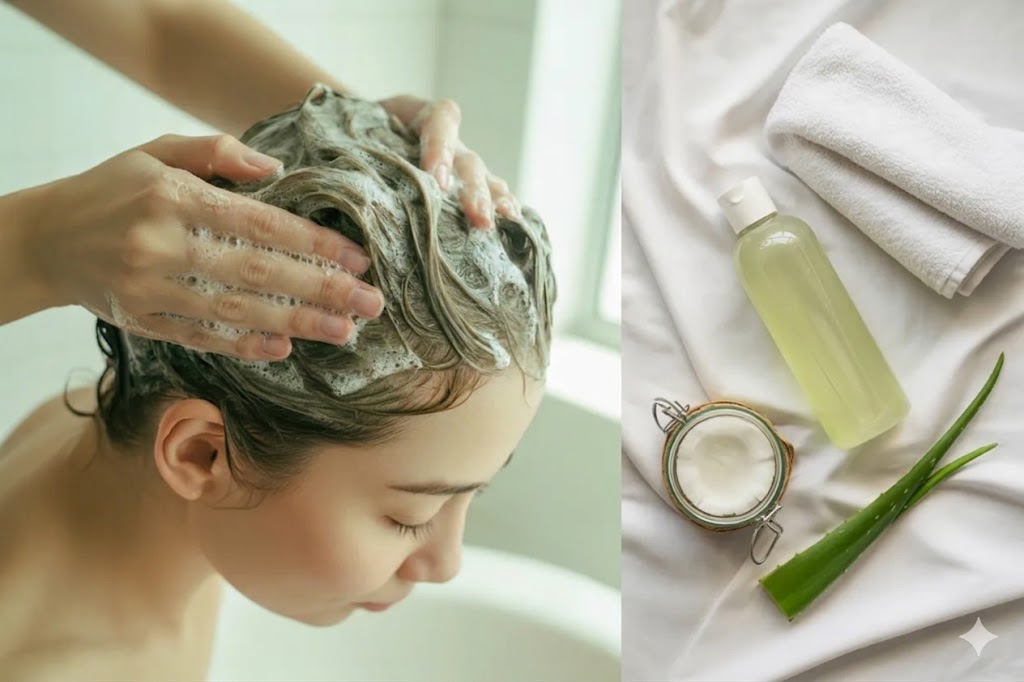
Method 1 — The Standard Aloe Vera Cleanse ⭐
🌿 Method 1 — Standard Aloe Vera Cleanse
All hair types · The everyday foundation · Replace your regular shampoo
🌿 WHAT YOU NEED
- ✦ Aloe vera shampoo — with aloe vera listed in the first three ingredients
- ✦ Lukewarm water throughout
- ✦ Cool water for the final rinse
📋 HOW TO DO IT
- 1Wet hair and scalp thoroughly. Lukewarm water — not hot. Aloe vera works best on a properly saturated scalp where the compounds can distribute evenly.
- 2Apply to the scalp first. Dispense onto fingertips and distribute across the scalp in sections. Aloe vera shampoo lathers more gently than conventional shampoo — less foam is normal and expected.
- 3Massage for 60 seconds. Firm circular motions across the entire scalp. Work the shampoo through the lengths by squeezing — not rubbing, which causes friction and breakage.
- 4Rinse thoroughly with lukewarm water. Every trace of shampoo should be removed. Aloe vera residue on the scalp can cause buildup over time.
- 5Final cool water rinse. Cool water seals the cuticle after the wash — this is what gives the shine improvement. 15 seconds is enough. Pat dry, never rub.
Method 2 — Deep Moisture Method for Dry or Brittle Hair
Method 3 — The Aloe Vera Shampoo and Conditioner Routine
🧴 Aloe Vera Shampoo and Conditioner — The Complete Routine
For oily scalp + dry ends · Zone separation · The combination that makes both work
The aloe vera shampoo and conditioner routine follows the same zone separation principle we use with tea tree shampoo: shampoo on the scalp, conditioner on the lengths. Aloe vera shampoo on the scalp, natural conditioner from mid-lengths to ends. The two zones have different needs and should be treated separately.
🌿 ZONE 1 — SCALP
- Apply aloe vera shampoo to scalp only
- Massage 60 seconds in circular motions
- Rinse thoroughly — scalp must be completely clean
- Cool water rinse on scalp
🧴 ZONE 2 — LENGTHS
- Apply conditioner from ear level to ends only
- Leave 2–3 minutes
- Rinse with cool water
- Pat dry — never rub
Method 4 — Aloe Vera Hair Growth Ritual
3 DIY Aloe Vera Shampoo Recipes
These are the recipes we actually make. The DIY approach has one significant advantage over commercial products: you know exactly what concentration of aloe vera is in your shampoo because you put it there. All three recipes use aloe vera as the primary base ingredient—not a trace addition. Store in the fridge and follow the use-by guidance for each recipe.
Recipe 1—Basic Natural Shampoo Aloe Vera Formula ⭐
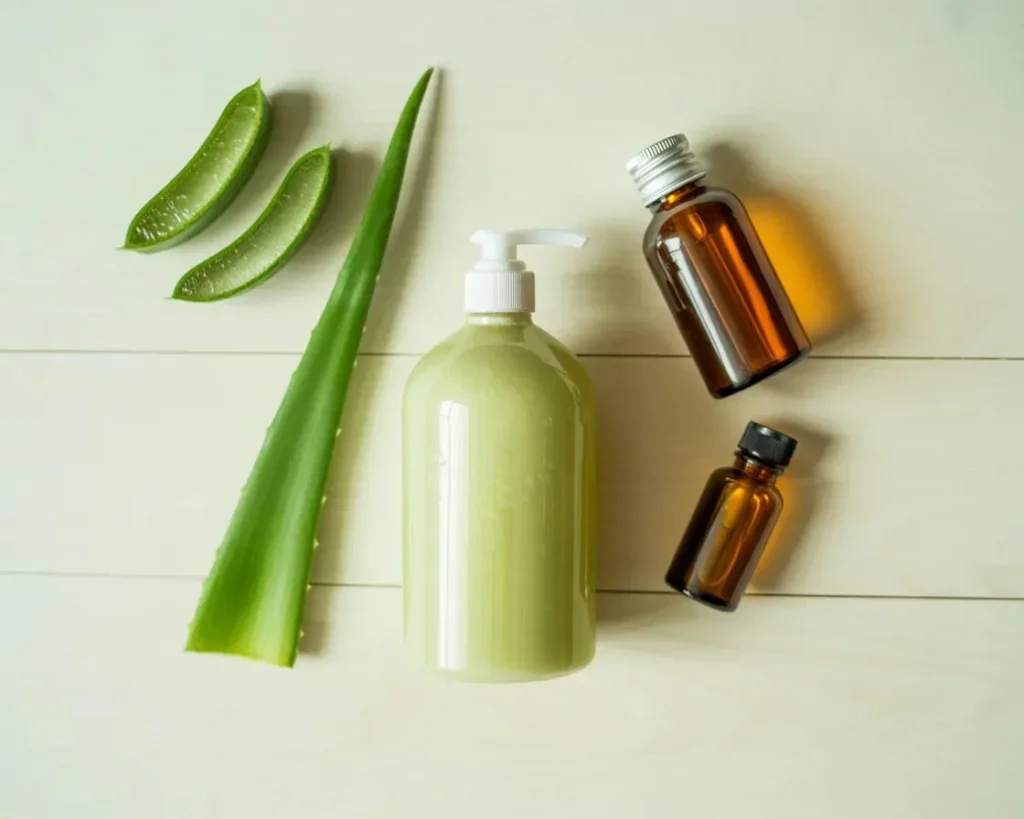
Recipe 2 — Aloe Vera & Coconut Milk Shampoo for Dry Hair
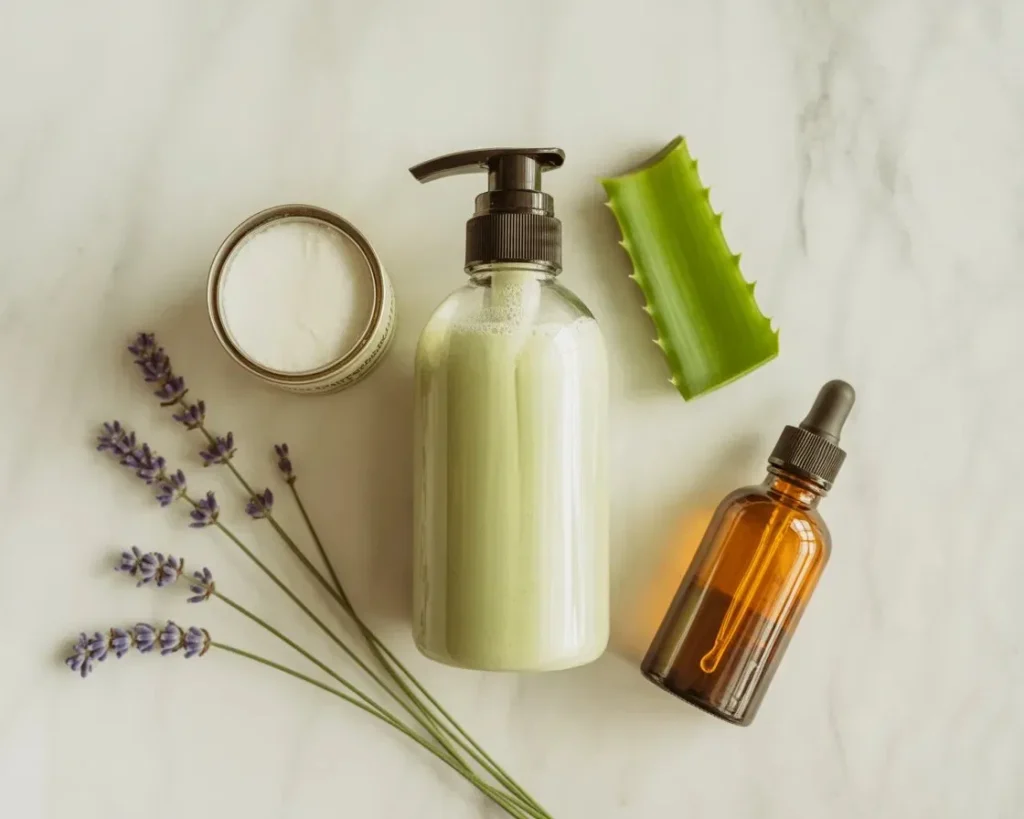
Recipe 3 — Aloe Vera & Rosemary Growth Shampoo
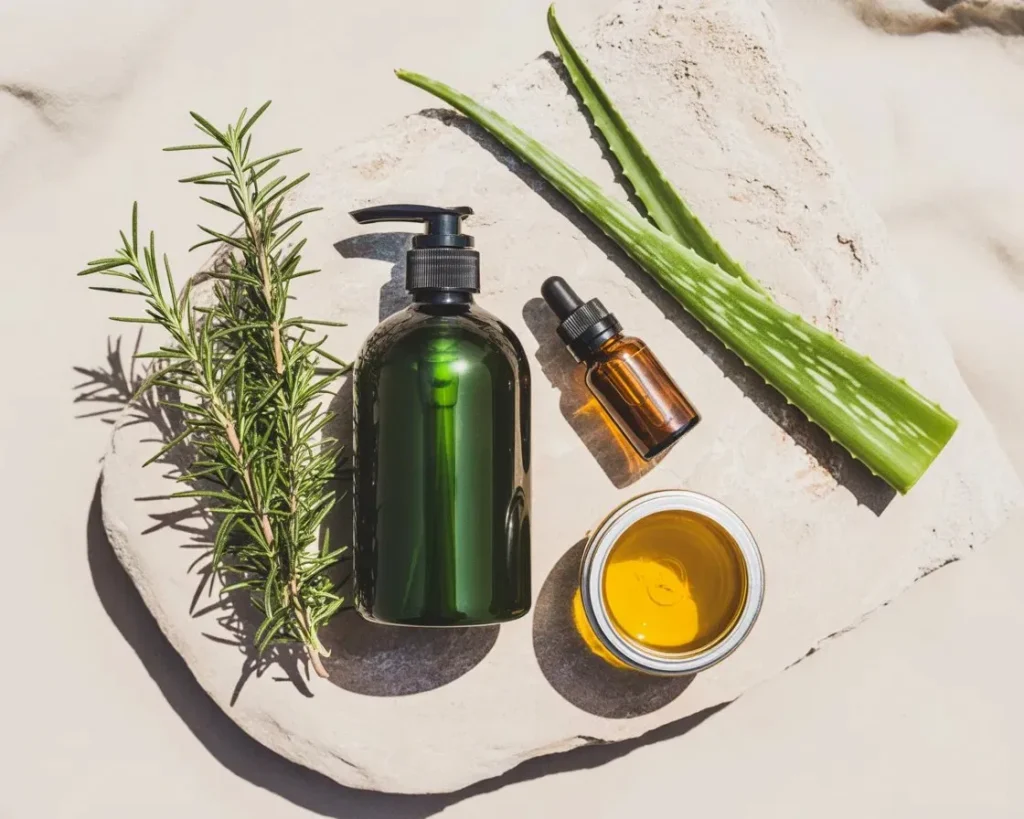
8 Aloe Vera Shampoo Mistakes to Avoid
Most people who switch to aloe vera shampoo and go back to conventional after two weeks made one of these eight mistakes. Everything is based on real experience—ours or from readers who wrote in.
❌ Expecting Rich Foam
Aloe vera shampoo lathers less than conventional shampoo. This is normal — foam is produced by harsh surfactants that strip the scalp. Less foam means gentler cleansing, not less cleansing. The two most common reasons people stop using aloe shampoo in the first week are “it doesn’t lather enough” and “it doesn’t feel clean.” Both are psychological, not practical.
❌ Not Rinsing Thoroughly
Aloe vera residue on the scalp builds up and can make hair feel heavy or dull over time. Rinse until the water runs completely clear — longer than you think necessary. This is especially important in the DIY version where the aloe gel is more concentrated.
❌ Skipping the Transition Period
Switching from a conventional shampoo to an aloe vera formula often involves a 1–2 week transition where the scalp adjusts its oil production. Hair may feel different — not necessarily bad, just different. Most people who “give up” do so during this window. The improvement comes after it.
❌ Using Supermarket Aloe Vera Gel with Additives
Many commercially available aloe vera gels contain added thickeners, fragrances and preservatives that can cause buildup or irritation in a DIY shampoo formula. Use pure aloe vera gel — ingredient list should say “aloe barbadensis leaf juice” and very little else.
❌ Applying Conditioner to the Scalp
The same zone separation rule applies here as with tea tree shampoo. Conditioner on the scalp after aloe vera shampoo coats the follicle openings and negates the pH-balancing work of the aloe. Conditioner belongs on mid-lengths to ends only.
❌ Keeping the DIY Version Too Long
No preservatives means a strict shelf life. Basic formula: 2 weeks in the fridge. Coconut milk formula: 1 week maximum. If it smells different from when you made it — discard it immediately. We cannot overstate how important this is.
❌ Using Hot Water
Hot water opens the cuticle aggressively and strips the natural oils that aloe vera shampoo is designed to preserve. Lukewarm throughout, cool for the final rinse. The cool final rinse is what produces the shine improvement — it takes 15 seconds and makes a visible difference.
❌ Expecting Commercial Products to Match DIY Quality
Many commercial shampoos labelled “with aloe vera” list it well below the top five ingredients. The aloe vera concentration in these products is often too low to produce the benefits described in this guide. If you’re buying rather than making, check the ingredient position. If aloe vera isn’t in the first three, the product is a regular shampoo with a marketing claim.
📚 Sources & Scientific References
We’re not cosmetic chemists. We’re two people who got curious about what aloe vera actually does in a shampoo formula and whether the results Rita noticed had a scientific explanation. Here are the three sources we found most credible and relevant.
🧪 How We Tested — & What Changed
Using aloe vera shampoo started as Rita’s solution to a vague problem and became a three-year investigation into what aloe vera actually does in a hair formula. Here is what “tested by us” means in this guide.
🌿 Rita’s switch in 2023 — the problem that started it
The tight-after-washing feeling had been there for two years across multiple conventional shampoos. The aloe vera formula resolved it by the second wash. She described it at the time as the first shampoo that felt like it “agreed” with her hair rather than fought it. That specific phrase is what made Doo try it too.
⚗️ The 2:1 ratio came from trial and error
Rita tested 1:1 aloe to castile soap — too thin, didn’t cleanse well enough. She tested 3:1 — barely lathered. The 2:1 ratio in Recipe 1 is the result of about eight batches over three months. It’s specific because it was tested, not estimated.
🥥 The coconut milk shelf life is from experience
We tried stretching the coconut milk formula to 10 days once. The smell changed noticeably by day 9. The 1-week guidance is not conservative caution — it’s based on what we observed. Make small batches. More frequently. It takes 10 minutes.
💚 The castor oil addition came from a texture problem
The first version of Recipe 3 without castor oil ran off the scalp during the massage. The formula was too thin to maintain scalp contact. Adding 1 tsp of castor oil gave it the viscosity needed to stay on the scalp during the extended massage in Method 4.
📊 The transition period warning is from reader feedback
Multiple readers wrote in saying aloe vera shampoo didn’t work for them — and in most cases they had stopped after 5–7 days. When we asked them to try again for two full weeks, most reported the improvement came in week two. The transition period is real and worth communicating clearly.
📚 The pH explanation confirmed what we observed
We understood the tight-after-washing feeling was pH-related from the Gavazzoni Dias review — after noticing the improvement with aloe vera and wanting to understand the mechanism. The science confirmed the observation, rather than the other way around.
🌿 Aloe vera shampoo is one of the most accessible entry points into natural haircare — the ingredients are simple, the DIY version is genuinely easy, and the results for most hair types are noticeable within two weeks. If something works differently for your hair than described here, or if you find a ratio that works better than ours, we’d genuinely like to know.
Frequently Asked Questions
Complete Your Natural Haircare Routine
Aloe vera shampoo works best as part of a wider natural routine. Here’s how each step fits together across your week.
If you have an oily or unbalanced scalp alongside using aloe vera shampoo, adding tea tree oil to your DIY formula (10–15 drops per 120ml) combines the pH-balancing properties of aloe with the purifying properties of tea tree — addressing both aspects simultaneously. Read the full method in our tea tree shampoo guide.
🌿 Read the complete tea tree shampoo guide →Doo and Rita are the creators of Nature’s Herbal Remedy, a plant-based haircare and wellness blog. Rita switched to aloe vera shampoo in 2023 after two years of searching for a formula that didn’t leave her hair feeling tight. Every recipe and ratio on this page was tested on at least one of their heads first — including the batches that didn’t work.