Natural Deodorant Recipe: 3 Homemade Formulas That Actually Work
Last updated: April 2026 · Prep time: 10 min · Cost: ~$5–$10 per batch · Shelf life: 3–6 months
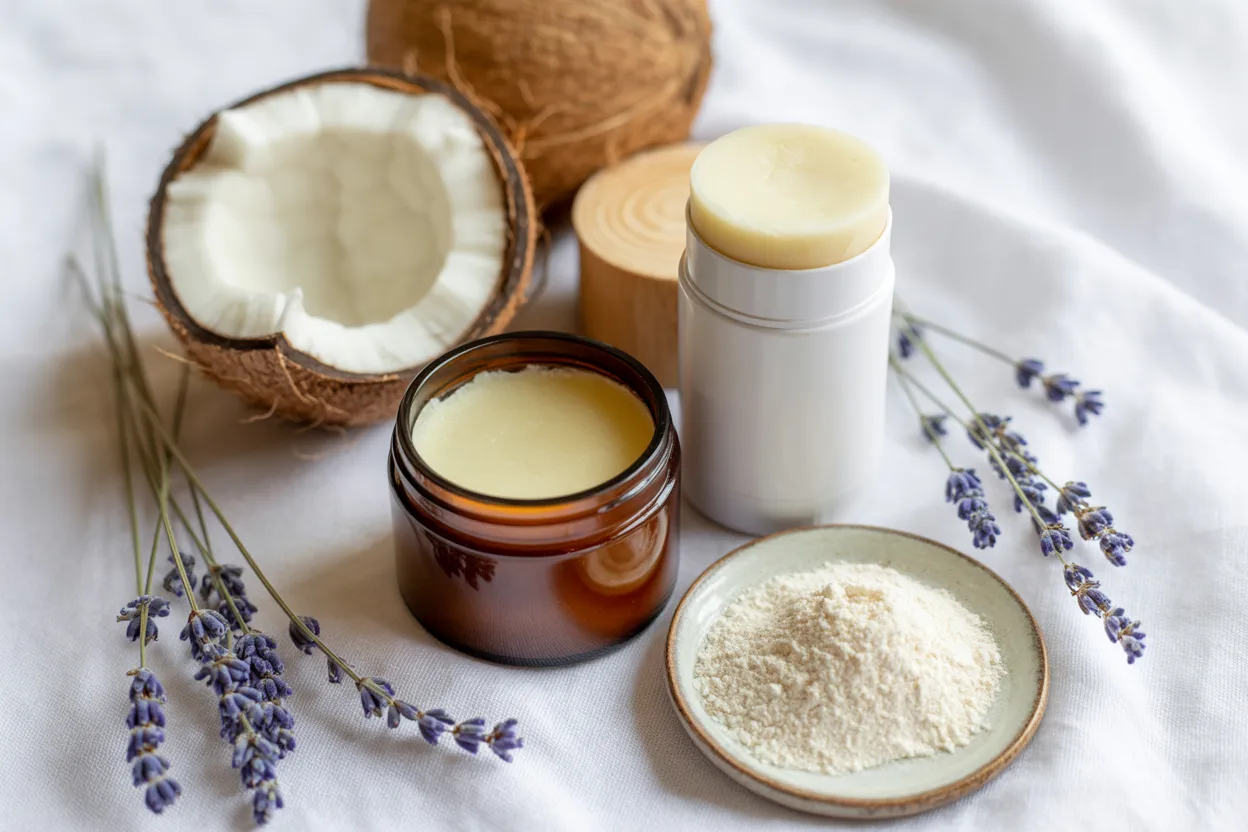
We switched to homemade deodorant three years ago—not because we were convinced it would work, but because we’d run out and had coconut oil and baking soda in the cupboard. That first batch lasted four months, cost less than two euros to make, and worked better than anything we’d bought before. We haven’t gone back. This guide has 3 natural deodorant recipes we actually use—the classic coconut oil and baking soda version, a gentle formula without baking soda for sensitive skin, and a 3-ingredient paste for beginners. All three use ingredients you likely already have. These are personal care recipes, not medical treatments.
If you enjoy making your own body care products, our natural body care guide has plenty more to explore — from whipped body butter to shea butter body wash.
⬇ JUMP TO RECIPE
⚡ QUICK ANSWER
What is the best natural deodorant recipe?
The most effective formula combines coconut oil, shea butter, baking soda and arrowroot powder. For sensitive skin, swap baking soda for magnesium hydroxide. Both formulas use 4-6 ingredients, take under 15 minutes, and last 3-6 months.
10-15 min
~4 oz per batch
4-6 months
Candelilla wax
Simplest start: 4 tbsp coconut oil + 3 tbsp arrowroot + 1-2 tbsp baking soda → mix into a paste → jar → done.
Table of Contents
🧴 Key Ingredients & What They Do
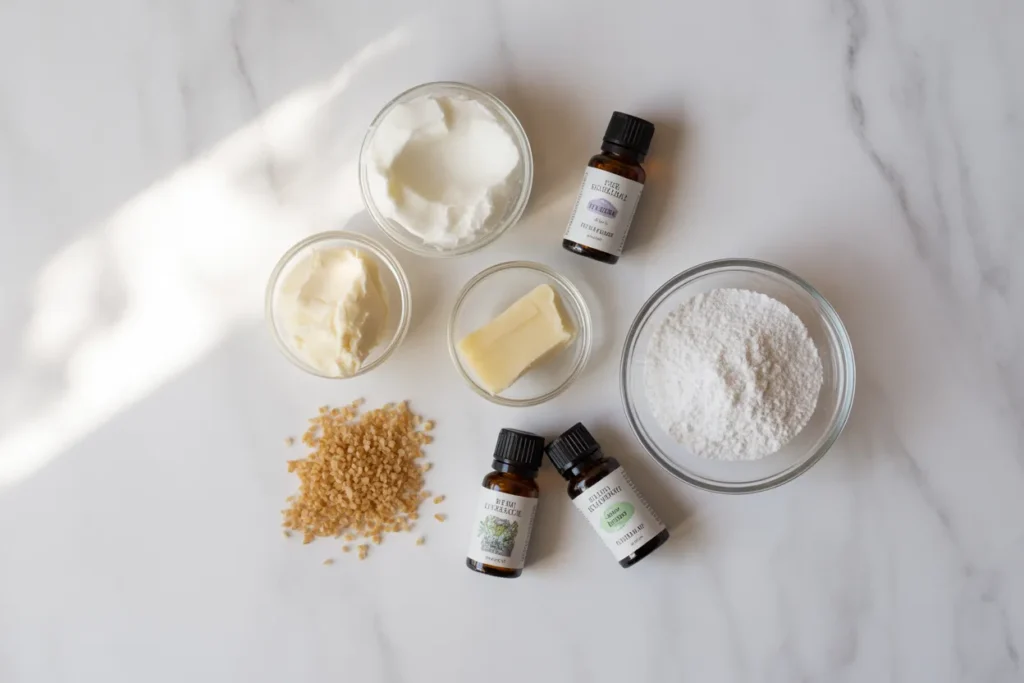
Before you start, it helps to understand why each ingredient is in the formula — so you can swap confidently and troubleshoot when needed.
| Ingredient | Role | Notes |
|---|---|---|
| Coconut oil | Carrier base, gentle on skin | Use refined for an odourless result |
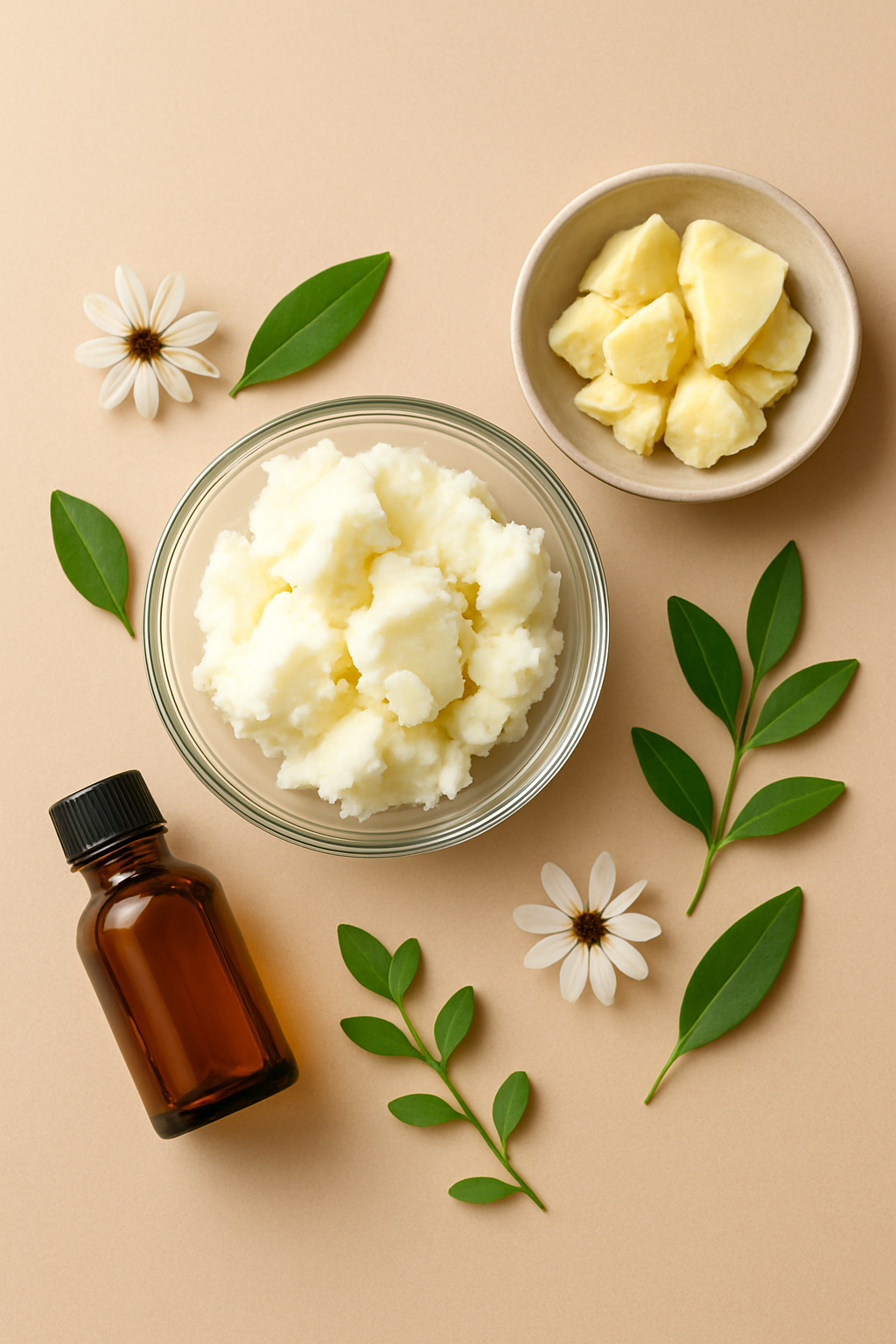
| Shea butter | Moisturiser, texture softener | Makes application smoother — same star ingredient as our DIY body butter |
| Baking soda | Odour neutraliser (strong) | Skip for sensitive or reactive skin — use magnesium hydroxide instead |
| Arrowroot powder | Moisture absorption | Lighter feel than cornstarch, less powdery residue |
| Magnesium hydroxide | Gentle odour neutraliser | Best swap for baking soda — gentler pH, works just as well |
| Candelilla wax | Solidifier for stick format | 100% vegan alternative to beeswax — slightly firmer, use a little less |
| Essential oils (optional) | Natural fragrance | Lavender, tea tree, cedarwood — see our geranium oil guide and sweet orange oil guide for ideas |
🌿 3 Natural Deodorant Recipes
Three formulas for three different skin types—from the classic that works for most people to a gentle version for reactive skin to a no-equipment paste for complete beginners.
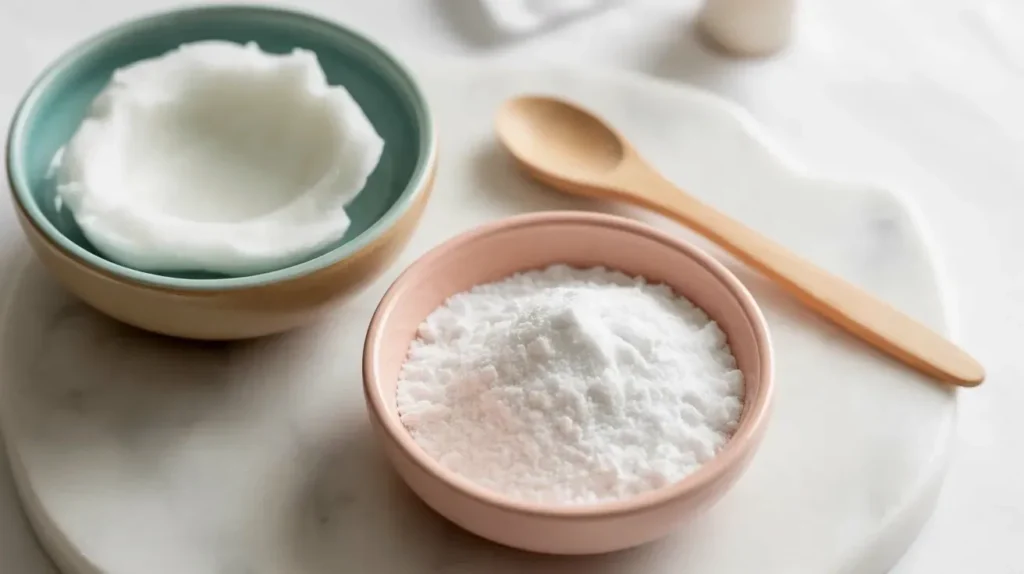
🧴 Recipe 1 — Classic Natural Deodorant (Coconut Oil & Baking Soda)
The most-made formula in this guide · Most skin types · Stick or jar format
🌿 INGREDIENTS
- ✔ 3 tbsp refined coconut oil
- ✔ 2 tbsp shea butter
- ✔ 3 tbsp arrowroot powder
- ✔ 2 tbsp baking soda
- ✔ 1 tbsp candelilla wax (or beeswax)
- ✔ 10-15 drops essential oil of choice (optional)
📋 INSTRUCTIONS
- Melt base ingredients. Combine coconut oil, shea butter and candelilla wax in a double boiler over low heat. Stir gently until fully liquid.
- Cool the mixture. Remove from heat and let cool 2-3 minutes. Still pourable, but no longer steaming.
- Add dry ingredients. Whisk in arrowroot powder and baking soda until completely smooth and lump-free. A mini whisk works best here.
- Add fragrance. Stir in essential oils if using.
- Pour and set. Pour quickly into a clean deodorant stick container or small glass jar — the mixture hardens fast. Let set at room temperature for 30 minutes.
- Label and store. Write the date on your container. Cool, dry spot, away from direct sunlight.
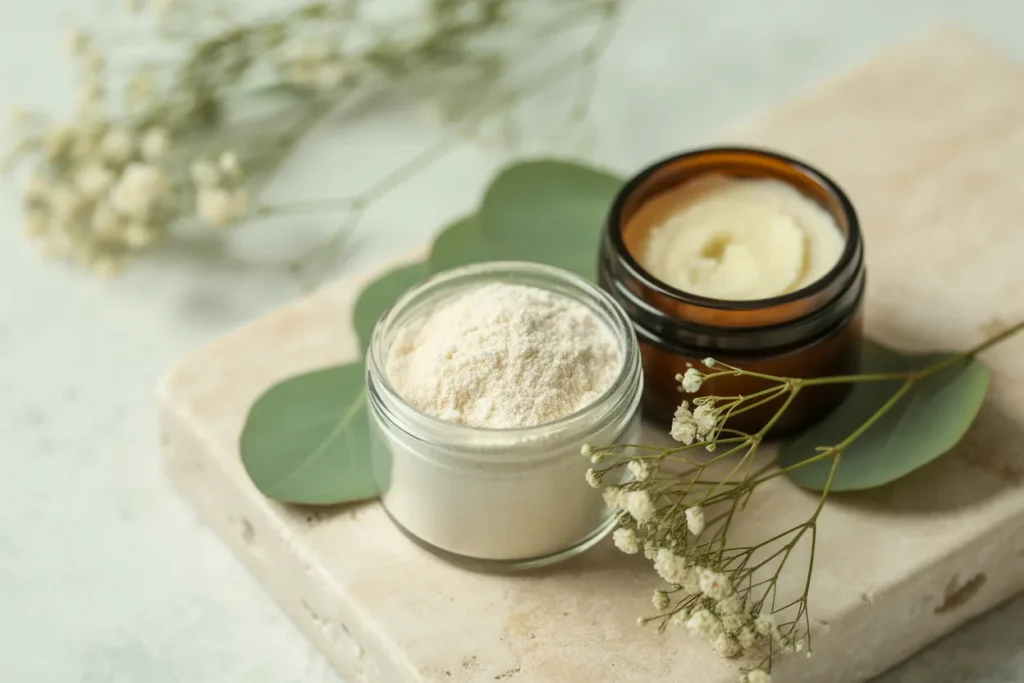
🍃 Recipe 2 — Natural Deodorant Without Baking Soda (Sensitive Skin)
Gentle formula with magnesium hydroxide · Reactive or delicate skin · Stick or jar
🌿 INGREDIENTS
- ✔ 3 tbsp refined coconut oil
- ✔ 2 tbsp shea butter
- ✔ 4 tbsp arrowroot powder
- ✔ 1.5 tbsp magnesium hydroxide powder
- ✔ 1 tbsp candelilla wax
- ✔ 10 drops essential oil (optional)
📋 INSTRUCTIONS
- Melt base. Combine coconut oil, shea butter and candelilla wax in a double boiler over low heat. Stir until completely melted.
- Cool slightly. Remove from heat and let stand 2-3 minutes.
- Add powders. Whisk in arrowroot powder and magnesium hydroxide until the mixture is completely smooth.
- Add oils. Stir in essential oils if using.
- Pour and set. Pour into your container. For a firmer result, refrigerate for 20 minutes instead of room temperature.
- Apply on clean, dry skin. A thin layer is enough — a little goes a long way.
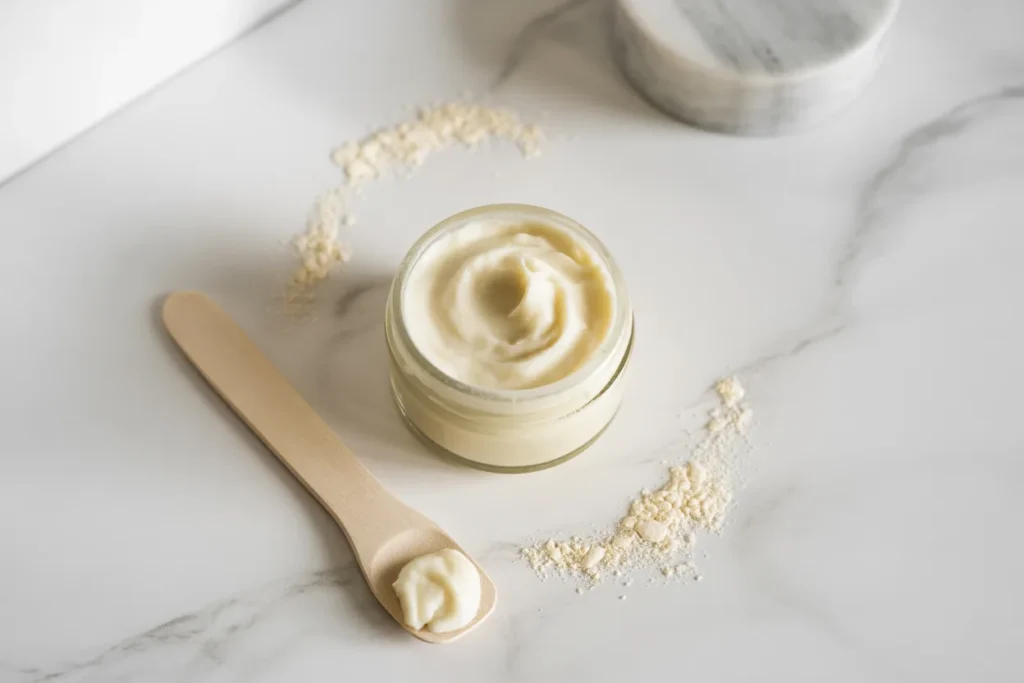
✨ Recipe 3 — 3-Ingredient DIY Deodorant Paste (Beginner-Friendly)
No melting, no tools needed · Ready in 5 minutes · Jar / paste format
🌿 INGREDIENTS
- ✔ 4 tbsp coconut oil (soft, not melted)
- ✔ 3 tbsp arrowroot powder
- ✔ 1-2 tbsp baking soda or magnesium hydroxide
📋 INSTRUCTIONS
- Start with soft coconut oil. It should be creamy, not liquid. If it has melted, refrigerate briefly until it reaches a spreadable texture.
- Combine all ingredients. Add arrowroot powder and baking soda (or magnesium hydroxide) directly into the bowl.
- Mix thoroughly. Stir with a fork or small spatula until a smooth, uniform paste forms with no dry pockets.
- Transfer to a jar. Apply with a clean fingertip or small cosmetic spatula.
📊 All 3 Recipes at a Glance
| Recipe | Best For | Baking Soda? | Effort | Format |
|---|---|---|---|---|
| Classic ⭐ | Most skin types | ✅ Yes | Easy | Stick or jar |
| Sensitive Skin | Reactive / delicate skin | ❌ No | Easy | Stick or jar |
| 3-Ingredient Paste | Beginners / travel | Optional | Very easy | Jar / paste |
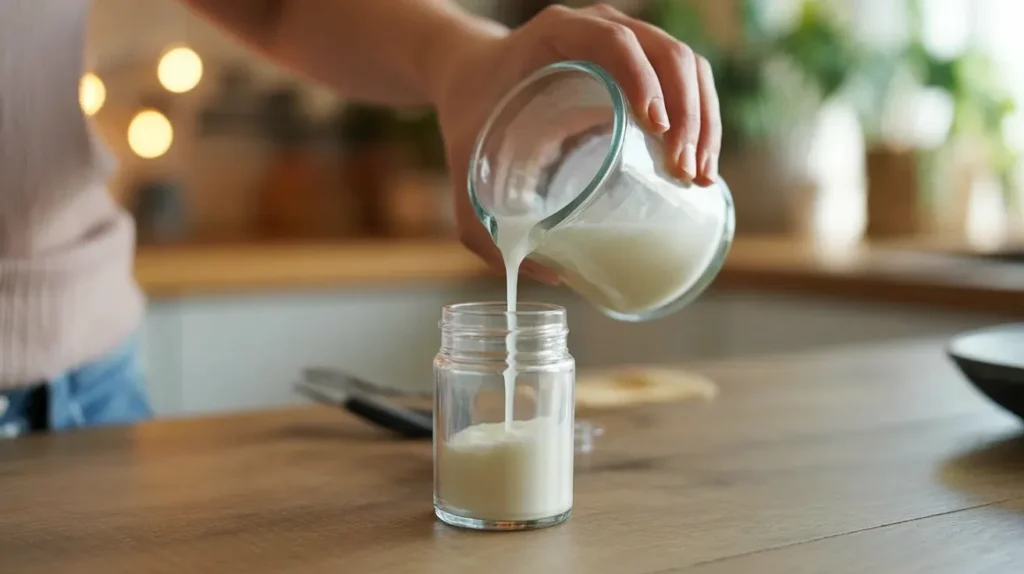
💡 How to Use Your Homemade Deodorant
Knowing how to make it is only half the equation — applying it correctly makes a real difference in performance.
📋 Application Guide
- Apply to clean, dry underarms after showering
- Use a pea-sized amount per underarm — less is more
- If using a jar, apply with a clean fingertip or small spatula
- Allow 1-2 minutes to absorb before dressing to avoid marks on clothing
- Reapply as needed on particularly active days
- Wait at least 30 minutes after shaving before application
⏳ TRANSITION PERIOD — WHAT TO EXPECT
If you’re switching from a conventional antiperspirant, your body may go through a 2-4 week adjustment phase. This is completely normal. You may notice slightly more perspiration or odour as your underarms recalibrate. Most people see a significant improvement once the adjustment period is over. Keep your clothes clean, reapply as needed, and give it the full month before judging results.
🗓 Storage & Shelf Life
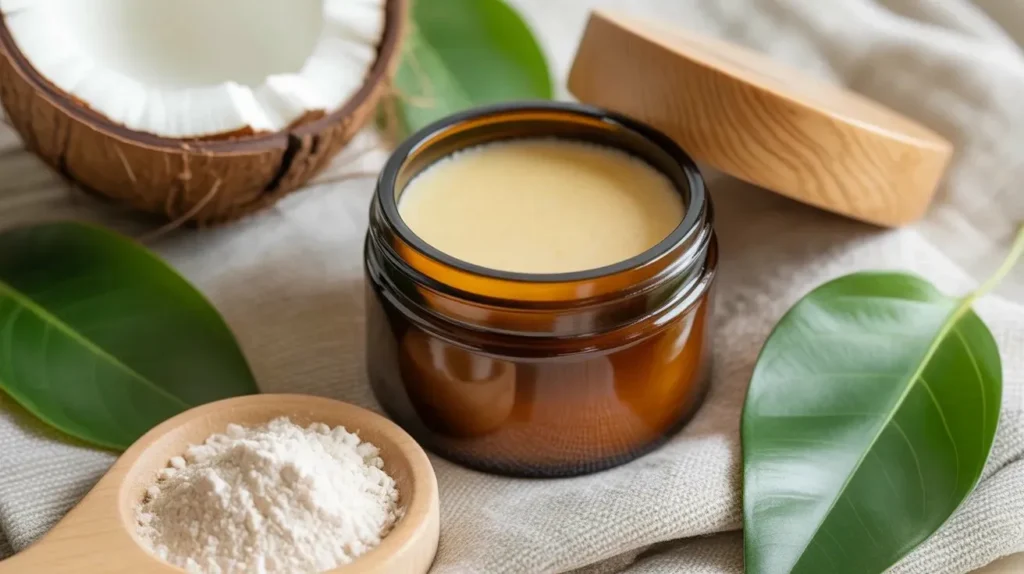
| Storage Condition | Shelf Life | Best For |
|---|---|---|
| Room temperature (below 21°C / 70°F) | 4-6 months | Stick format, cool climates |
| Refrigerator | 6-12 months | Paste format, warm climates |
| Cool, dark cupboard | 4-6 months | All formats |
✅ Signs your deodorant is still good: uniform texture, consistent color, and no unusual smell from the coconut oil base.
🚫 Discard if you notice mold, a rancid or sour smell, or significant discoloration. Wondering about the shelf life of other natural oils? Our organic castor oil guide covers similar storage principles.
🔧 Troubleshooting Common Issues
| Problem | Likely Cause | Fix |
|---|---|---|
| Skin irritation or redness | Too much baking soda | Reduce to 1 tbsp or switch to Recipe 2 |
| Deodorant too soft / melts | Too little wax or warm climate | Add 0.5 tbsp more wax; refrigerate |
| Deodorant too hard / crumbly | Too much wax | Reduce wax by 0.5 tbsp next batch |
| White marks on clothes | Coconut oil residue | Apply thin layer; wait 1-2 min before dressing |
| Odour not well controlled | Adjustment period or too little product | Increase magnesium hydroxide; apply on clean skin only |
| Grainy or lumpy texture | Powders not fully mixed | Use a mini whisk; stir for 2+ minutes |
❓ Frequently Asked Questions
🌿 More Natural Body Care from Doo & Rita
Natural deodorant is just the beginning. Here’s what else we make at home:
Same shea butter as in this recipe — in a silkier form.
The cleanser that pairs perfectly with homemade deodorant.
Prep your skin before switching to natural deodorant.
Storage tips that apply to all natural oil-based products.
Complete the natural body care ritual.
One of the best essential oil additions to your deodorant.
Doo and Rita are sisters, herbal wellness enthusiasts and DIY beauty lovers who explore plant-based ingredients through hands-on experiments. We’ve been making our own deodorant for three years. Recipe 1 is what’s currently on our bathroom shelf. Last updated: March 2026.