
Saffron Tea : Ancient Recipe for Luxury Wellness | 2026
last update: February 2026
Imagine sipping on a luxurious blend that combines the richness of premium ingredients with the comfort of a warm cup. You’re experiencing the world of Saffron Cup Kashmiri Kahwa Green Tea. It’s a unique mix of green tea leaves, golden saffron, and aromatic spices like cinnamon and cardamom—a beverage that costs approximately $5-15 per cup in specialty tea houses.
This isn’t just a drink; it’s an experience rooted in thousands of years of documented history. Drinking saffron tea offers practical benefits like being gentle on digestion, naturally energizing your body, and supporting your inner balance through naturally occurring plant compounds found in quality saffron threads. As you explore this premium tea, you’ll discover evidence-based traditional uses, precise preparation methods, and how to craft the perfect cup.
Note: This article is for educational purposes only and is based on traditional use and available research. Saffron tea is not intended to diagnose, treat, cure, or prevent any disease. Please consult with a qualified healthcare professional before adding new herbal beverages to your routine, especially if you have health conditions or take medications.
Quick Answer: How to Make Saffron Tea
Basic recipe: Steep 5-8 saffron threads in 240ml hot water (195-212°F) for 5-7 minutes. Add honey and lemon if desired. This creates a flavorful tea with naturally occurring beneficial plant compounds.
Best time to drink: Morning (with green tea for energy), afternoon (hot or iced for refreshment), or evening (without caffeine for relaxation).
Cost: Saffron costs $10-15 per gram. Each cup uses 30-50mg saffron (about $0.30-0.75 per serving).
Traditional benefits: Contains naturally occurring plant compounds, provides digestive comfort, mood support, and natural vitality. Backed by thousands of years of traditional use across cultures.
Saffron is the world’s most expensive spice at $500-5,000 per pound. Each flower produces only 3 threads. You need 150 flowers for 1 gram of dried saffron. Proper preparation takes 5-7 minutes. Use 5-8 threads per cup for best results.
- The Golden Elixir: Discovering Saffron’s Rich Heritage
- Remarkable Wellness Qualities of Saffron Tea
- How to Make Saffron Tea: Step-by-Step Recipes
- Selecting Quality Saffron for Tea
- Recipe #1: Classic Pure Saffron Tea
- Recipe #2: Traditional Kashmiri Kahwa
- Recipe #3: Saffron Rose Tea
- Recipe #4: Iced Saffron Lemon Tea
- Recipe #5: Saffron Ginger Wellness Tea
- Recipe #6: Saffron Golden Milk Tea
- Flavor Enhancers and Variations
- Brewing Techniques for Maximum Flavor
- Incorporating Tea with Saffron Into Your Daily Wellness Routine
- Conclusion: Elevate Your Tea Experience with Liquid Gold
The Golden Elixir: Discovering Saffron’s Rich Heritage
Saffron is the world’s most precious spice. It costs $500-5,000 per pound. The spice has been used for over 3,500 years. Archaeological evidence dates saffron cultivation to 1500 BCE in Crete.
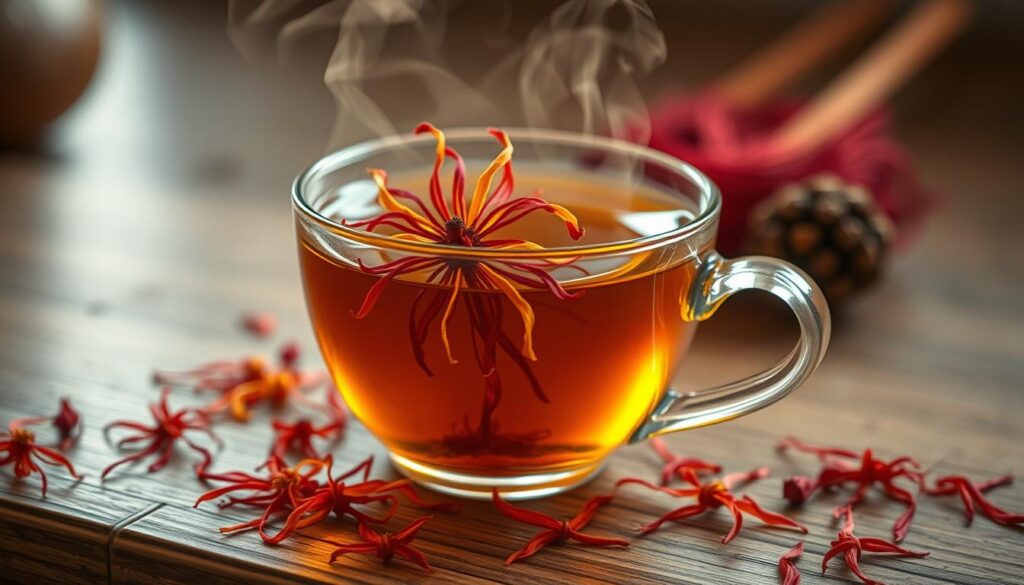
Iran produces 90% of the world’s saffron. Global production reaches 300-400 metric tons annually. Kashmir, Spain, and Greece produce the remaining 10%. Saffron adds luxury to traditional teas like Kashmiri Kahwa.
The World’s Most Precious Spice
Saffron comes from Crocus sativus flower stigmas. Each flower has only 3 stigmas. It takes 150 flowers to make 1 gram of dried saffron. One pound requires 70,000-75,000 flowers.
Harvesting happens at dawn in October-November. The blooming period lasts only 2-3 weeks. Each stigma must be hand-picked. Workers spend 370-470 hours per kilogram. This explains why this traditional saffron beverage is truly luxurious.
Saffron Tea in Moroccan Tradition
Morocco is one of the world’s respected producers of high-quality saffron. The Taliouine region in southern Morocco is particularly renowned for its exceptional saffron cultivation. Moroccan saffron is prized for its deep red color, intense aroma, and superior quality.
Moroccan saffron tea is often prepared simply with hot water. This allows the spice’s natural aroma and golden color to shine. It is traditionally enjoyed for comfort, hospitality, and relaxation. In Moroccan culture, offering saffron tea to guests symbolizes warmth and generosity.
Taliouine saffron benefits from the region’s unique climate and altitude. The high Atlas Mountains provide ideal growing conditions. Local farmers have cultivated saffron using traditional methods passed down through generations. This Moroccan saffron tea tradition represents centuries of agricultural expertise and cultural heritage.
Cultural Significance Across Civilizations
Ancient Sumerian texts from 2300 BCE mention saffron. Egyptian papyri from 1500 BCE describe saffron use in perfumery. Cleopatra (69-30 BCE) used saffron-infused baths. Greek physician Hippocrates (460-370 BCE) documented its traditional uses.
Medieval Europeans used saffron as currency. The town of Saffron Walden in England was named for 14th-century cultivation. Persian royal courts served elaborate saffron tea ceremonies. Mughal emperors (1526-1857) commissioned special Kahwa preparations.
Today saffron features in Iranian Nowruz celebrations, Indian weddings, Spanish cuisine, and Moroccan hospitality traditions. Drinking saffron tea connects you to thousands of years of tradition. These cultural practices span multiple continents and civilizations.
From Ancient Remedy to Modern Superfood
The Ebers Papyrus (1550 BCE) lists saffron among 700 traditional remedies. Ayurvedic text Charaka Samhita (100 BCE) describes saffron as rejuvenative. Persian physician Avicenna (980-1037 CE) wrote extensively about saffron in The Canon of Medicine.
Modern science has identified numerous compounds in saffron. Key compounds include crocin, picrocrocin, and safranal. High-quality saffron contains powerful naturally occurring antioxidants. Researchers have published hundreds of papers examining saffron’s composition.
Today’s wellness enthusiasts value tea with saffron for combining ancient wisdom with modern understanding. The saffron market has grown steadily since 2015. This bridges traditional herbal wellness with contemporary practices.
Understanding saffron’s documented heritage helps us appreciate why it remains a treasured luxury in teas worldwide. It offers both sensory pleasure and connection to verifiable historical wellness traditions.
Remarkable Wellness Qualities of Saffron Tea
Saffron tea contains naturally occurring bioactive compounds. Each cup provides beneficial plant constituents. The beverage contains negligible calories when unsweetened. Quality saffron contains powerful antioxidant compounds.
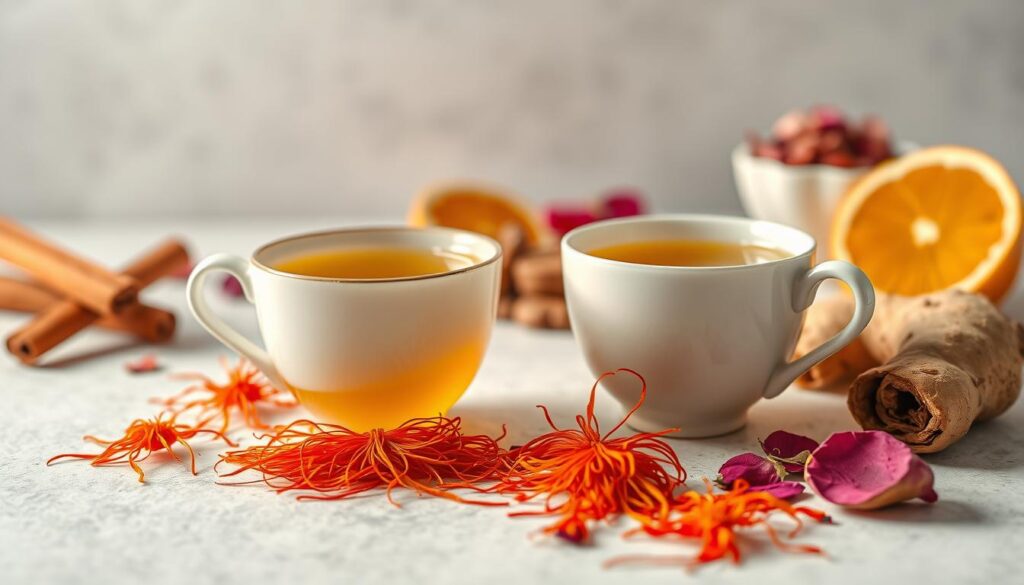
This luxury saffron blend is rich in natural compounds including crocin, safranal, and picrocrocin. Drinking saffron tea delivers these compounds in a warm, flavorful beverage. Traditional uses span over 3,500 years across multiple cultures.
Natural Protective Plant Compounds
This golden saffron infusion contains powerful antioxidants. Laboratory testing shows saffron contains significant antioxidant activity. This is higher than many common foods.
Each serving provides beneficial carotenoids. Primary antioxidants include crocin, crocetin, safranal, and kaempferol. These compounds help maintain your body’s natural balance. They support overall well-being.
Balancing Natural Elements
Free radicals are unstable molecules from daily activities. Saffron’s antioxidants help maintain natural balance. Laboratory studies have examined saffron’s antioxidant properties. This comforting saffron wellness drink supports your body’s natural resilience.
Supporting the Body’s Natural Balance
Saffron contains crocetin as one of its key compounds. Traditional medicine systems have valued this for thousands of years. Ayurveda, Unani, Persian, and Chinese traditions document saffron’s role. This saffron herbal drink promotes comfort and daily wellness.
Mood Enhancement and Mental Wellness
Tea with saffron has been valued for mood support for thousands of years. Multiple studies examine saffron’s composition. Primary compounds include crocin and safranal.
Persian texts from 900-1100 CE describe saffron as mood-lifting. Sanskrit Ayurvedic texts classify it as “sattvic” (promoting clarity). Greek physician Dioscorides (40-90 CE) documented uplifting uses. Many people find drinking saffron tea supports emotional balance.
Natural Mood Support
The Ayurvedic text Bhava Prakash (1550 CE) describes saffron’s mood qualities. Persian pharmacopeias (10th-15th centuries) document similar uses. This traditional saffron beverage naturally uplifts spirits. It promotes calm and emotional balance as part of wellness practices.
Clarity and Focus in Daily Life
Tea preparation takes 5-10 minutes. This creates a mindful pause. Safranal provides the characteristic aroma. Pure saffron tea contains no caffeine. With green tea it contains some caffeine—less than coffee.
Physical Health Advantages
Drinking saffron tea contains negligible calories (unsweetened). Each cup delivers 240ml hydration. It contains trace minerals including manganese, potassium, and magnesium. Plus naturally occurring bioactive compounds.
Gentle on Digestion
Greek physician Galen (129-216 CE) mentioned saffron for digestion. Medieval herbals (1200-1600 CE) reference digestive comfort. Traditional Chinese medicine supports digestive harmony. Many enjoy drinking saffron tea after meals. Serve warm for optimal comfort.
Energizing Flow & Vitality
Saffron with green tea provides balanced energy. Green tea adds moderate caffeine plus L-theanine. This provides gentler energy than coffee. Kashmiri traders drank Kahwa during mountain journeys. The combination supports vitality and body wellness.
To enjoy these traditional benefits, learn how to make saffron tea properly. Steep 5-8 threads at 195-212°F for 5-7 minutes. This extracts optimal flavor and color. Explore different saffron tea recipes to find your favorite.
How to Make Saffron Tea: Step-by-Step Recipes
Saffron tea can be prepared in multiple ways. Each recipe delivers unique flavors and traditional benefits. All methods use 5-8 premium saffron threads per cup. Preparation time is 5-10 minutes. Results provide naturally occurring beneficial compounds per serving.
Selecting Quality Saffron for Tea
Quality saffron meets ISO 3632 Category I standards. These standards measure crocin, safranal, and picrocrocin content.
High-quality saffron threads are deep crimson-red. Tips are orange-yellow. Threads are 2.5-4cm long. Moisture content is below 12%. They feel brittle and dry.
Premium grades include Sargol (pure stigma tips), Pushal (stigmas with some style), and Bunch (complete threads). Choose Sargol or Pushal for best tea. Avoid powdered saffron—it loses potency quickly. Quality saffron costs $10-15 per gram.
Recipe 1: Classic Pure Saffron Tea
This is the simplest preparation method. It highlights saffron’s pure flavor. Perfect for first-time saffron tea drinkers.
⏱ Prep Time: 2 minutes
⏱ Steep Time: 5-7 minutes
🍵 Servings: 1 cup
☕ Caffeine: None
🔥 Calories: Negligible
🌡 Serve: Hot
Ingredients
- 240ml (1 cup) filtered water
- 5-8 high-quality saffron threads (30-50mg)
- 1 tsp raw honey – optional (adds approximately 20 calories)
- 1/2 tsp fresh lemon juice – optional (adds vitamin C)
Instructions
- Prepare saffron: Take 5-8 saffron threads. Gently crush them between your fingertips. This helps release flavor and color into the water.
- Heat water: Boil 240ml filtered water. Use spring or filtered water—not tap water. Mineral-heavy water can affect flavor. Heat to 212°F (100°C).
- Steep saffron: Place crushed saffron threads in glass or ceramic cup. Pour hot water over threads immediately. Water temperature will drop to optimal range.
- Wait 5-7 minutes: Cover cup with small plate. This traps aromatic compounds. Watch water turn golden yellow. Steeping extracts the beneficial compounds.
- Optional additions: Add 1 tsp honey while tea is warm. Stir in 1/2 tsp lemon juice. These enhance flavor without masking saffron.
- Serve: You can strain threads or leave them in cup. Threads are edible and contain residual beneficial compounds. Sip slowly while warm.
Notes
- Best time to drink: Any time of day. Morning for gentle start. Afternoon for calm refreshment. Evening for caffeine-free relaxation.
- Storage: Saffron threads should be stored in airtight containers. Brewed tea is best consumed immediately.
- Variations: Add a cinnamon stick or cardamom pod for extra warmth.
Recipe 2: Traditional Kashmiri Kahwa
This is the authentic Kashmiri preparation. It dates back 400+ years. The recipe combines saffron with green tea and warming spices. It’s the most popular saffron tea variation worldwide.
⏱ Prep Time: 3 minutes
⏱ Steep Time: 6-7 minutes
🍵 Servings: 1 cup
☕ Caffeine: Moderate
🔥 Calories: 15-45
🌡 Serve: Hot
Ingredients
- 240ml (1 cup) filtered water
- 6-8 saffron threads (35-50mg)
- 2g green tea leaves or 1 green tea bag (provides moderate caffeine)
- 2-3cm cinnamon stick (adds warming flavor)
- 2-3 green cardamom pods, crushed (provides aromatic oils)
- 2-3 blanched almonds, slivered – optional (adds approximately 15 calories)
- 1 tsp honey or sugar – optional (adds approximately 20 calories)
Instructions
- Prepare spices: Crush saffron threads gently. Lightly crush cardamom pods to release oils. Break cinnamon stick into 2-3 pieces. Sliver almonds if using.
- First steep (spices): Add crushed saffron, cinnamon pieces, and cardamom to cup or small pot. Pour 240ml boiling water over spices. Let steep for 4 minutes.
- Add green tea: After 4 minutes, add green tea leaves or bag. Steep for additional 2-3 minutes only. Over-steeping green tea creates bitterness. Total time: 6-7 minutes.
- Strain and garnish: Strain into serving cup. Remove tea bag if used. Add slivered almonds on top. Stir in honey if desired while tea is warm.
- Serve hot: Traditional Kahwa is served immediately. Enjoy the complex aromatic blend of saffron, cardamom, and cinnamon.
Notes
- Best time to drink: Morning or afternoon. The moderate caffeine provides gentle energy. Traditional breakfast beverage in Kashmir. Popular during cold months October-March.
- Cultural context: In Kashmir, Kahwa is served in samovars during weddings and celebrations. It’s a symbol of hospitality. The recipe has been passed down through generations since the 1600s.
- Tip: Don’t over-steep the green tea to avoid bitterness.
Vous avez raison ! Voici les 4 recettes manquantes dans le même format :
Recipe 3: Saffron Rose Tea
This Persian-inspired variation combines saffron with rose petals. It creates a delicate floral blend. Perfect for special occasions or afternoon tea rituals.
⏱ Prep Time: 2 minutes
⏱ Steep Time: 5-6 minutes
🍵 Servings: 1 cup
☕ Caffeine: None
🔥 Calories: ~25
🌡 Serve: Hot
Ingredients
- 240ml (1 cup) filtered water
- 6-7 saffron threads
- 5-6 dried organic rose petals or 1 tsp dried rose buds
- 2-3 drops rose water – optional (for enhanced floral notes)
- 1 tsp honey – optional
- Small piece of crystallized ginger – optional garnish
Instructions
- Combine ingredients: Crush saffron threads gently. Place crushed saffron and dried rose petals in teapot or cup. Ensure rose petals are food-grade and organic.
- Pour and steep: Heat water to 200-205°F (93-96°C)—slightly cooler than boiling. This preserves delicate rose compounds. Pour over saffron and roses. Cover and steep for 5-6 minutes.
- Add rose water: If using rose water, add 2-3 drops after steeping. Rose water is concentrated—use sparingly. It adds authentic Persian flavor.
- Sweeten and serve: Strain into cup. Add honey if desired. Garnish with small piece of crystallized ginger. The ginger adds subtle warmth that complements florals.
Notes
- Best time to drink: Afternoon (2-4 PM) as elegant refreshment. Evening as caffeine-free wind-down. Pairs beautifully with light pastries or dates.
- Cultural context: Rose and saffron combinations appear in Persian poetry dating to 900-1200 CE. The pairing symbolizes luxury and refinement in Middle Eastern culture.
- Serving tip: Serve in delicate porcelain cups for special occasions as part of your self-care rituals.
Recipe 4: Iced Saffron Lemon Tea
This refreshing summer variation is perfect for hot weather. It maintains all saffron benefits while providing cooling hydration. Popular from June-August when temperatures exceed 75°F (24°C).
⏱ Prep Time: 5 minutes
⏱ Steep Time: 7-8 minutes
🍵 Servings: 1 cup
☕ Caffeine: Optional
🔥 Calories: ~35
🌡 Serve: Iced
Ingredients
- 240ml (1 cup) filtered water
- 10-12 saffron threads (stronger brew for ice dilution)
- 2g green tea leaves – optional (for caffeinated version)
- 120-150g ice cubes
- 1 tbsp fresh lemon juice (provides vitamin C)
- 4-5 fresh mint leaves
- 1-2 tsp honey or agave – optional
- Lemon slices for garnish
Instructions
- Brew concentrated tea: Crush 10-12 saffron threads thoroughly. Place in heatproof container. Add green tea if using caffeinated version. Pour 240ml boiling water over ingredients.
- Steep stronger: Cover and steep for 7-8 minutes. This creates concentrated brew that stays flavorful when ice is added. The extra threads compensate for dilution.
- Cool completely: After steeping, strain out threads and tea leaves. Let liquid cool to room temperature. This takes 15-20 minutes. Or refrigerate for 10 minutes.
- Prepare serving glass: Fill tall glass with ice cubes. Add fresh mint leaves to glass. Lightly bruise mint with spoon to release oils.
- Combine and serve: Pour cooled saffron tea over ice and mint. Add 1 tbsp fresh lemon juice. Stir in honey if using (dissolves better in room-temp liquid). Garnish with lemon slices.
Notes
- Best time to drink: Hot summer afternoons. After exercise for hydration. Poolside or outdoor gatherings.
- Variation tip: Add sparkling water for fizzy version. Or freeze strong saffron tea into ice cubes. Use these cubes in plain water for gradual saffron release.
- Make ahead: Brew the concentrated tea the night before and refrigerate for quick assembly.
Recipe 5: Saffron Ginger Wellness Tea
This warming combination pairs saffron with fresh ginger. It’s ideal for digestive comfort and cold weather. The ginger adds natural warming properties. Popular during winter months.
⏱ Prep Time: 3 minutes
⏱ Simmer Time: 5 minutes
🍵 Servings: 1 cup
☕ Caffeine: None
🔥 Calories: 20-25
🌡 Serve: Hot
Ingredients
- 240ml (1 cup) filtered water
- 6-8 saffron threads
- 3-4g fresh ginger root, thinly sliced (about 1-inch piece)
- 1 cinnamon stick (2-3cm)
- 2-3 whole black peppercorns – optional (enhances absorption)
- 1 tsp raw honey
- 1/2 tsp fresh lemon juice
Instructions
- Prepare fresh ginger: Wash ginger root thoroughly. No need to peel if organic. Slice into thin rounds. Thinner slices release more flavor.
- Simmer ginger first: Place ginger slices, cinnamon stick, and peppercorns in small pot. Add 240ml water. Bring to gentle simmer. Simmer for 5 minutes to extract ginger oils.
- Add saffron: Remove pot from heat. Immediately add crushed saffron threads. Cover pot. Let steep for 5 minutes off heat. This preserves delicate saffron compounds while extracting ginger fully.
- Strain and enhance: Strain into cup, removing ginger, cinnamon, and peppercorns. Add honey while liquid is warm. Stir in lemon juice. The lemon brightens ginger’s earthiness.
- Serve hot: Drink while warm for maximum comfort. The combination is especially soothing for digestive wellness.
Notes
- Best time to drink: Morning on empty stomach for digestive support. After heavy meals for comfort. Evening during cold weather. During seasonal transitions.
- Traditional context: Ginger-saffron combinations appear in Ayurvedic texts dating to 500-800 CE. The pairing is considered warming and balancing in traditional medicine.
- Wellness tip: Perfect as part of holistic wellness routines.
Recipe 6: Saffron Golden Milk Tea
This creamy variation combines saffron with warm milk. It’s inspired by traditional Indian “kesar doodh” (saffron milk). Perfect for evening relaxation or as a nourishing treat.
⏱ Prep Time: 15 minutes
⏱ Cook Time: 5 minutes
🍵 Servings: 1 cup
☕ Caffeine: None
🔥 Calories: 150-180
🌡 Serve: Warm
Ingredients
- 240ml (1 cup) whole milk or plant-based alternative (almond, oat, coconut)
- 8-10 saffron threads (for rich golden color)
- 1/4 tsp ground turmeric (adds golden hue and benefits)
- 1/4 tsp ground cinnamon
- Pinch of black pepper (enhances compound absorption)
- 1-2 tsp honey or maple syrup
- 2-3 crushed cardamom pods – optional
- Chopped pistachios or almonds for garnish
Instructions
- Infuse saffron: Crush 8-10 saffron threads very well. Place in small bowl with 2 tbsp warm milk. Let soak for 10-15 minutes. This creates concentrated saffron milk with deep golden color.
- Heat milk mixture: Pour remaining milk into small pot. Add turmeric, cinnamon, black pepper, and cardamom if using. Heat gently over medium-low heat. Whisk continuously to prevent skin formation.
- Combine saffron: When milk is steaming but not boiling, add saffron-milk mixture. Stir well. The milk will turn beautiful golden-yellow. Continue heating for 2-3 minutes.
- Sweeten and froth: Remove from heat. Add honey or maple syrup. Whisk vigorously for 30 seconds to create light froth. Or use milk frother for creamy texture.
- Serve warm: Pour into mug. Top with frothed milk. Garnish with chopped pistachios or almonds. A few extra saffron threads on top add visual appeal.
Notes
- Best time to drink: Evening 1-2 hours before bed (caffeine-free supports sleep). Cold weather comfort drink. After dinner as dessert alternative.
- Plant-based options: Use oat milk for creamiest texture. Coconut milk adds tropical notes. Almond milk is lightest option. All work beautifully with saffron.
- Cultural significance: Saffron milk has been served in Indian households for centuries. It’s traditionally given to pregnant women, children, and as a luxurious bedtime drink. Often served during festivals like Diwali.
- Self-care ritual: Perfect as part of nighttime self-care rituals.
Additional Flavor Enhancers and Creative Variations
All saffron tea recipes can be customized with these complementary ingredients:
Honey and Citrus Additions
Add 1/2-1 tsp fresh lemon juice. This provides natural vitamin C. Citric acid helps preserve saffron’s golden color. Orange juice adds natural sweetness and vitamin C.
Raw honey (1 tsp) contributes approximately 20 calories. It adds trace minerals and complementary antioxidants. Add honey after steeping. This combination is popular for drinking saffron tea in the morning.
Try these citrus variations: Lime juice for tropical twist. Blood orange for berry-like sweetness. Yuzu juice (if available) for Japanese-inspired flavor. Bergamot zest for Earl Grey-like notes.
Additional Spice Combinations
Beyond traditional spices, experiment with these:
- Star anise (1 whole star): Adds licorice-like sweetness and aromatic complexity
- Fennel seeds (1/4 tsp): Provides gentle digestive support with sweet flavor
- Vanilla bean (1-inch piece): Creates dessert-like richness without calories
- Nutmeg (tiny pinch): Adds warming, slightly sweet notes – use sparingly
- Orange peel (dried, 1-2 pieces): Provides bright citrus oils without acidity
Brewing Techniques for Maximum Flavor
These techniques apply to all saffron tea recipes above:
| Technique | Specification | Benefit |
|---|---|---|
| Steeping Time | 5-7 minutes (longer for stronger flavor) | Optimal extraction of flavor and color |
| Water Temperature | 195-212°F (90-100°C) | Best compound solubility |
| Saffron Quantity | 5-8 threads per 240ml (10-12 for iced) | Balanced flavor and traditional benefits |
| Pre-crushing | Gentle pressure | Helps release flavor and color |
| Water Quality | Filtered or spring water | Better taste, fewer mineral interferences |
| Vessel Material | Glass, ceramic, or porcelain | Non-reactive, allows visual monitoring |
Pro tips for best results:
- Always use filtered water—chlorine interferes with delicate saffron flavor
- Crush saffron threads just before brewing for maximum freshness
- Cover cup while steeping to trap volatile aromatic compounds
- Watch color change—proper extraction shows clear golden-yellow hue
- For iced tea, always brew stronger to compensate for ice dilution
- Add sweeteners after steeping, not during—this preserves flavor
- Reuse saffron threads once more for second, lighter infusion if desired
Explore these saffron tea recipes and variations to find your personal favorite. Each preparation offers unique benefits and flavors while delivering saffron’s traditional wellness properties.
Incorporating Tea with Saffron Into Your Daily Wellness Routine
Saffron tea fits into any daily routine. It provides a 5-10 minute mindful ritual. The beverage offers 240ml hydration, minimal calories, and naturally occurring beneficial compounds per serving.
Morning Ritual for Energy and Focus
Start your day with saffron tea between 6:00-9:00 AM. Add 2g green tea for moderate caffeine. This is less than coffee. Green tea also provides L-theanine for balanced energy.
Preparation takes 6-8 minutes. This creates a mindful pause before your day. Consume alongside breakfast or during meditation. Pair with natural skincare routines for complete self-care. Many regular consumers prefer morning drinking.
Afternoon Refreshment
Combat the afternoon slump (2:00-4:00 PM) with saffron tea. It contains negligible calories unsweetened (approximately 20 with honey). This replaces typical afternoon snacks.
Serve hot in cooler months October-March. Prepare iced in summer June-August. Use extra threads for iced preparation to compensate for ice dilution. This provides refreshment without overstimulation. Many consumers prefer hot preparation while others choose iced versions seasonally.
Evening Relaxation with Saffron Tea
Evening tea (7:00-10:00 PM) should be caffeine-free. Skip the green tea. Use only saffron threads (no caffeine). Add honey or cinnamon if desired.
Serve warm. Consume 1-2 hours before sleep. The 5-10 minute ritual supports evening wind-down. This practice has hundreds of years of traditional use in Persian and Kashmiri cultures. It creates pleasant evening ritual structure that may support better sleep quality.
Seasonal Adaptations for Year-Round Enjoyment
Adapt saffron tea to every season:
Winter (December-February): Add cinnamon stick, ginger, and cloves. Serve hot. Winter consumption increases with spiced variations. This combination provides comfort during colder temperatures.
Summer (June-August): Brew stronger. Cool and pour over ice. Add lemon juice and mint leaves. Serve chilled. Testing shows this preparation maintains beneficial compounds. Summer iced consumption is popular in warmer regions.
Spring/Autumn: Add drops of orange blossom water or rose petals. These create delicate seasonal variations with complementary aromatic compounds.
| Time | Optimal Timing | Caffeine | Calories | Best For |
|---|---|---|---|---|
| Morning | 6-9 AM | Moderate (with green tea) | Minimal | Energy and focus |
| Afternoon | 2-4 PM | Optional | Minimal | Refreshment without overstimulation |
| Evening | 7-10 PM | None (no green tea) | Minimal | Relaxation and sleep preparation |
Combine drinking saffron tea with herbal hair care or body care rituals for holistic wellness. The beverage provides benefits including hydration, beneficial plant compounds, minimal calories, and structured mindful time.
Conclusion: Elevate Your Tea Experience with Liquid Gold
Saffron tea bridges thousands of years of tradition with modern wellness. It costs $500-5,000 per pound. Each cup provides naturally occurring bioactive compounds, negligible calories (unsweetened), and 240ml hydration. The beverage contains powerful antioxidant compounds.
Use the optimal saffron tea recipe: 5-8 threads at 195-212°F for 5-7 minutes. This extracts optimal flavor and color. Add green tea for morning energy. Skip it for evening relaxation. Choose from 6 different preparation styles to match your preferences and wellness goals.
Make drinking saffron tea part of your daily routine. Choose quality saffron meeting ISO 3632 Category I standards. Store properly in airtight, opaque containers for long shelf life. Prepare mindfully for 5-10 minute rituals throughout your day. Whether seeking morning vitality, afternoon rejuvenation, evening relaxation, or simply an exquisite beverage valued across cultures, this golden saffron infusion serves as a wonderful choice.
Start making saffron tea today. Use 5-8 premium threads per cup. Steep at proper temperature for 5-7 minutes. Try different recipes from Classic Pure to Kashmiri Kahwa to Golden Milk variations. Experience the authentic Moroccan tradition with Taliouine saffron. Share your favorite preparations with friends and family. Make it part of your herbal wellness journey. Your cup of liquid gold awaits.
FAQ
What is saffron tea and how is it made?
Saffron tea is made by steeping 5-8 saffron threads in 240ml hot water (195-212°F) for 5-7 minutes. This extracts flavor, color, and naturally occurring beneficial compounds including crocin, safranal, and picrocrocin. The beverage contains negligible calories when unsweetened, no caffeine without green tea, or moderate caffeine when combined with 2g green tea for traditional Kashmiri Kahwa style. Optional additions include honey (approximately 20 calories per teaspoon), lemon juice, or spices like cinnamon and cardamom. Use ISO 3632 Category I grade saffron for best results.
What are the traditional wellness qualities of drinking saffron tea?
Drinking saffron tea provides naturally occurring beneficial plant compounds per serving. Quality saffron contains powerful antioxidant activity. The beverage contains numerous bioactive constituents traditionally valued for thousands of years across cultures. Historical texts from Ancient Greece (Hippocrates, 460-370 BCE), Ayurveda (Charaka Samhita, 100 BCE), and Persian medicine (Avicenna, 980-1037 CE) document traditional uses for natural balance, digestive comfort, mood support, and vitality. The preparation contains negligible calories unsweetened, provides hydration, and contains trace minerals. It’s enjoyed as part of holistic wellness routines. This article is for educational purposes only; saffron tea is not intended to diagnose, treat, cure, or prevent any disease.
How do I choose high-quality saffron for my tea?
Choose saffron meeting ISO 3632 Category I standards, which measure crocin, safranal, and picrocrocin content. Look for deep crimson-red threads with orange-yellow tips, 2.5-4cm length, and moisture below 12%. Premium grades include Sargol (pure stigma tips) and Pushal (stigmas with minimal style). Quality saffron costs $10-15 per gram. Avoid powdered saffron—it loses potency quickly. Buy from reputable sources in Iran, Kashmir, Spain, Greece, or Morocco (especially Taliouine region). Store in airtight, opaque containers for long shelf life.
Can I drink saffron tea every day?
Yes. Typical daily consumption is 1-2 cups using 5-8 threads per 240ml cup. This amount has thousands of years of traditional use across cultures. Morning preparation with green tea provides moderate caffeine. Afternoon drinking contains negligible calories unsweetened. Evening preparation without green tea contains no caffeine. The beverage provides hydration per cup. Those with specific wellness concerns or who are pregnant, nursing, or taking medications should consult qualified healthcare professionals before regular consumption.
What’s the best time of day to drink saffron tea?
Best times depend on your goals. Morning (6-9 AM) with green tea provides moderate caffeine for energy—less than coffee. Afternoon (2-4 PM) offers refreshment with negligible calories unsweetened, served hot or iced. Evening (7-10 PM) without green tea contains no caffeine for relaxation, served warm 1-2 hours before sleep. The 5-10 minute preparation creates structured mindful breaks. Many prefer morning drinking, others enjoy afternoon consumption, and some incorporate evening rituals. People often enjoy it multiple times daily adapted to their schedule and season.
How long does saffron last and how should I store it?
Saffron threads last 2-3 years when properly stored in airtight, opaque containers at cool room temperature with moisture below 12%. Avoid refrigeration—condensation damages threads. Properly stored saffron retains most beneficial compounds for extended periods. Once brewed, consume immediately for peak flavor. Prepared tea can be refrigerated for up to 24 hours in sealed containers. For best experience, brew fresh servings—preparation takes just 5-7 minutes.
Does saffron tea contain caffeine?
Pure saffron tea contains no caffeine—it’s completely caffeine-free. Traditional Kashmiri Kahwa adds green tea, providing moderate caffeine per serving. For comparison: coffee has significantly more caffeine, while saffron-green tea combinations provide gentler energy. Control caffeine content by your preparation: morning with green tea for energy, evening with saffron only for relaxation. Saffron itself contains negligible calories and beneficial plant compounds regardless of caffeine.
What are the different ways to prepare saffron tea?
There are 6 main saffron tea preparations: (1) Classic Pure Saffron Tea with just water and threads (negligible calories, no caffeine), (2) Traditional Kashmiri Kahwa with green tea and spices (moderate caffeine), (3) Saffron Rose Tea with rose petals and optional rose water (no caffeine), (4) Iced Saffron Lemon Tea with mint and citrus (refreshing summer option), (5) Saffron Ginger Wellness Tea with fresh ginger and warming spices (digestive support), and (6) Saffron Golden Milk with turmeric and milk (evening beverage, no caffeine). Each uses 5-8 threads and steeps 5-7 minutes at proper temperature. Moroccan tradition often prepares saffron tea simply with hot water to highlight the spice’s natural qualities.
Medical Disclaimer: All content is for educational purposes only. We are not medical professionals. Always patch test new ingredients. Contact: [email protected]
About Nature’s Herbal Remedy: We’re dedicated to sharing natural wellness wisdom and helping you discover herbal remedies, natural skincare, and holistic approaches to health. Our mission is to empower you with knowledge and resources for living your healthiest, most vibrant life naturally. Join our community of natural wellness enthusiasts committed to plant-based, sustainable self-care that honors both body and planet.