
What Is Moringa Tea? Benefits, How to Make It & Best Recipes (2026 Guide)
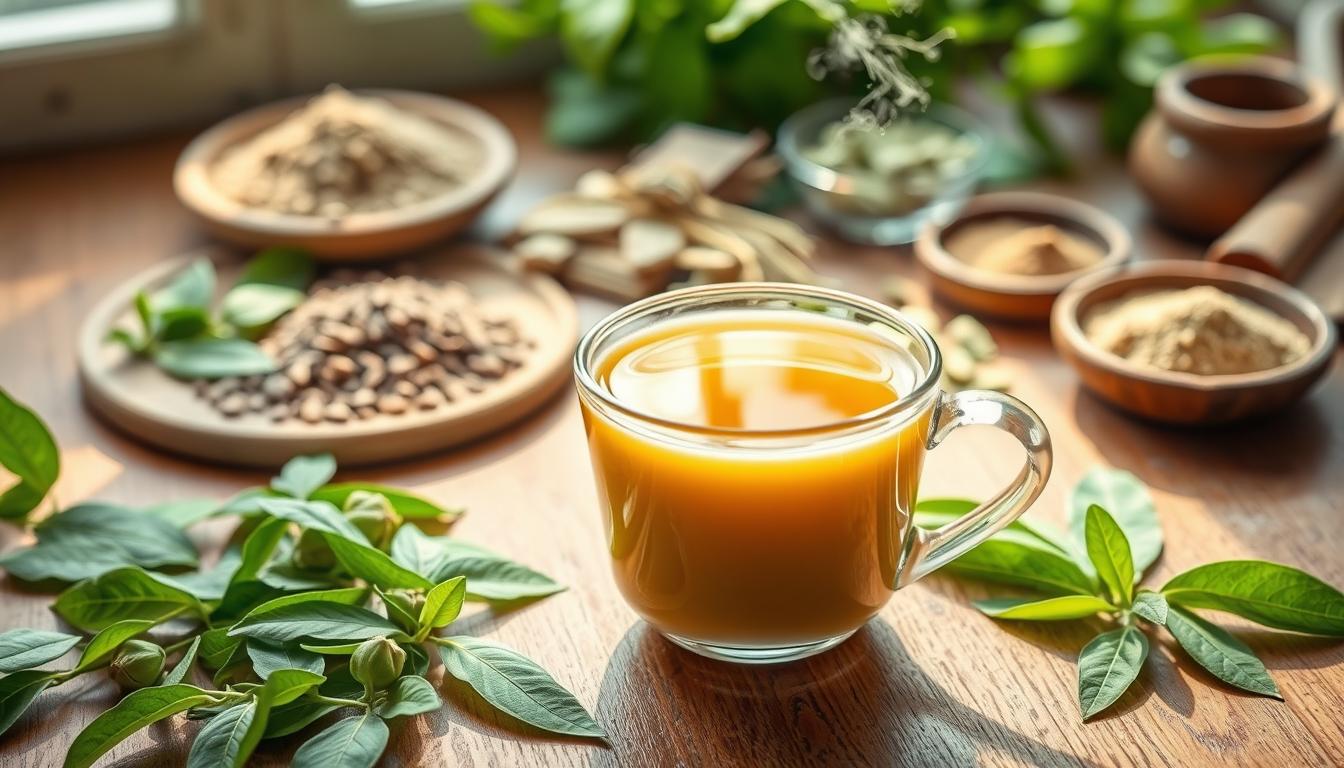
Moringa tea is a caffeine-free herbal infusion made from the dried leaves of Moringa oleifera, a nutrient-rich tree native to South Asia. It is valued for its natural vitamins, antioxidants, and mild earthy flavor.
Quick Answer:
Moringa can be used in tea, smoothies, golden milk, iced drinks, and wellness shots. The easiest recipe is moringa tea: mix 1 teaspoon moringa powder with hot water, lemon, and honey.
By info.naturesherbalremedy
October 9, 2025
Last Updated: February 2026
Table of Contents
Discovering the Ancient Superfood: Moringa
Moringa tea has earned a well-deserved place in global wellness traditions. Long prized for its exceptional nutritional profile and its versatility as both a food source and a nourishing infusion, moringa oleifera has been cultivated and cherished across generations. Its growing popularity in Western wellness circles is no trend — it reflects a genuine appreciation for this plant’s remarkable qualities.
The Rich History and Origin of Moringa
Moringa oleifera tea traces its roots to the Indian subcontinent, where it has played a central role in Ayurvedic wellness traditions for millennia. Ancient Sanskrit texts reference moringa as a plant of exceptional nutritional value, and communities across South Asia, Southeast Asia, and sub-Saharan Africa have relied on it as a staple nourishing food for centuries. Today, it is cultivated in more than 90 countries, making it one of the most widely used botanical resources on the planet.
Its common nickname — the “Miracle Tree” — speaks to the extraordinary range of uses communities have found for it over time, from its leaves and seeds to its bark and roots. For the purposes of this guide, we focus on the leaves, which form the basis of moringa tea.
Impressive Nutritional Profile of the “Miracle Tree”
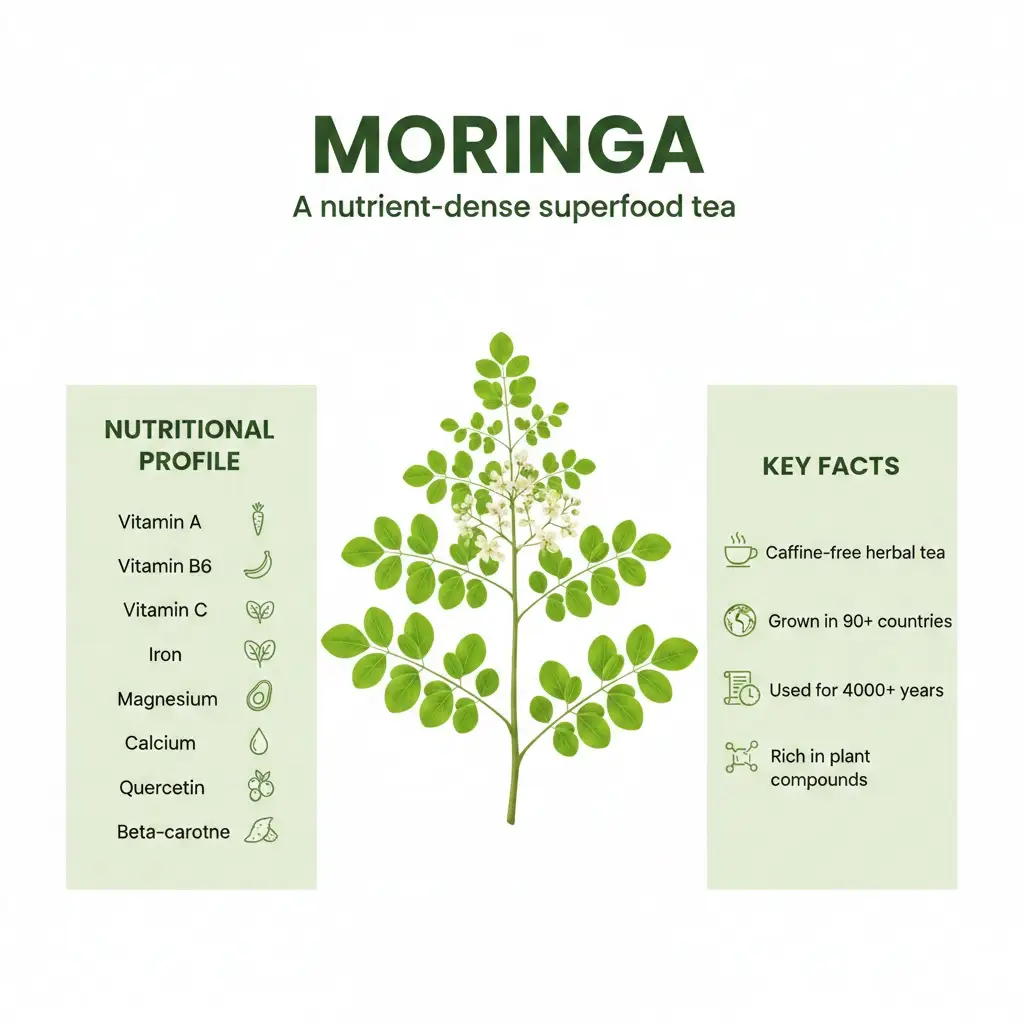
One of the reasons moringa tea attracts so much attention is the sheer density of nutrients packed into its leaves. A single cup of fresh moringa leaves contains meaningful amounts of vitamin B6, vitamin C, vitamin A, iron, riboflavin, and magnesium — a combination rarely found in a single plant food. When these leaves are dried and steeped into a tea, many of these nutrients are preserved in the resulting infusion.
This rich nutritional profile positions moringa as a genuinely useful addition to a balanced diet, especially for those seeking plant-based ways to diversify their nutrient intake.
The Wellness Benefits of Tea Moringa
Incorporating moringa tea into your daily routine is a straightforward way to enrich your wellness habits. Packed with natural plant compounds and essential nutrients, it offers a nourishing complement to a healthy, balanced lifestyle. While it is not a substitute for a varied diet or professional wellness advice, its qualities have made it a staple in cultures that have long prioritized plant-based well-being.
Nourishing Plant Compounds
Moringa leaves are notably rich in naturally occurring plant compounds, including vitamin C, beta-carotene, quercetin, and chlorogenic acid. These are the kinds of compounds commonly found in vegetables and fruits celebrated for their contribution to everyday vitality. The presence of these compounds in moringa oleifera tea makes it a genuinely nourishing beverage, contributing to overall wellness as part of a healthy lifestyle.
Natural Support for Body Comfort
Many people who make moringa tea part of their daily routine appreciate its gently soothing quality. The act of brewing and enjoying a warm herbal infusion naturally supports a moment of calm and balance in a busy day. The plant compounds found in moringa leaves contribute to this sense of ease, making it a popular choice for those who enjoy herbal teas as part of a mindful wellness routine.
Natural Defense Support
The vitamins and minerals naturally present in moringa — particularly vitamin C and iron — are recognized nutrients that contribute to the body’s everyday functioning and resilience. Choosing moringa tea as part of a diverse, plant-rich diet is a practical way to support your nutritional variety day after day.
For another powerful herbal option, discover our complete guide to Chinese Herbal Tea: Types, Benefits & Daily Wellness Rituals.
Overall Vitality Support
A notable question many newcomers ask is: does moringa tea have caffeine? The answer is no — moringa tea is naturally caffeine-free. This makes it an excellent choice for those looking to reduce their caffeine consumption while still enjoying a warm, flavorful beverage at any time of day or evening. It provides a gentle sense of vitality without the stimulant effect associated with coffee or traditional teas.
Looking for a natural pick-me-up? Discover Shilajit Gummies: 7 Benefits for Energy & Focus.
Enhance Your Daily Wellness with Tea Moringa
The real power of moringa tea lies in its simplicity and consistency. Unlike complicated supplement regimens, it fits easily into the rhythms of daily life — a morning cup alongside breakfast, an afternoon pause, or a caffeine-free evening wind-down. When enjoyed regularly as part of a nutrient-rich diet, it becomes a quiet, steady contribution to overall wellness.
Nutritional and Wellness Support
As part of a balanced diet, moringa oleifera tea contributes a meaningful array of nutrients that many people find difficult to source consistently from food alone. Its combination of vitamins, minerals, and plant compounds makes it a nourishing complement to a varied, whole-foods diet. Regular enjoyment allows you to appreciate its role in a balanced lifestyle.
Promote Daily Comfort
Many herbal tea enthusiasts incorporate moringa into their routines specifically for the sense of balance and ease it brings to daily life. Its mild, earthy flavor profile lends itself naturally to moments of pause and reflection. Whether sipped in the morning to begin the day with intention, or in the evening to unwind, moringa tea supports a harmonious daily rhythm and a comfortable sense of well-being.
Supporting a Balanced Diet and Lifestyle
Moringa tea pairs exceptionally well with an active, health-conscious lifestyle. Its nutritional profile provides a broad spectrum of essential nutrients, and its naturally caffeine-free nature means it can be enjoyed without disrupting sleep or energy rhythms. By making it a consistent part of your diet, you can complement your wellness routine in a practical, enjoyable way.
How to Make Moringa Tea at Home
Learning how to make tea from moringa leaves at home is easier than you might think. Whether you have access to fresh leaves, prefer dried leaves, or find moringa powder more convenient, each method produces a satisfying and nourishing infusion. Here’s a clear guide to each approach.
New to brewing herbal teas? Check out our Step-by-Step Guide for Beginners on How to Make Matcha for more tea-making tips.
Brewing with Fresh Moringa Leaves
If you have access to a moringa tree or a market that carries fresh leaves, this is the most natural way to prepare your infusion. Begin by rinsing a small handful of fresh moringa leaves thoroughly under cold water to remove any dust or residue. Place the cleaned leaves into a cup or teapot and pour freshly boiled water over them. Allow the leaves to steep for 5 to 7 minutes — shorter for a lighter infusion, longer for a more robust flavor. Strain the liquid and enjoy hot, or allow it to cool over ice for a refreshing cold version.
Using Dried Moringa Leaves for Maximum Flavor
Dried moringa leaves are the most widely available form and are easy to store in an airtight container for months. To brew: measure one teaspoon of dried leaves per cup of boiling water. Place the leaves in a strainer or infuser, pour hot water over them, and steep for 5 to 10 minutes depending on the depth of flavor you prefer. Strain and serve. Dried leaves often produce a slightly more concentrated infusion than fresh leaves, with a deeper earthy taste.
Quick and Easy Preparation with Moringa Powder Tea
Moringa powder tea is the quickest method for those with a busy schedule. Simply measure one teaspoon of high-quality moringa leaf powder into a cup, add hot or cold water, and stir well until fully dissolved. The result is a smooth, vibrant green infusion ready in under a minute. This method is also ideal for blending into smoothies, lattes, or culinary recipes — making moringa powder one of the most versatile formats available.
Looking for more refreshing beverage ideas? Try our Fruit Infused Water Recipes Made Easy.
Selecting the Highest Quality Products
The quality of your moringa tea directly influences both its flavor and its nutritional value. With the market offering a broad range of products — from moringa tea bags to loose leaf and powder formats — knowing what to look for ensures you consistently choose a product worth your investment.
Comparing Moringa Tea Bags and Loose Leaf Options
Moringa tea bags offer unmatched convenience — they’re ideal for quick preparation at home or on the go, with no need for any additional equipment. However, loose leaf moringa is often considered the superior choice for flavor enthusiasts, as larger leaf pieces tend to release their compounds more fully during steeping. If flavor depth and nutritional richness are priorities, loose leaf options generally deliver a more satisfying cup. For everyday convenience, quality tea bags from reputable brands are an excellent practical choice.
Why Choose Organic Moringa Tea
Choosing organic moringa tea means selecting a product grown without synthetic pesticides, herbicides, or chemical fertilizers. Beyond being a cleaner choice for your cup, organic farming practices protect soil health, local ecosystems, and the livelihoods of farming communities. Organic options frequently deliver a purer, more pronounced flavor, reflecting the natural terroir of the moringa leaves without interference from agrochemical residues.
Quality Indicators for Premium Products
When evaluating moringa tea products, look for recognized certifications such as USDA Organic or equivalent standards in your region. Premium products should display transparent sourcing information — ideally specifying the country and region of origin. In terms of appearance, high-quality dried moringa leaves and powder should display a vibrant green color and carry a fresh, earthy aroma. A dull color or faint scent may indicate older stock or poor processing. Verified customer reviews and independent quality ratings are additional reliable indicators worth consulting.
Delicious Ways to Enhance Your Experience
One of the most appealing qualities of moringa tea is its adaptability. Its mild, grassy, slightly earthy flavor profile lends itself naturally to a wide range of enhancements — from natural sweeteners and citrus to warming spices and aromatic herbs. Experimenting with these additions allows you to personalize your cup and discover combinations that genuinely delight your palate.
Natural Sweeteners and Flavor Boosters
A teaspoon of raw honey adds gentle sweetness and a floral note that pairs beautifully with moringa’s earthy depth. Stevia is an excellent zero-calorie alternative for those watching their sugar intake. A squeeze of fresh lemon brightens the cup and adds a citrusy lift, while a small piece of fresh ginger introduces a warming, spicy edge. Each of these additions contributes its own character, allowing you to tailor your moringa tea experience to your mood and the time of day.
Complementary Herbs and Spices for Blending
Blending moringa with other herbs and spices is a creative and rewarding way to expand your herbal tea repertoire. Peppermint adds a cooling, invigorating freshness that works especially well in cold-brewed moringa. Cinnamon introduces a comforting warmth ideal for cooler months. Tulsi (holy basil) is another traditional pairing, creating a complex, aromatic blend with a long heritage in Ayurvedic practice. Don’t be afraid to experiment — even small additions can transform the character of your cup.
Explore more herbal blending ideas in our Chinese Herbal Tea wellness guide.
Hot vs. Cold Brewing Techniques
The brewing temperature you choose shapes the final character of your moringa tea significantly. Hot brewing — using water just off the boil — extracts flavor compounds quickly, producing a more robust, fuller-bodied infusion with a pronounced earthy note. Cold brewing, by contrast, involves steeping moringa in cold or room-temperature water for several hours (typically 4 to 8 hours in the refrigerator), resulting in a noticeably smoother, less bitter, and more refreshing cup. Cold-brewed moringa is particularly enjoyable as a chilled summer drink, served over ice with lemon and mint.
Curious about other herbal tea flavors? Learn What Does Chamomile Tea Taste Like in our simple flavor guide.
Creative Recipes to Try Today
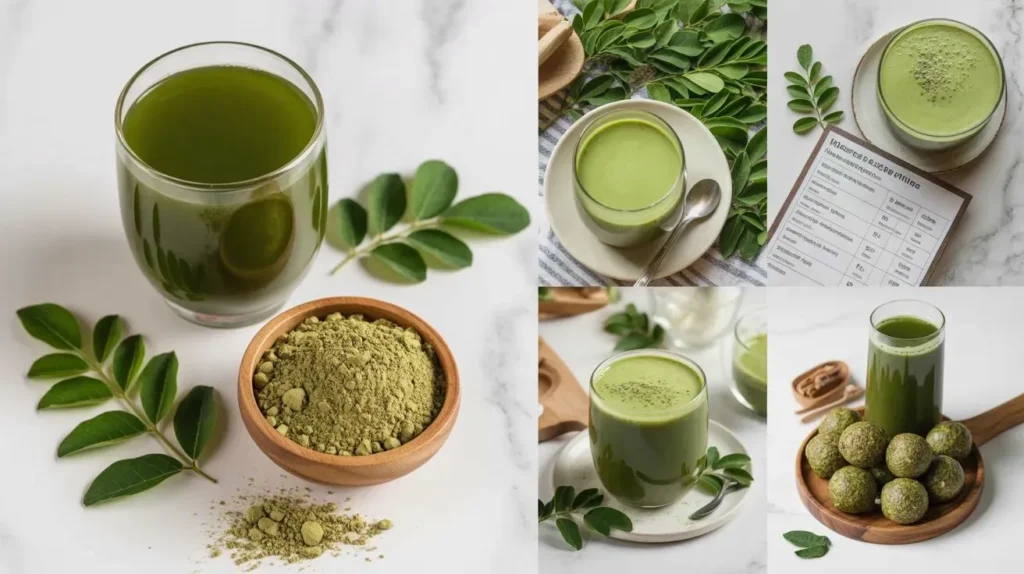
Save this recipe for later on Pinterest!
Beyond a simple cup of tea, moringa tea and moringa powder open up a world of culinary creativity. From vibrant smoothies and cozy lattes to chilled summer drinks, energy balls, soups, and savory marinades — here are 6 easy recipes to get you started.
Refreshing Smoothies
Moringa Green Smoothie
- 1 tsp moringa leaf powder
- 1 cup frozen mixed berries
- 1 ripe banana
- 1 cup unsweetened almond milk
- 1 handful fresh spinach (optional)
- 1 tsp honey or agave (optional)
- Add all ingredients to a high-speed blender.
- Blend on high for 30–45 seconds until smooth.
- Pour into a glass and enjoy immediately.
Moringa Lemonade
- 1 tsp moringa powder
- Juice of 2 lemons
- 2 cups cold water or sparkling water
- 2 tsp raw honey or agave
- Ice cubes
- Fresh mint leaves for garnish
- Dissolve moringa powder in 2 tbsp warm water, stir well.
- Mix with lemon juice, honey, and cold water in a pitcher.
- Stir until honey is fully dissolved.
- Serve over ice, garnished with fresh mint.
Moringa Green Latte
- 1 tsp moringa leaf powder
- 1 cup oat milk, almond milk, or whole milk
- 1 tsp raw honey
- ¼ tsp ground cinnamon
- A pinch of nutmeg (optional)
- Whisk moringa powder with 2 tbsp hot water into a smooth paste.
- Steam or heat your milk until warm and frothy.
- Pour milk over the moringa paste, stirring to combine.
- Add honey and cinnamon, stir and serve immediately.
Moringa Energy Balls
- 1 cup rolled oats
- 2 tbsp moringa powder
- 3 tbsp almond or peanut butter
- 3 tbsp raw honey or maple syrup
- 2 tbsp dark chocolate chips (optional)
- 1 tsp vanilla extract
- Combine all ingredients in a large bowl and mix well.
- Refrigerate the mixture for 10 minutes to firm up.
- Roll into 12 evenly sized balls using your hands.
- Store in an airtight container in the fridge for up to 1 week.
Moringa Ginger Broth
- 1 tbsp moringa powder
- 4 cups vegetable or chicken broth
- 1 tsp fresh ginger, grated
- 2 garlic cloves, minced
- Juice of ½ lemon
- 1 cup seasonal vegetables (spinach, zucchini, carrots)
- Salt and pepper to taste
- Bring broth to a gentle simmer in a medium saucepan.
- Add garlic and ginger, cook for 3 minutes.
- Add vegetables and cook for 10–15 minutes until tender.
- Remove from heat, whisk in moringa powder and lemon juice.
- Season to taste and serve immediately.
Moringa Tea Marinade
- ½ cup strongly brewed moringa tea (cooled)
- 2 tbsp olive oil
- Juice of 1 lemon
- 2 garlic cloves, minced
- 1 tsp fresh ginger, grated
- Salt, pepper, and fresh herbs to taste
- Whisk all marinade ingredients together in a bowl.
- Place chicken, fish, or tofu in a shallow dish.
- Pour marinade over, ensuring even coverage.
- Refrigerate for 30 minutes to 2 hours.
- Grill, pan-fry, or bake as desired and serve.
Conclusion: Embrace the Power of This Wellness Beverage in Your Daily Routine
Whether you’re a seasoned herbal tea enthusiast or just beginning to explore plant-based wellness beverages, moringa tea is one of the most rewarding additions you can make to your daily routine. Backed by centuries of traditional use and a genuinely impressive nutritional profile, moringa oleifera tea stands out as a plant-based beverage worth knowing well.
It’s naturally caffeine-free — answering the common question “does moringa tea have caffeine” with a clear no — making it suitable for all ages and times of day. It’s easy to prepare once you know how to make tea from moringa leaves, whether fresh, dried, or in powder form. And it’s endlessly customizable, from simple hot infusions to creative lattes, smoothies, and culinary applications.
The most important step is simply to start. Choose a high-quality, ideally organic product, brew your first cup, and discover how naturally this ancient botanical fits into a modern wellness lifestyle. Your daily routine deserves it.
FAQ – Quick Answers About Moringa Tea
What is moringa tea?
Moringa tea is a caffeine-free herbal infusion made from the dried leaves of Moringa oleifera, a nutrient-rich tree native to South Asia. The leaves are harvested, dried, and steeped in hot water to create a mild, earthy beverage enjoyed worldwide.
How do you make moringa tea?
To make moringa tea, steep 1 teaspoon of dried moringa leaves in hot water for 5–10 minutes, then strain and enjoy. You can also use fresh leaves or moringa powder depending on your preference.
Does moringa tea have caffeine?
No, moringa tea does not contain caffeine. It is naturally caffeine-free and suitable for drinking at any time of day, including the evening.
What are the benefits of moringa tea?
Moringa tea contains vitamins, minerals, and plant antioxidants that support overall wellness as part of a balanced lifestyle.
- Rich in vitamins A and C
- Contains natural antioxidants
- Supports nutritional diversity
- Naturally caffeine-free
Can you drink moringa tea every day?
Yes, moringa tea can generally be consumed daily in moderate amounts as part of a balanced diet. Individuals with medical conditions should consult a healthcare professional before regular use.
When is the best time to drink moringa tea?
The best time to drink moringa tea is in the morning or early afternoon, depending on your wellness routine. Because it is caffeine-free, it can also be enjoyed in the evening.
What does moringa tea taste like?
Moringa tea has a mild, earthy, slightly grassy flavor similar to green tea but smoother and less bitter. The taste can vary depending on freshness and preparation method.
Can moringa powder be added to smoothies?
Yes, moringa powder blends easily into fruit smoothies, juices, and protein shakes. It is a versatile option for incorporating moringa into your daily routine beyond traditional tea.
Medical Disclaimer: This article is for informational and educational purposes only and is not intended to diagnose, treat, cure, or prevent any disease or health condition. The information provided does not constitute medical advice. If you have a skin condition, allergy, or other health concern, please consult with a qualified healthcare professional before trying new products. Individual results may vary, and what works for one person may not work for another. Always patch test new products before full application, especially if you have sensitive skin or known allergies.
Written by Doo & Rita: Doo and Rita are sisters, herbal wellness enthusiasts, and DIY beauty lovers who explore plant-based ingredients through hands-on experiments. We share tips and recipes we personally test, always with a gentle, nature-first approach.